
What Does a Seawall Inspection Find in Coral Gables?
What a seawall inspection turns up along the Coral Gables Waterway — cap cracks, soil loss, aging bulkheads — and what repair actually costs.
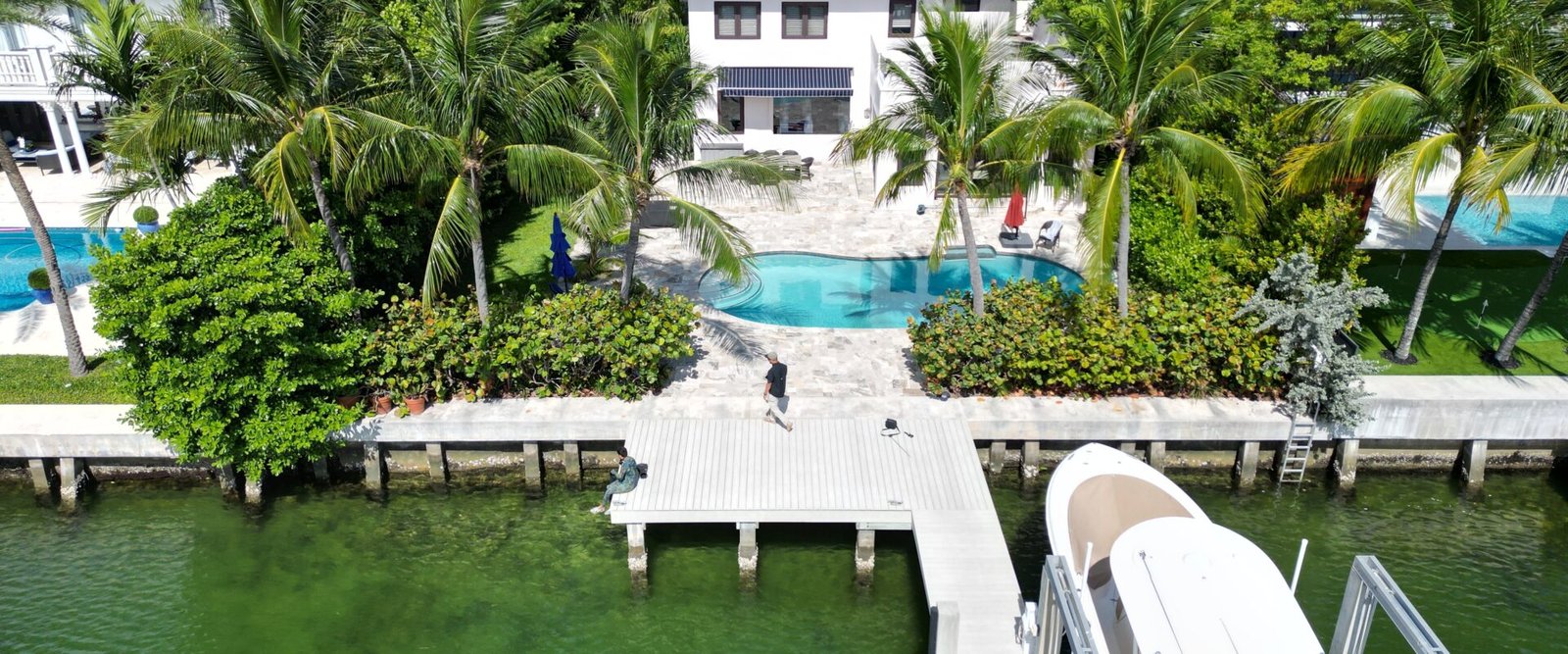
A seawall inspection along the Coral Gables Waterway almost always turns up the same three things: a cracked or spalling cap, soil pulled out from behind the wall at the tide line, and a wall that was never built to the standards a structural engineer would use today. That’s not a guess — it’s what shows up walk after walk on the canals that run through Coral Gables, from the Riviera section down to the Waterway’s mouth at Biscayne Bay near Cocoplum.
Most of these walls were part of the city’s original canal system, dug in the 1920s when Souffront Contractors wasn’t around and neither was the modern Florida Building Code. If you own on the Waterway, a seawall inspection from a Florida-licensed structural engineer is the only way to know what’s actually happening below the waterline before you have a problem at closing, at a board meeting, or after a storm surge.
Key takeaways
- Coral Gables Waterway seawalls skew old — many date to the original 1920s canal dredging, before rebar detailing and tieback systems were standard practice.
- Canal walls fail differently than open-bay walls: boat wake and tidal pumping erode soil behind the cap even when the concrete face looks fine.
- A residential structural seawall inspection is a flat fee, typically $1,500–$3,000 depending on complexity, quoted before any site visit — never priced per linear foot.
- Seawall repair, by contrast, is priced per linear foot — roughly $100–$250 for moderate repairs and $400–$600 for full panel or tieback replacement.
- Repairs on the Waterway require Miami-Dade DERM permitting because it’s tidally influenced water, on top of City of Coral Gables approval.
What we actually find on the Coral Gables Waterway
Walk the seawalls from Sunrise Harbor down toward the Bay and the pattern repeats. The concrete cap — the horizontal beam running along the top of the wall — is usually the first thing to show distress: hairline cracks that widen into spalls, with rust staining bleeding out where the embedded steel has started to corrode. Below the waterline, probing behind the wall with a rod often turns up voids where soil has washed out through gaps in the panels, pulled by tidal exchange twice a day, every day, for decades.
Boat wake matters more here than it does on open Biscayne Bay frontage. The Waterway and its side canals are narrow, so wake reflects off both banks instead of dissipating. That repeated chop works soil loose at the toe of the wall faster than open-water wave action does on a wider shoreline.
Why these seawalls age differently than open-bay walls
Coral Gables’ canal system was cut through oolitic limestone as part of George Merrick’s original development plan, and a lot of what’s in the ground today is the wall that went in at that time or a mid-century replacement. Neither generation of construction typically included a tieback — the buried anchor rod that holds a modern wall against soil pressure from behind. Without one, the wall relies on the weight and embedment of the panel alone, which is exactly why a panel that looks straight from the seawall repair companies in the area, and it’s the reason a visual look from a dock isn’t the same thing as an inspection.
What a structural engineer inspection actually checks
A proper seawall inspection on the Waterway covers more than a walk-by. Expect a structural engineer to document:
- Cap condition — cracking, spalling, exposed or corroded rebar
- Panel condition — leaning, rotation, holes, and visible separation at the joints
- Soil loss behind the wall — probed at multiple points, not assumed
- Drainage — whether weep holes or jets are present and functioning, or missing entirely
- Cap elevation relative to the Waterway’s high-tide line, since a low cap means regular overtopping during king tides
- Marine growth and corrosion at and below the waterline, which can hide the true condition of the concrete underneath
On canal-front property, an underwater or below-waterline component is often necessary because so much of the deterioration on these older walls starts at or below the mudline, not at the visible cap.
What repair actually costs — and what permitting requires
Once an inspection identifies a problem, repair pricing works differently from the inspection fee. Moderate repairs — cap patching, localized panel work, tieback replacement in isolated spots — generally run $100–$250 per linear foot. Full panel and tieback replacement, which is common on the oldest Waterway sections, runs $400–$600 per linear foot. These are general South Florida ranges, not a quote; every project on the Waterway gets its own scope and number after the inspection.
Because the Coral Gables Waterway connects directly to Biscayne Bay, any repair work falls under Miami-Dade DERM permitting in addition to City of Coral Gables approval. A seawall contractor who also holds the engineering license to seal the plans can move a permit through both agencies without handing the file to a third party mid-project — which matters on a canal system where DERM review times can otherwise stretch a repair timeline for months.
Talk to a Florida-licensed structural engineer
If your seawall sits on the Coral Gables Waterway and you’ve noticed cap cracking, a leaning section, or soil pulling away at the tide line, get it looked at before the next king tide or storm season does the deciding for you. Souffront inspects, engineers, permits, and builds as one company, so the person writing your report is the same one who can price and execute the seawall repair if one is needed. Inspections are a flat fee, quoted upfront, with a same-business-day response. The form below gets you started.
Frequently asked questions
How much does a seawall inspection cost on the Coral Gables Waterway?
A residential structural seawall inspection typically runs $1,500–$3,000, depending on the complexity of the inspection — wall length, whether a below-waterline dive is needed, and the number of structural components to assess. It’s a flat fee quoted before any site visit, never priced per linear foot.
Why do Coral Gables Waterway seawalls crack more than newer construction?
Many walls along the Waterway date to the city’s original 1920s canal development or mid-century replacements, built before modern tieback systems and rebar detailing were standard. Without a tieback anchoring the wall against soil pressure, the panel and cap take on stress a modern wall design distributes elsewhere.
How often should a canal-front seawall be inspected?
A general guideline is every three to five years for a wall in stable condition, sooner if you’ve seen visible cracking, leaning, or a sinkhole forming in the yard near the wall. Older Waterway construction with no tieback system warrants closer, more frequent attention.
What are the signs my Coral Gables seawall needs repair?
Watch for cracking or spalling on the cap, rust staining bleeding through the concrete, a section of yard settling or sinking near the wall, visible gaps or separation between panels, and a wall that looks like it’s leaning or rotating toward the water.
Do I need a permit to repair a seawall on the Coral Gables Waterway?
Yes. Because the Waterway is tidally connected to Biscayne Bay, repair work requires Miami-Dade DERM permitting in addition to City of Coral Gables approval. A firm that holds both the engineering license and the contractor license can manage this process directly instead of routing it through separate parties.
What’s the difference between seawall repair and full replacement?
Repair addresses localized damage — a cracked cap section, isolated soil loss, a failed tieback — and generally costs $100–$250 per linear foot. Replacement rebuilds the panel and tieback system along the full length of the wall, typically $400–$600 per linear foot, and is usually recommended when deterioration is widespread rather than isolated.
Does a seawall inspection include the part underwater?
It should on canal-front property like the Coral Gables Waterway, where deterioration often starts at or below the mudline. A below-waterline or dive component lets the inspecting engineer assess the toe of the wall and the soil condition behind it, not just what’s visible above the tide line.
Does Souffront Contractors work on the Coral Gables Waterway?
Yes. Souffront serves Coral Gables and the surrounding Biscayne Bay corridor, inspecting, engineering, permitting, and building seawall and bulkhead repairs as one company. Call (877) 420-7220 or request an inspection online.
About Souffront Contractors Inc.: a Florida-licensed structural engineering and marine construction firm serving Miami-Dade, Broward, and Palm Beach counties. Schedule a professional seawall inspection with a licensed structural engineer — see our seawall contractors page or call (877) 420-7220.
Got a seawall or structural question?
Five fields. Same business day from a Florida-licensed engineer, routed into our dispatch CRM in real time.
- Same business dayAcknowledgment from a Florida licensed engineer — Mon–Fri 8 AM–5:30 PM.
- Engineer-sealed reportAccepted by carriers, building departments, and real-estate transactions.
- Fixed-fee proposalNo hourly billing. Repair scope priced line-by-line.