
What Does a Seawall Inspection Cover in Delray Beach?
A flat-fee engineer report on your Delray Beach Intracoastal seawall covers panels, tiebacks, cap, soil loss, and more. Here's exactly what you get.
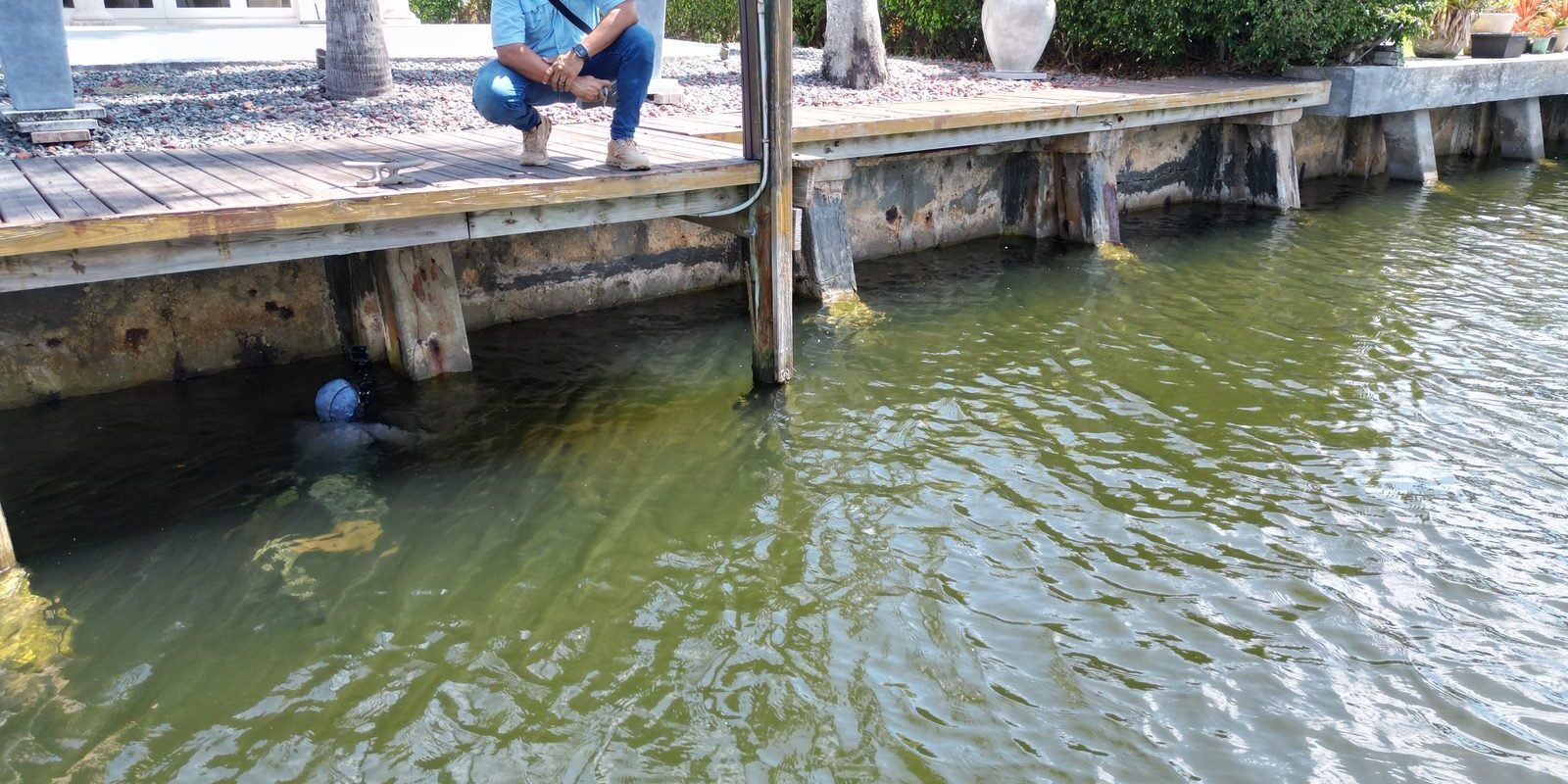
A seawall inspection in Delray Beach is priced as a flat fee — typically $1,500–$3,000 depending on the complexity of the inspection — quoted in writing before anyone sets foot on your property. For Intracoastal lots in Delray Beach, that report covers every structural component you can see, plus the ones you can’t: buried tiebacks, soil conditions behind the wall, and the waterline zone where deterioration almost always starts. Souffront Contractors, a Florida-licensed structural engineering and marine construction firm, delivers a sealed engineer’s report that documents what is actually happening to your seawall — not a salesperson’s walkthrough.
Key takeaways
- Seawall inspections in Delray Beach are flat-fee — $1,500–$3,000 depending on complexity — never priced by the foot. The fee is quoted upfront before the visit.
- Intracoastal lots face tidal fluctuation, vessel wake, and sandy fill soil — all factors a structural engineer evaluates differently than a canal-front property.
- A sealed engineer’s report covers panels, tiebacks, cap, deadman anchors, weep holes, and evidence of soil loss behind the wall.
- The report tells you whether a repair is urgent, deferrable, or unnecessary — with enough detail to get real, comparable bids from seawall repair contractors.
- Delray Beach Intracoastal properties may also need Palm Beach County or Florida DEP coordination depending on the work triggered by the findings.
Why Delray Beach Intracoastal seawalls age differently
Delray Beach sits along the Lake Worth Lagoon — the Intracoastal Waterway section that runs between the barrier island and the mainland through Palm Beach County. The water here is tidally influenced, exposed to boat wake from the Intracoastal channel, and sits against fill soil that South Florida developers placed decades ago. That combination does specific things to seawalls.
Tidal cycling pushes and pulls water through any crack or void in the wall face. Every cycle moves a small amount of fine sand. Over years, that sand migration hollows out a void behind the cap or at the wall’s toe that you cannot see from the surface. When you finally notice the cap cracking or a soft spot in the lawn behind the wall, the void is already substantial.
Vessel wake adds a lateral load the original design may not have anticipated — particularly on walls built in the 1970s and 1980s, before the Intracoastal carried the boat traffic it carries today. Wake-induced vibration loosens tieback connections and accelerates panel joint failure.
Fill soil — the sandy material most lots in this area were built on — drains freely, which sounds good until you realize it also migrates freely through any opening in the wall. A seawall designed for a cohesive soil performs very differently when backed by loose fill.
What the flat-fee engineer report actually covers
When a Florida-licensed structural engineer from Souffront arrives at your Delray Beach property, the inspection follows a systematic sequence. Here is what the flat fee includes.
Panel-by-panel visual survey
Every panel gets examined for horizontal cracking (a sign of tieback failure or soil pressure), vertical cracking (settlement or impact), spalling concrete (exposed rebar is a timeline issue, not a cosmetic one), and displacement — any panel that has rotated or shifted outward from the original plane. The engineer photographs and documents each finding with its location along the wall.
Tieback and deadman evaluation
A tieback is the buried steel rod or cable that runs from the wall back to a deadman anchor set in the soil behind the property. It is the primary element resisting the outward force of retained soil. On Intracoastal lots in Delray Beach, tiebacks are typically set 10 to 15 feet back from the wall face. The engineer assesses tieback condition through panel behavior, cap movement, and, where access allows, direct probing. A wall that is rotating at the top with no visible panel cracking is usually telling you the tiebacks have lost tension or the deadman has moved.
Seawall cap inspection
The cap is the concrete beam poured along the top of the wall. It ties the panels together and anchors the tiebacks. Longitudinal cracking along the centerline of the cap often indicates differential movement between panels. Transverse cracking — running across the cap — frequently marks a tieback location that has failed. The engineer maps every crack, notes its width, and assesses whether it is active or dormant.
Waterline and below-waterline condition
The zone from roughly one foot above the waterline to two feet below it takes the most damage. Concrete is chemically attacked by the salt-and-oxygen interface at the splash zone. For some properties, particularly those with deep draft access or suspected toe scour, the inspection includes an underwater or below-waterline assessment. If that component is needed for your wall, it is scoped and priced explicitly — it does not appear as a surprise add-on after the fact.
Weep holes and drainage
Weep holes are small openings through the wall face that allow hydrostatic pressure to equalize. Blocked weep holes turn a wall into a dam. The engineer checks whether weep holes are open, whether they show signs of soil piping (sandy discharge), and whether the spacing is adequate for the retained fill height.
Soil loss indicators
Voids behind the wall, settlement of patio or pool deck slabs, sinkholes near the base of the wall, and soft ground along the cap are all signs that fill soil has migrated through or under the wall. The engineer documents these surface indicators and notes whether a more invasive investigation — probe holes, ground-penetrating radar — is warranted.
What the sealed report delivers
The deliverable is an engineer-sealed written report, not a verbal summary and not a one-page checklist. It contains findings, photographs keyed to a diagram of your wall, an assessment of structural condition, and a recommended course of action. The recommendation is calibrated: some walls need immediate repair, some need monitoring with a re-inspection in 12 months, and some are in sound condition. The report does not inflate findings to generate repair work.
That report is also the document you need to get real bids from seawall repair contractors. Without a written scope, bids are incomparable — one contractor patches the visible crack, another replaces three panels, and you have no basis to evaluate either. The engineer’s report defines the scope so that every bidder is pricing the same work.
For Delray Beach properties, the report also notes whether the findings would trigger a permit requirement through Palm Beach County’s building department or whether Florida DEP coastal construction coordination is needed before repairs begin.
When an HOA or condo board orders the inspection
Many Delray Beach Intracoastal properties are governed by HOAs or condominium associations. When a board orders a seawall inspection, the engineer-sealed report serves a second purpose: it gives the board documented, professional findings to present to owners and to use in reserve planning. A board that acts on a licensed structural engineer’s recommendation is in a materially different position than one acting on a contractor’s verbal advice.
For associations managing a larger seawall project — multiple panels, full cap replacement, or tieback work spanning hundreds of feet — the inspection report is the starting point, not the endpoint. At that scale, boards often benefit from engineer-led construction management, where a structural engineer writes the bid documents, reviews contractor submittals, observes critical installation milestones, and verifies pay applications before the board signs off. That service is scoped and quoted upfront, separately from the inspection fee.
Souffront’s position on that is disclosed plainly: the firm both performs oversight and bids construction work. If Souffront inspects your wall and you later ask whether they would bid the repair, that interest is put in writing before any conversation about construction scope. A board can engage Souffront for oversight only. The separation is real and documented.
How the flat fee is set — and what affects it
The inspection fee for a Delray Beach Intracoastal seawall is not tied to the wall’s length. The fee reflects the complexity of the inspection itself. Factors that affect scope and cost include:
- Access conditions — a wall with dense landscaping or a boat dock running its entire length takes longer to inspect thoroughly than an open bulkhead.
- Number of structural components — a wall with an integrated boat ramp, a return wall at the property line, or a timber seawall section adjacent to concrete panels involves more components and more assessment time.
- Below-waterline assessment — if toe scour or underwater panel damage is suspected, an underwater examination is scoped as part of the inspection, not added afterward.
- Report scope — some clients need a brief condition letter; others need a full engineering report with repair specifications that a contractor can bid directly. Both are available; the scope is confirmed before the visit.
The fee is quoted in writing before the site visit. For most residential Intracoastal lots in Delray Beach, the inspection falls in the $1,500–$3,000 range. Complex commercial bulkheads, properties with multiple wall segments, or inspections requiring underwater assessment may fall outside that range — but you will know the number before anyone arrives.
What happens after the inspection
Once the report is in hand, you have three typical outcomes. First, the wall is in acceptable condition and no immediate action is needed — the report documents the baseline so future changes can be measured against it. Second, the report identifies deferred maintenance items that should be addressed within 12 to 24 months — cracks sealed, weep holes cleared, minor spalling treated — before they become structural issues. Third, the report identifies active structural problems that need repair before the next storm season.
If repairs are needed, the report’s scope becomes the basis for soliciting bids from seawall construction companies. For Intracoastal work in Palm Beach County, most structural repairs require a building permit. The engineer’s report supports that permit application. Souffront handles permit coordination in-house — the same firm that wrote the report can pull the permit and, if the board chooses, perform the seawall construction or repair work.
Talk to a Florida-licensed structural engineer
If you own or manage a waterfront property on the Delray Beach Intracoastal and are not certain of your seawall’s current condition, the starting point is a flat-fee engineer’s report — delivered with a quoted price before the visit, sealed by a Florida-licensed structural engineer, and written to give you real answers rather than a repair sales pitch. Souffront responds to inspection requests the same business day. Fill out the form below and a licensed engineer will follow up with a quoted scope, not a callback from a salesperson.
Frequently asked questions
How much does a seawall inspection cost in Delray Beach?
A residential seawall inspection in Delray Beach is typically priced between $1,500 and $3,000, depending on the complexity of the inspection — factors like access conditions, number of structural components, and whether an underwater assessment is needed. The fee is a flat rate quoted in writing before the site visit, not calculated by the wall’s length.
Does the inspection price change based on how long my seawall is?
No. Seawall inspections are flat-fee, not priced by linear footage. Wall length is one minor factor among several that affect how complex an inspection is, but the fee is determined by overall scope — access, structural components, report type, and whether below-waterline work is needed. That price is confirmed before the engineer visits.
What does a sealed engineer’s report include for an Intracoastal seawall?
The report covers a panel-by-panel visual survey, tieback and deadman anchor condition, seawall cap cracking and movement, weep hole function, waterline deterioration, and surface indicators of soil loss behind the wall. It includes photographs keyed to a diagram of your wall, findings for each component, a structural condition assessment, and a recommended course of action. The report is signed and sealed by a Florida-licensed structural engineer.
Do I need a permit for a seawall inspection in Palm Beach County?
The inspection itself does not require a permit — it is an assessment, not construction work. However, if the inspection findings lead to structural repairs, a Palm Beach County building permit is typically required before work begins. For work near or in the Intracoastal Waterway, Florida DEP coordination may also be needed. The engineer’s report notes which permit pathways apply to your findings.
How often should an Intracoastal seawall in Delray Beach be inspected?
For most residential Intracoastal walls in Delray Beach, an inspection every five to seven years is a reasonable baseline — sooner after a major storm, if you notice new cracking or settlement, or before buying or selling the property. Walls that showed deferred maintenance on the last inspection should be re-examined within 12 to 24 months to confirm conditions have not worsened.
What are the most common signs that a Delray Beach seawall needs inspection now?
Horizontal cracking along the wall face, longitudinal cracking down the center of the cap, soft or sunken ground behind the wall, sinkholes or voids near the wall’s base, outward lean or rotation of any panels, and sandy discharge through weep holes or cracks are all signs that an inspection should not wait. Vessel wake damage on Intracoastal lots can also accelerate joint failure without obvious surface signs — a periodic inspection catches that before it becomes a structural emergency.
Can an HOA board use the engineer’s report to get comparable bids from contractors?
Yes — that is one of the report’s primary practical uses. A sealed engineer’s report defines the scope of necessary repairs in enough detail that multiple seawall repair contractors can bid the same work. Without a defined scope, bids are incomparable: one contractor prices a patch, another prices panel replacement, and the board cannot evaluate the difference. The report levels the bid process and gives the board documentation for whatever decision it makes.
What is construction management, and does an HOA need it for a seawall project?
Construction management on a seawall project — also called owner’s representative work — means a Florida-licensed structural engineer acts as the board’s single point of contact from bid documents through project closeout. The engineer reviews submittals, observes critical milestones, checks pay applications, and evaluates change orders on the board’s behalf. It is not required for every project, but for associations managing large seawall repairs or replacements, it closes the gap between what the board approved and what actually gets built. Souffront’s construction management service for HOA boards is scoped and quoted as a separate engagement from the inspection.
Related from Souffront Contractors: HOA and condo board compliance reports — all delivered by the same Florida-licensed structural engineering and marine construction team. Call (877) 420-7220.
About Souffront Contractors Inc.: a Florida-licensed structural engineering and marine construction firm serving Miami-Dade, Broward, and Palm Beach counties. Hire a trusted seawall contractor in Fort Lauderdale and throughout Broward County — see our seawall contractors page or call (877) 420-7220.
Got a seawall or structural question?
Five fields. Same business day from a Florida-licensed engineer, routed into our dispatch CRM in real time.
- Same business dayAcknowledgment from a Florida licensed engineer — Mon–Fri 8 AM–5:30 PM.
- Engineer-sealed reportAccepted by carriers, building departments, and real-estate transactions.
- Fixed-fee proposalNo hourly billing. Repair scope priced line-by-line.