
Why Jupiter Seawalls Fail Faster Than You Think
The Loxahatchee River and Jupiter Inlet create tidal forces that wreck seawalls fast. Learn what a licensed engineer looks for and what repairs cost.
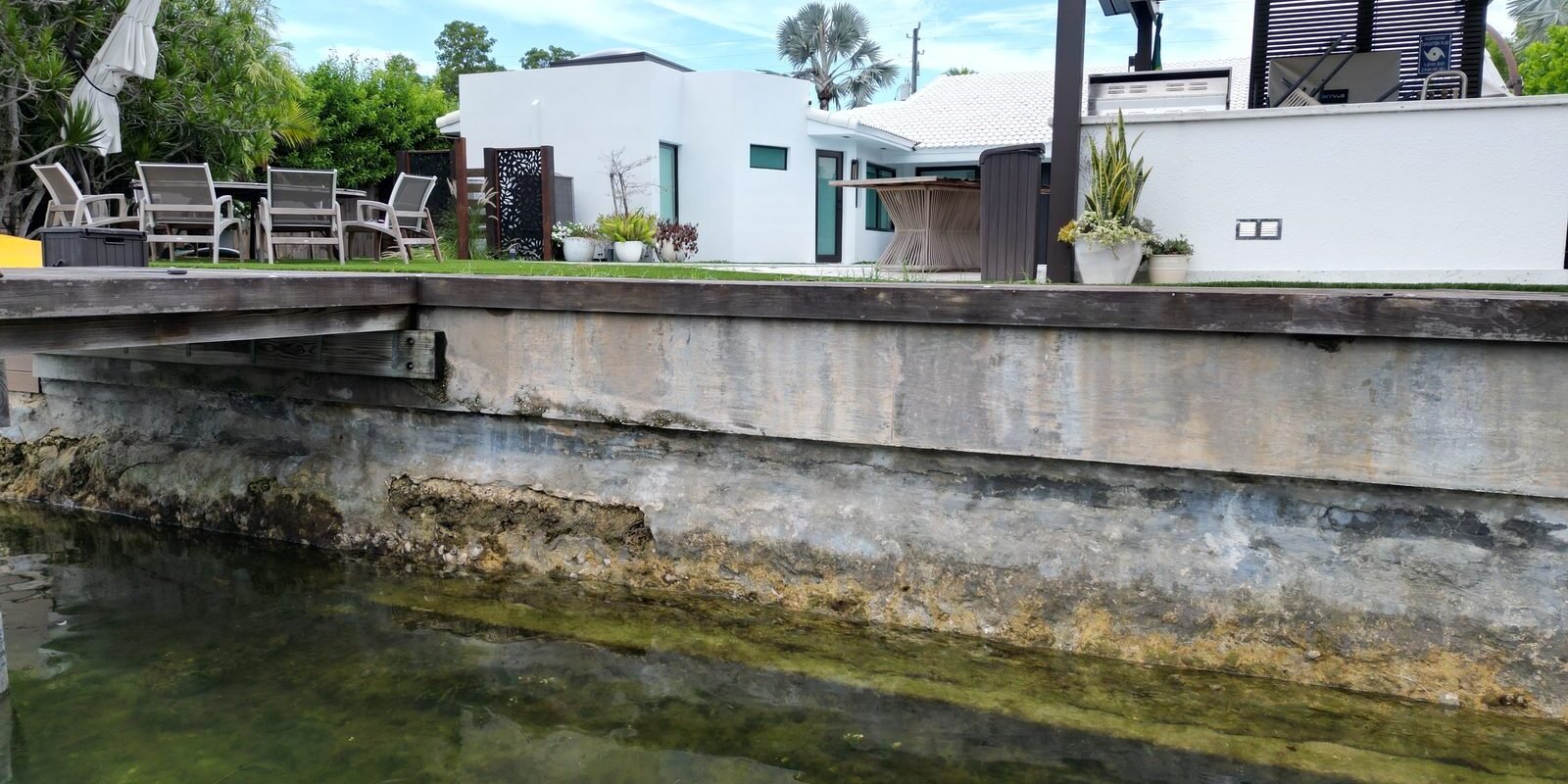
A seawall inspection in Jupiter, Florida is not the same job it is on a calm inland canal. The Loxahatchee River and Jupiter Inlet push tidal fluctuations, strong current, and salt-saturated soil into your wall every single day — conditions that accelerate corrosion, joint failure, and soil loss faster than most waterfront owners expect. Souffront Contractors, a Florida-licensed structural engineering and marine construction firm serving Palm Beach, Broward, and Miami-Dade, inspects and repairs seawalls throughout the Jupiter corridor with a team that has physically stood on these walls and read what the tides do to them.
Key takeaways
- Jupiter’s tidal range on the Loxahatchee River regularly exceeds two feet — one of the more dynamic tidal environments in South Florida — and that cycling load is the primary driver of seawall joint failure.
- A professional seawall inspection in Jupiter is a flat fee — typically $1,500–$3,000 depending on complexity — quoted before any site visit, never priced per linear foot.
- Inlet-side and river-mouth properties face the most aggressive scour; seawalls there should be evaluated every two to three years, not on a “wait until something cracks” schedule.
- Moderate seawall repairs in Jupiter run roughly $100–$250 per linear foot; full panel or tieback replacement can reach $400–$600 per linear foot — industry ranges, not a quote.
- A Florida-licensed structural engineer should sign any inspection report you plan to use for insurance, sale, or repair permitting in Palm Beach County.
What the Loxahatchee River actually does to your wall
Stand at a Jupiter waterfront property at low tide, then come back six hours later. The water level difference you see — sometimes 24 to 30 inches on a strong tidal cycle — represents a pressure swing your seawall absorbs twice every day. That is not a static load. It is a fatigue load, the same mechanical principle that eventually cracks a paper clip you bend back and forth. Concrete panels crack. Vinyl sheet piling joints open. Steel tie rods corrode at the soil-water interface where oxygen content fluctuates.
The Loxahatchee River is also a blackwater river — naturally tannic, slightly acidic water flowing out of the Jonathan Dickinson State Park watershed. Where it meets the saltwater pushing in from the Jupiter Inlet, you get a mixing zone with variable salinity and pH. That chemistry is unusually harsh on embedded steel components: tieback rods, deadman anchors, and waler connections. On a wall that was installed in the 1990s or early 2000s, those steel elements may have significantly less section remaining than the original design assumed.
Inlet proximity amplifies everything. Properties on the south shore of the inlet mouth or along the Intracoastal just south of the inlet experience scour — high-velocity current removes the fine sand and shell material from behind and beneath the seawall panels. When that fill migrates, voids form. Voids mean unsupported panels. Unsupported panels rotate, and once a panel rotates past a few degrees, the tieback geometry that was designed to hold it is working against itself.
What a licensed engineer looks for on a Jupiter seawall
A visual inspection from the seawall cap is a starting point, not a conclusion. Here is what a Florida-licensed structural engineer actually examines on a Jupiter property:
- Cap condition: longitudinal cracking along the cap centerline usually means the deadman anchor system below has moved. Transverse cracks at regular intervals may indicate panel joint locations where water infiltration has begun corroding embedded steel.
- Panel face: spalling, rust staining, and exposed rebar on concrete panels are not cosmetic. Rust staining means the steel inside is actively corroding and expanding — it is cracking the concrete from the inside out. On vinyl sheet piling, look for joint separation and UV degradation above the waterline.
- Tieback hardware: where tiebacks are accessible at the cap, a probe checks for section loss. On older walls the engineer may recommend a localized cap removal at suspect locations to expose the rod-to-waler connection.
- Below-waterline condition: on river and inlet-adjacent walls, an underwater dive observation is often warranted. Scour at the toe — the base of the wall — is invisible from above but is one of the most common causes of sudden failure in Jupiter’s tidal environment. The Florida Department of Environmental Protection regulates what can be placed at the toe, so repair options depend on a permitted scope.
- Soil behind the wall: probing or sounding behind the cap reveals whether fill is still present or whether voids have developed. A hollow sound under a cap that should be solid is an immediate red flag.
- Drainage: weep holes that are blocked trap hydrostatic pressure behind the wall. On river-front walls that absorb freshwater from rainfall events, that trapped pressure is a significant load increment.
The inspection report documents every finding with photographs, measurements, and an engineer’s assessment of urgency. That report is what your contractor bids from, what your insurance carrier asks for, and what Palm Beach County building officials review when you pull a repair permit.
Jupiter-specific permitting: what you need before repairs start
Seawall repair and replacement in Jupiter touches multiple agencies, and the Loxahatchee River adds layers that a simple canal-front project does not carry. Expect to coordinate with:
- Palm Beach County Building Division — structural permit for any repair that alters the wall’s structural system. Required for tieback replacement, panel replacement, or cap reconstruction.
- Florida DEP / FDEP Office of Resilience and Coastal Protection — work below mean high water or on sovereign submerged lands requires a consent of use or an exemption determination. The Loxahatchee is a designated aquatic preserve; that designation affects what materials and methods are permitted at the toe.
- U.S. Army Corps of Engineers — the USACE Jacksonville District issues Section 404 and Section 10 permits for work in navigable waters. The Jupiter Inlet and the lower Loxahatchee River are navigable waters of the United States. Depending on scope, a Nationwide Permit 3 (maintenance) may apply, or a standard individual permit may be required.
- Town of Jupiter — local building department coordinates with county; for properties within town limits, the town issues the building permit referencing the county’s structural requirements.
An inspection report from a licensed engineer is the document that starts all of these conversations. Submitting for permits without an engineer-sealed drawing is not a path Palm Beach County accepts for structural seawall work.
How often should a Jupiter waterfront property be inspected?
On a protected inland canal in Miami-Dade with minimal tidal range, a seawall in good condition might go four to five years between professional evaluations. Jupiter is a different calculation. The tidal cycling, the river chemistry, and the inlet scour create conditions where deterioration can progress from “monitor this” to “repair now” in 18 to 24 months.
As a general rule for Jupiter waterfront properties:
- River-mouth and inlet-adjacent walls: every two to three years, or immediately after any major storm event that generates significant surge.
- Inland Loxahatchee canal-front walls: every three to four years if the last inspection showed no active movement or void formation.
- Pre-purchase: always, before closing, regardless of the wall’s apparent condition. A wall that looks fine from the dock can have 40% section loss on the tiebacks below grade.
- After a named storm: surge drives sand and debris against and over walls, and the drawback current can remove toe material rapidly. Inspect within 60 days of any storm that brought water over the cap.
What seawall repairs cost in Jupiter
Repair costs in Jupiter follow the same general industry ranges seen elsewhere in South Florida, with some upward pressure from the permitting complexity described above and from the marine environment’s demands on materials. These are general industry ranges — not a Souffront quote:
- Crack injection and joint sealing: addressed under a minor repair scope; often bundled into a lump-sum price rather than a per-foot rate.
- Cap reconstruction: moderate repairs run roughly $100–$250 per linear foot when the panels and tiebacks are sound and only the cap and drainage system need work.
- Panel and tieback replacement: full structural replacement runs roughly $400–$600 per linear foot. On inlet-adjacent properties where underwater work and additional permitting are required, costs at the higher end of that range are common.
- Toe protection and scour repair: added cost depending on scope and what FDEP and USACE permit for the specific location.
These numbers assume you have a clean scope of work. The single biggest cost driver we see is a vague contractor proposal that covers what is visible and excludes what is not — then delivers change orders once the wall is open. An engineer-written scope of work, bid out to competing seawall repair contractors, eliminates most of that exposure.
When a condo or HOA board needs more than just an inspection
A seawall inspection tells you what is wrong. Getting it fixed — correctly, on budget, with documentation the next board can actually use — is a different problem. For condominium and HOA boards on the Loxahatchee River and Jupiter Inlet waterfront, the gap between “we have an engineering report” and “the wall is fixed and the permits are closed” is where projects go wrong.
The typical failure sequence: the board receives a report, solicits three bids, picks the lowest, and then has no one on their side who can read the contractor’s submittals, verify that the installed tiebacks match the engineer’s drawings, or confirm that a $90,000 change order reflects a real differing condition rather than a gap in the original bid. Volunteers with day jobs are not positioned to make that call.
Souffront’s engineer-led construction management service puts a Florida-licensed structural engineer in the owner’s representative role — writing the bid documents so competing proposals are actually comparable, reviewing submittals and shop drawings, observing work at the milestones that matter (tieback installation, cap pour, backfill), reviewing pay applications against completed work, and evaluating change orders before the board signs them. The service is scoped and quoted upfront, before the project starts. Boards can engage Souffront for oversight only; if Souffront has any interest in also bidding the repair work, that is disclosed in writing from the first conversation.
On a Jupiter seawall project where the permitting alone touches three agencies, having one point of contact who has actually built these walls — and who is accountable to the board, not to the contractor — is not a luxury. It is what keeps a $600,000 seawall replacement from becoming an $800,000 one.
Talk to a Florida-licensed structural engineer
If your Jupiter waterfront property hasn’t had a professional seawall evaluation in the last two to three years — or if you’re seeing cap cracks, staining, or soil loss behind the wall — the right next step is a flat-fee inspection with an engineer-sealed report. Souffront Contractors quotes every inspection upfront, responds within the same business day, and delivers a report you can take to a contractor, a permitting office, or a closing table. Fill out the form below to get started.
Frequently asked questions
How much does a seawall inspection cost in Jupiter, Florida?
A professional seawall inspection in Jupiter is a flat fee — typically $1,500–$3,000 depending on the complexity of the inspection. Complexity factors include wall length, accessibility, whether an underwater dive observation is needed to evaluate the toe and below-waterline panels, the number of structural components, and the report scope required. The fee is quoted before any site visit; there is no per-linear-foot pricing for inspections.
Why are Jupiter seawalls more vulnerable than those in other parts of South Florida?
The Loxahatchee River generates tidal cycling that can exceed a two-foot range twice daily — a fatigue load that stresses panel joints and tieback connections continuously. The river’s naturally acidic, tannic water mixes with salt water near the Jupiter Inlet, creating a corrosive chemistry that accelerates deterioration of embedded steel. Inlet-proximity also causes scour — high-velocity current removes fill from behind and beneath wall panels, creating voids that lead to rotation and eventual failure.
Do I need a permit to repair a seawall in Jupiter?
Yes, for any work that alters the structural system. Seawall repairs in Jupiter typically require a Palm Beach County building permit, and work in or near the Loxahatchee River — a designated aquatic preserve — may require authorization from Florida DEP and a permit from the U.S. Army Corps of Engineers. An engineer-sealed drawing is required to submit for structural permits; a licensed engineer should prepare or review those documents before you apply.
What are the signs that a Jupiter seawall needs immediate attention?
Longitudinal cracking along the center of the seawall cap often indicates the anchor system below has shifted. Rust staining on a concrete panel face means embedded steel is corroding and expanding inside the panel. Soil loss or voids visible behind the cap, a cap that sounds hollow when tapped, and any visible tilting or rotation of panels are all conditions that warrant prompt evaluation — not monitoring. On inlet-adjacent or river-mouth properties, these signs can progress quickly.
How often should a waterfront property in Jupiter have its seawall inspected?
For properties directly on the Loxahatchee River mouth or near the Jupiter Inlet, every two to three years is a reasonable baseline — sooner after any named storm that brought surge over or close to the cap. For inland river canal properties in calmer locations, every three to four years is a general guideline, provided the last inspection showed no active movement or void formation. Any change in condition — new cracking, staining, or erosion — warrants an inspection outside the regular schedule.
Can a seawall inspection report be used for a real estate transaction in Jupiter?
Yes, and it is one of the best uses of an engineer-sealed inspection report. A buyer’s agent or lender may require documentation of the wall’s structural condition, and a report signed by a Florida-licensed structural engineer carries the weight needed for that purpose. If the report identifies deficiencies, it also gives the buyer a basis for negotiating repair credits before closing — far better than discovering the problem after the fact.
What is an owner’s representative on a seawall project, and does a condo board need one?
An owner’s representative — sometimes called a construction manager or the board’s engineer — is a licensed professional the board hires to act on their behalf throughout a seawall repair or replacement project. The owner’s rep writes the scope, runs the bid process, reviews submittals and pay applications, observes work at critical milestones, and evaluates change orders before the board signs them. For a condo or HOA board managing a large seawall project without engineering expertise on the board itself, this oversight is what keeps costs and quality under control. The service is priced per project, quoted upfront.
Related from Souffront Contractors: HOA and condo board compliance reports — all delivered by the same Florida-licensed structural engineering and marine construction team. Call (877) 420-7220.
About Souffront Contractors Inc.: a Florida-licensed structural engineering and marine construction firm serving Miami-Dade, Broward, and Palm Beach counties. Explore our seawall construction and marine construction capabilities — see our seawall contractors page or call (877) 420-7220.
Got a seawall or structural question?
Five fields. Same business day from a Florida-licensed engineer, routed into our dispatch CRM in real time.
- Same business dayAcknowledgment from a Florida licensed engineer — Mon–Fri 8 AM–5:30 PM.
- Engineer-sealed reportAccepted by carriers, building departments, and real-estate transactions.
- Fixed-fee proposalNo hourly billing. Repair scope priced line-by-line.