
What’s Destroying Seawalls in Lauderdale-by-the-Sea?
Atlantic exposure and narrow canals punish Lauderdale-by-the-Sea seawalls harder than most. A Florida-licensed structural engineer explains what to look for and when to act.
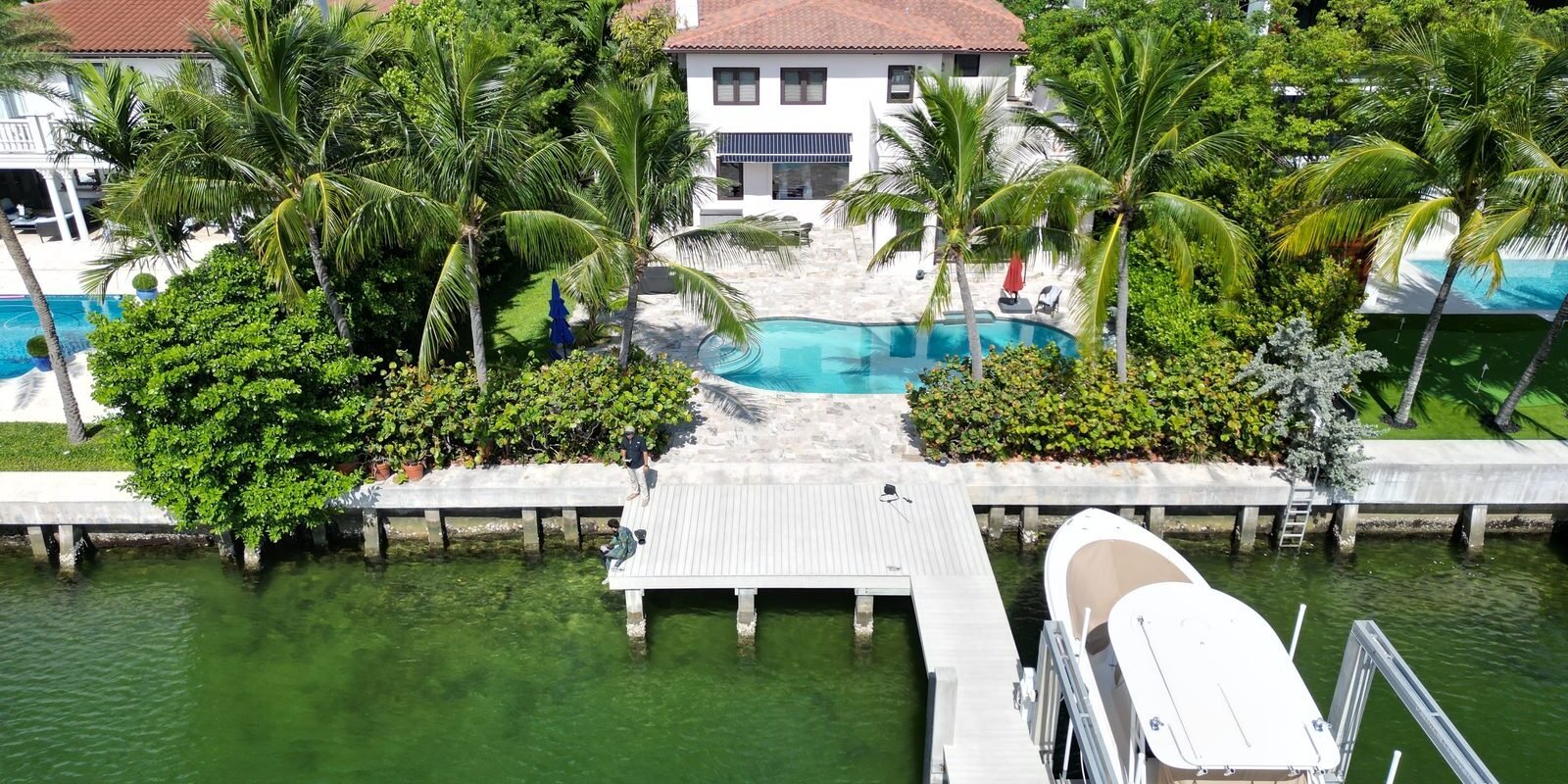
In Lauderdale-by-the-Sea, a seawall faces two very different enemies at the same time: open Atlantic wave energy from the east and the slow, relentless tidal flushing inside the town’s narrow finger canals. A professional seawall inspection here turns up failure patterns you rarely see on calmer bay-front properties — and catching them early is the difference between a repair and a full replacement. Souffront Contractors, a Florida-licensed structural engineering and marine construction firm, inspects seawalls throughout Broward County and along this corridor every week.
Key takeaways
- Lauderdale-by-the-Sea seawalls face both Atlantic swell exposure and canal-specific tidal scour — two distinct failure mechanisms on the same property.
- Narrow canal geometry accelerates tidal velocity, which erodes the soil behind a wall faster than open-water sites.
- A residential seawall inspection is a flat fee — typically $1,500–$3,000 depending on complexity — quoted before any site visit.
- Concrete panel rotation, rust staining along the cap, and soft ground behind the wall are the three field signs that demand immediate engineering review.
- Moderate seawall repairs in this area run roughly $100–$250 per linear foot; full panel and tieback replacement can reach $400–$600 per linear foot.
Two environments, one wall
Most South Florida waterfront towns sit on calm bay or river shoreline. Lauderdale-by-the-Sea is different. The eastern edge of town meets the Atlantic directly, and the inland canal grid — built in the mid-20th century — is made up of channels barely wide enough for two boats to pass. That combination puts unusual stress on seawalls throughout the area, even ones that look fine from the seawall cap looking down.
On the ocean-adjacent side, swell refraction and surge move around the reef line and push against retaining structures with energy that bay-front walls never see. On the canal side, the narrow geometry acts like a funnel — tidal water moves faster through a 40-foot-wide canal than it does across open water, and that velocity accelerates the erosion of soil at the toe of the wall and at every joint in the panel system.
When we walk a wall here, we are not doing a single-environment inspection. We are reading two different stress histories in the same structure.
What we actually find on site
Panel rotation and forward lean
Concrete or vinyl panels that have rotated outward — even one or two inches — tell you the tiebacks have lost their grip. A tieback is the buried anchor rod or deadman system that holds the wall face against the lateral pressure of the soil behind it. In Lauderdale-by-the-Sea’s canal lots, tidal fluctuation repeatedly wets and dries the soil zone where the tieback anchors. Over time, that cycling loosens the bearing capacity of the anchor. Once a tieback slips, the panel begins to rotate, and the geometry of the failure accelerates — the more the panel leans, the more load transfers to the remaining anchors.
We check rotation with a level and a straight edge, and we probe the soil immediately behind the cap to feel for voids. A panel that looks plumb from the dock can still have a three-inch void behind the cap that will collapse the moment someone drives a vehicle close to the edge.
Rust staining and section loss in the cap
The seawall cap — the concrete beam that runs along the top of the wall — almost always contains rebar. In a saltwater environment, chloride ions penetrate the concrete and reach the steel. Once corrosion starts, the steel expands as it rusts, and the concrete above it cracks and spalls. You can read the stage of deterioration from the staining pattern: light tan staining means early-stage oxidation; dark orange or brown staining with visible cracking means the rebar cross-section is already reduced.
In the canal lots here, the cap sits at or near the tidal splash zone, which means it is wet with saltwater regularly. Some caps we inspect have lost 30–40 percent of their rebar section before the homeowner knew anything was wrong. At that point, the cap is not just cosmetic — it has lost structural function, and the panels below are less restrained at the top.
Soil loss at the toe and behind the face
The toe of a seawall is the buried bottom edge of the panel, typically set into the canal or ocean bottom. Tidal scour — especially in the narrow canals — erodes the sediment at the toe over years. When the embedment depth decreases, the passive resistance that keeps the panel from kicking out at the bottom decreases with it. A wall that was originally set 24 inches into the bottom may now have only 10 or 12 inches of embedment. It looks identical from the top, but it is structurally compromised.
Behind the face, soil loss shows up as soft or hollow zones when you probe with a rod. Voids form when water moves through cracks or open joints and carries fine material with it. Every tide cycle that passes through an open joint takes a little more soil. When enough is gone, you get sudden settlement — the kind that drops a corner of a patio slab or splits a planting bed open overnight.
Joint deterioration specific to the canal environment
Concrete panel seawalls are not monolithic — they are made of individual panels with sealed joints between them. The joint sealant is the first line of defense against water and soil migration. In a salt and UV environment, most sealants have a service life of 7–12 years before they begin to crack and gap. On Atlantic-influenced canals, wave action pushes water directly into those joints with more force than a calm bay-front wall ever experiences. We see open joints on walls that are only 15 years old in this area — walls that would still have intact joints at 25 years on a sheltered lot.
Why the canal geometry changes the inspection approach
A standard seawall inspection on an open bay lot can often be completed with a visual above-waterline survey and a soil probe. In Lauderdale-by-the-Sea’s finger canals, the confined channel means water clarity is often poor, current is higher, and the toe condition is harder to assess without getting below the waterline. On walls where we have any reason to suspect toe scour or embedment loss, we include an underwater assessment as part of the inspection scope.
That is one of the reasons inspection cost here varies — not because the wall is longer, but because the inspection itself is more complex. A residential seawall inspection in this area is typically $1,500–$3,000, quoted as a flat fee before the visit, depending on what the site actually requires. Wall length is one factor. Below-waterline access, the number of structural components, and the depth of the report scope all affect the quote as much or more.
The fee is fixed before we arrive. There are no hourly charges added later.
What the inspection report tells you — and what it doesn’t
A Florida-licensed structural engineer’s inspection report on a Lauderdale-by-the-Sea seawall will tell you the current condition, the failure mechanisms that are active, the urgency of each finding, and the recommended scope of repair. It will not tell you the contractor’s bid price — that comes later, after you understand what the wall actually needs.
What a good report does is give you a factual baseline. If you are buying the property, it tells you what you are assuming. If you are the current owner, it tells you whether you have a maintenance issue, a repair project, or a replacement decision in front of you. If you are a condo or HOA board, it gives you the documentation to act — and to explain that action to your members.
Boards that skip the inspection and go straight to contractor bids end up comparing bids that are not based on the same scope. One contractor prices a cap patch; another prices full panel replacement. The board cannot tell which is right because no one with an engineering license has told them what the wall actually needs. That is the problem the inspection solves.
When a board or property manager needs more than an inspection
For condominium and HOA properties in Lauderdale-by-the-Sea — and there are dozens of them along the canal grid — the inspection is sometimes just the beginning. Once a report identifies repair work, someone has to manage that work: write a scope, run a bid process, review submittals, observe the critical construction milestones, and verify that the contractor billed for what was actually built.
That is what engineer-led construction management for HOA boards covers. A Florida-licensed structural engineer acts as the board’s single point of contact — from the scope document through final closeout — so the board is not left reading a $180,000 change order with no one on their side who understands what it says. Souffront can provide this oversight independently of construction, or as part of a project we are also building. When we are both the oversight and the contractor, we disclose that in writing before the project starts. Boards that prefer independent oversight can engage us for that role alone.
The seawall repair process — from scope through permit through construction — moves faster and cleaner when one engineering firm has eyes on every stage. On a narrow canal lot, where the working space is tight and the tide window is short, that matters more than it does on a wide open bay.
Permits and agencies that govern seawall work here
Seawall repair and replacement in Lauderdale-by-the-Sea requires permits from both Broward County and the Town of Lauderdale-by-the-Sea. Work in navigable waters also triggers coordination with the Florida Department of Environmental Protection and, depending on the scope, the U.S. Army Corps of Engineers. Broward County’s Environmental Planning and Community Resilience Division reviews work that affects coastal and canal ecosystems.
Getting the permit package right — drawings, calculations, environmental forms — is part of what a structural engineering firm handles. A contractor who builds but does not engineer has to subcontract that work out, which adds time and a communication gap. When the same firm that inspected the wall also seals the repair drawings, the permit process moves in one direction instead of bouncing between parties.
Talk to a Florida-licensed structural engineer
If your seawall is showing rust stains, soft ground behind the cap, or any visible lean in the panels, the right first step is an engineer’s assessment — not a contractor estimate. Souffront Contractors provides flat-fee seawall inspections in Lauderdale-by-the-Sea and throughout Broward County, quoted upfront before any site visit, with a written report sealed by a Florida-licensed structural engineer. Call (877) 420-7220 or fill out the form below to get a quote the same business day.
Frequently asked questions
How much does a seawall inspection cost in Lauderdale-by-the-Sea?
A residential seawall inspection is a flat fee — typically $1,500–$3,000 depending on the complexity of the site — quoted before the engineer visits. In Lauderdale-by-the-Sea, inspections often require below-waterline assessment due to canal scour conditions, which can place the fee toward the higher end of that range. The price is fixed; there are no hourly additions after the fact.
What is actually included in a seawall inspection here?
A full inspection includes an above-waterline structural survey of the cap, panels, and visible joints; soil probing behind the wall face to check for voids; a review of the tieback condition where accessible; and, where conditions warrant, an underwater assessment of the toe and below-waterline panel faces. The result is a written report sealed by a Florida-licensed structural engineer identifying the condition, active failure mechanisms, and recommended action.
Why do narrow canals cause seawalls to fail faster?
Narrow canal geometry concentrates tidal flow, which increases water velocity past the wall face. Higher velocity accelerates scour at the toe of the panel — the buried base — reducing the embedment depth that keeps the wall stable. It also drives water more forcefully through open panel joints, carrying fine soil particles with it and creating voids behind the wall face. Both mechanisms operate simultaneously in Lauderdale-by-the-Sea’s finger canals.
What are the warning signs that a seawall here needs urgent attention?
The four signs that require immediate engineering review are: visible panel rotation or forward lean, dark rust staining with cracking in the concrete cap, soft or spongy ground within three feet of the wall face, and open gaps in the panel joints wider than a quarter inch. Any one of these can indicate an active failure mechanism. Waiting on multiple signs before acting typically converts a repair into a replacement.
How much do seawall repairs cost in Lauderdale-by-the-Sea?
General industry ranges for South Florida seawall repair run roughly $100–$250 per linear foot for moderate work — cap patching, joint resealing, minor tieback tightening. Full panel replacement or tieback replacement typically runs $400–$600 per linear foot. These are industry ranges, not quotes. The actual cost depends on the scope the engineer identifies in the inspection report. Souffront provides repair pricing after the inspection, not before it.
Do I need a permit to repair a seawall in Lauderdale-by-the-Sea?
Yes. Seawall repair and replacement requires permits from Broward County and the Town of Lauderdale-by-the-Sea. Work that affects the waterway bottom or canal ecology also requires coordination with the Florida Department of Environmental Protection. Depending on the scope and proximity to navigable water, a U.S. Army Corps of Engineers permit may also apply. The engineering firm that seals the repair drawings handles permit coordination as part of the scope.
What is an owner’s representative and does my HOA need one for a seawall project?
An owner’s representative — also called a construction manager or the board’s engineer — is a licensed professional who acts solely on the owner’s behalf during a construction project. On a seawall project, that means writing the bid documents, evaluating contractor proposals, reviewing submittals and shop drawings, observing construction at key milestones, and reviewing pay applications before the board authorizes payment. An HOA board managing a seawall repair without this role has no independent check on whether the work billed matches the work done. Engineer-led construction management fills that role for boards that need it.
How often should a seawall in Lauderdale-by-the-Sea be inspected?
In a high-exposure environment like Lauderdale-by-the-Sea — where Atlantic swell energy and canal tidal scour both act on the wall — a structural inspection every three to five years is a reasonable baseline for walls in known good condition. Walls that have had prior repairs, show any visible distress, or are more than 20 years old warrant inspection every two to three years. After any significant storm event, a post-storm inspection is advisable regardless of the regular schedule.
Related from Souffront Contractors: HOA and condo board compliance reports — all delivered by the same Florida-licensed structural engineering and marine construction team. Call (877) 420-7220.
About Souffront Contractors Inc.: a Florida-licensed structural engineering and marine construction firm serving Miami-Dade, Broward, and Palm Beach counties. Explore our seawall construction and marine construction capabilities — see our seawall contractors page or call (877) 420-7220.
Got a seawall or structural question?
Five fields. Same business day from a Florida-licensed engineer, routed into our dispatch CRM in real time.
- Same business dayAcknowledgment from a Florida licensed engineer — Mon–Fri 8 AM–5:30 PM.
- Engineer-sealed reportAccepted by carriers, building departments, and real-estate transactions.
- Fixed-fee proposalNo hourly billing. Repair scope priced line-by-line.