
Seawall Inspection in Pompano Beach: Tidal Wear Explained
Hillsboro Inlet pushes fast tidal flow through Pompano Beach canals and wears walls differently than a calm lagoon. Here's what a seawall inspection finds.
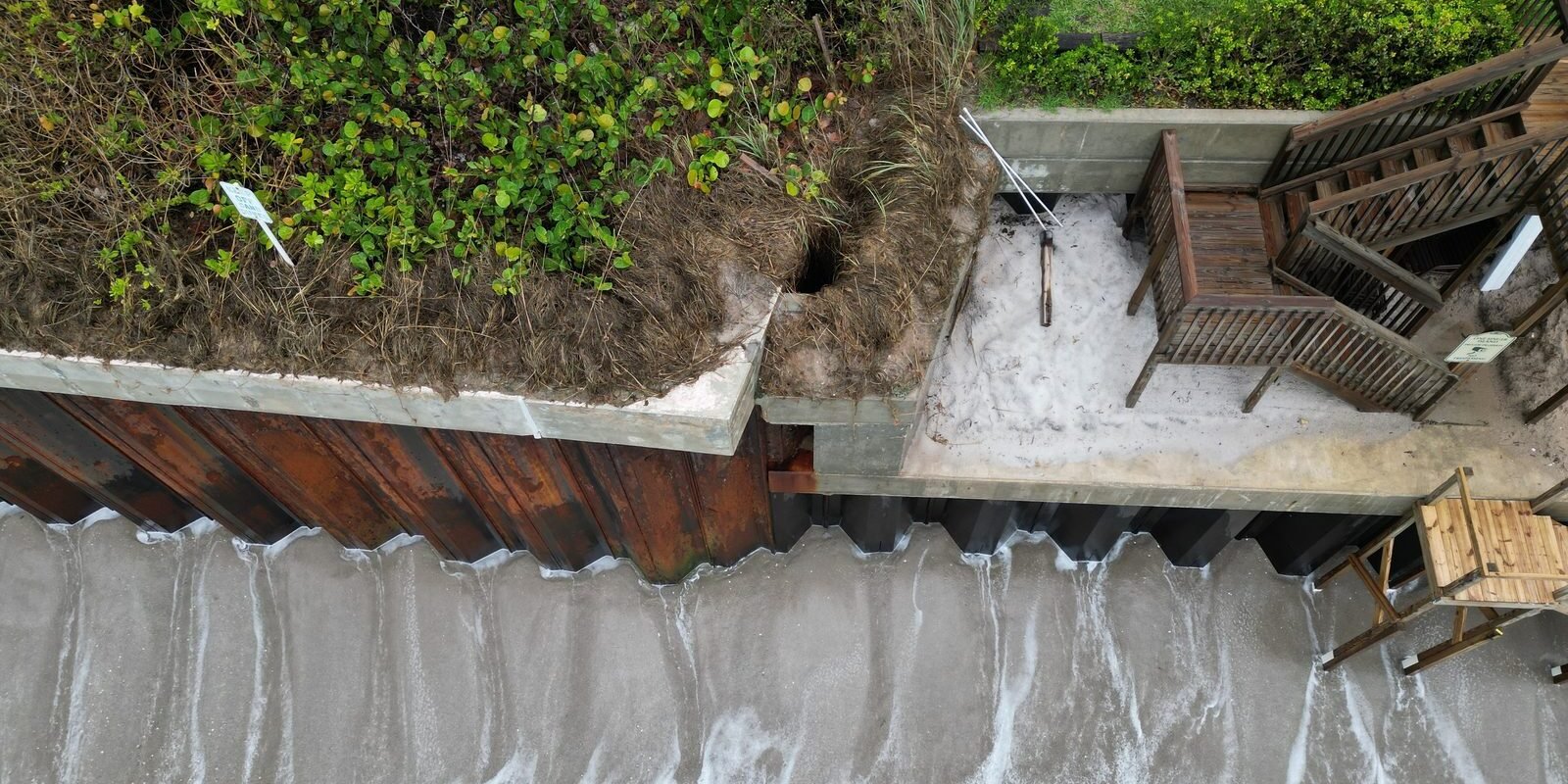
Walk a finger canal off the Pompano Beach waterway at low tide and you’ll see the difference an inlet makes. The water doesn’t just rise and fall here — it moves, hard, twice a day, because Hillsboro Inlet is close enough to push real current through these canals instead of a gentle lagoon swell. That current is why a seawall inspection in Pompano Beach often turns up a different pattern of wear than the same wall would show three miles inland. Souffront Contractors inspects these canal walls regularly, and the inlet’s fingerprint is usually easy to spot once you know where to look.
A proper seawall inspection on an inlet-fed canal checks the same structural components as any other wall — panels, cap, tiebacks, drainage — but weighs them differently. Tidal velocity near an inlet accelerates scour at the toe of the wall and erodes backfill through small cap cracks faster than still water would. A wall that looks fine from a dock can already have six inches of void behind it.
Key takeaways
- Hillsboro Inlet creates measurably stronger tidal exchange in nearby Pompano Beach canals than in interior waterways further from the inlet mouth.
- Faster tidal flow accelerates toe scour, backfill loss through cap cracks, and corrosion at the waterline — the same defects show up sooner near the inlet.
- Boat wake in narrow canals adds a second load the wall wasn’t necessarily designed to absorb as often.
- A structural engineer inspection is priced as one flat fee set before the visit, based on access, component count, and whether a diver is needed — not on the wall’s length.
- Repair costs, when they’re needed, are the only part of this process priced by the linear foot.
What Hillsboro Inlet actually does to the water in these canals
Hillsboro Inlet is a narrow, fairly deep cut connecting the Intracoastal Waterway to the Atlantic. Narrow inlets accelerate tidal flow — the same volume of water has to move through a smaller opening, so it moves faster. Canals within roughly a mile or two of the inlet feel that acceleration directly: stronger ebb and flood currents, quicker salinity changes, and more sediment moving through the system than you’d see in a canal of the same size further from the inlet.
For a seawall, current speed matters more than tide height. A wall can handle a two-foot tidal swing without issue. What it struggles with is water moving fast enough, twice a day, to pull sand and fill out through any gap in the structure. That’s the mechanism behind most of what we find on inlet-adjacent canals in Pompano Beach.
What this looks like when we’re actually on the wall
Field observations on these canals tend to repeat themselves:
- Toe scour. The sediment right at the base of the wall is thinner or missing entirely, often visible as a shadow or drop-off when the water’s clear at low tide.
- Cap cracking at the waterline. Daily wetting and drying cycles plus saltwater intrusion corrode rebar inside the cap faster here than in a slower canal.
- Soil loss behind the panels. Water pulled through hairline cracks or gaps at panel joints by the stronger current carries backfill with it. The wall looks straight; the yard behind it is quietly hollowing out.
- Tieback and anchor rod corrosion. Saltwater that moves through faster also exchanges more completely, keeping metal components more consistently wet and accelerating rust.
- Panel rotation near dock pilings. Boat wake in a narrow canal adds a repeated lateral load most walls weren’t built to take as often as an inlet-adjacent property sees it.
None of these are necessarily urgent on their own. Together, or left unaddressed for a few seasons, they’re how a wall that looked fine goes from “monitor it” to “replace it” faster than an owner expects.
Why canal location changes the inspection, not just the wall
An inspection on an inlet-fed canal usually spends more time on a few specific checks than the same inspection would on a calmer waterway: a closer look at the toe for undermining, a check of drainage points for backfill loss, and attention to any dock or piling attached to the wall, since those connections take the wake load first. If there’s any question about what’s happening below the waterline, that’s where a diver inspection earns its cost — scour at the toe is invisible from a dock and from most photos.
This is also where seawall repair decisions get made correctly or incorrectly. A wall with active toe scour needs the scour addressed, not just a cosmetic cap patch — patching the visible crack without fixing the current problem underneath it buys a year, maybe two, before the same crack reopens.
What the inspection costs, and why it’s not tied to how long your wall is
A residential structural seawall inspection is set as a single flat fee, agreed before anyone steps on the property — typically $1,500 to $3,000, depending on access to the wall, how many structural components it has, and whether a dive below the waterline is called for. The length of the wall is one small factor in that number, not the basis for it. A 40-foot wall with poor access and a suspected void behind the cap can cost more to properly inspect than a 90-foot wall that’s easy to reach and clearly in good shape.
Repair work is where linear footage actually drives the number. As a general range for South Florida: moderate cap and panel repairs typically run $100–$250 per linear foot, and full panel or tieback replacement runs $400–$600 per linear foot. Those are industry ranges, not a quote — your engineer’s report will tell you which bracket your wall falls into and why.
Docks and lifts on the same wall add their own wear
Most canal-front properties near the inlet have a dock, a lift, or both tied into the seawall cap or an adjacent piling. Each connection point is a place where two different structures move independently under wave and wake load, which is exactly where cracking starts. If you’re dealing with a dock repair on the same property, it’s worth having the wall checked at the same visit — a marine contractor who inspects both together catches interactions a wall-only or dock-only look would miss.
Talk to a Florida-licensed engineer
If your wall sits on a canal near Hillsboro Inlet and you’ve noticed a crack, a soft spot in the yard, or you simply haven’t had it looked at in a few years, get it checked before the next storm season adds another load cycle to whatever’s already started. A Florida-licensed structural engineer can walk the property, give you a sealed written report, and quote any recommended repair work as a separate, clearly scoped number — not bundled into the inspection. The contact form below reaches our office directly, and most inspection requests get a same-business-day response.
Frequently asked questions
Why do seawalls near Hillsboro Inlet wear faster than walls in other canals?
Hillsboro Inlet is a narrow connection between the Intracoastal Waterway and the Atlantic, which forces tidal water to move faster through nearby canals than through canals further from the inlet. That faster current accelerates toe scour, pulls backfill through small cracks, and keeps saltwater in more consistent contact with metal components like tiebacks and anchor rods, speeding up corrosion.
How much does a seawall inspection cost in Pompano Beach?
A typical residential seawall inspection runs $1,500 to $3,000, set as a flat fee and agreed before the site visit. The number depends on access to the wall, the number of structural components, and whether a below-waterline dive is needed — not on the wall’s length.
How often should a canal-front seawall be inspected?
Every two to three years is a reasonable baseline for a wall in good condition. Walls near an inlet, where current and wake loads are higher, often benefit from inspection closer to every two years, and sooner than that if you notice new cracking, a leaning cap, or soft ground behind the wall.
What are the first signs that a seawall near the inlet is failing?
Look for cracks at the cap’s waterline, a visible gap or drop-off at the base of the wall during low tide, soft or sinking soil in the yard a few feet back from the wall, and rust staining bleeding through concrete. Any one of these on its own may be minor; several together usually mean active soil loss behind the wall.
Do I need an inspection if my seawall doesn’t look damaged?
Yes, if it’s been several years or you’ve never had one. Toe scour and backfill loss happen below the waterline and behind the panels, where they’re invisible from a dock. A wall can look structurally sound from above while losing support underneath, which is exactly the failure mode fast tidal current near an inlet tends to produce.
Does boat wake in a narrow canal actually damage a seawall?
Yes. Repeated wake loading adds a lateral push the wall takes on top of normal tidal and soil pressure, and it’s concentrated at dock and piling connection points. In a narrow canal with regular boat traffic, that repeated load is a real contributor to panel rotation and cracking over time, separate from tidal current.
Who do I call for a seawall inspection or repair near Hillsboro Inlet?
Look for a seawall contractor that is also a licensed engineering firm, so the same company that identifies the problem can scope, permit, and build the fix if one is needed. Souffront Contractors serves Pompano Beach and the surrounding Broward waterfront and can inspect, engineer, and repair under one contract.
About Souffront Contractors Inc.: a Florida-licensed structural engineering and marine construction firm serving Miami-Dade, Broward, and Palm Beach counties. Partner with a full-service marine construction company for docks, seawalls, and waterfront structures — see our seawall contractors page or call (877) 420-7220.
Got a seawall or structural question?
Five fields. Same business day from a Florida-licensed engineer, routed into our dispatch CRM in real time.
- Same business dayAcknowledgment from a Florida licensed engineer — Mon–Fri 8 AM–5:30 PM.
- Engineer-sealed reportAccepted by carriers, building departments, and real-estate transactions.
- Fixed-fee proposalNo hourly billing. Repair scope priced line-by-line.