
Seawall Overtopping in Miami: Why It Floods Anyway
Freeboard too low or a wall that's settled — here's why a seawall that looks intact still floods in Miami, and what a structural engineer checks first.
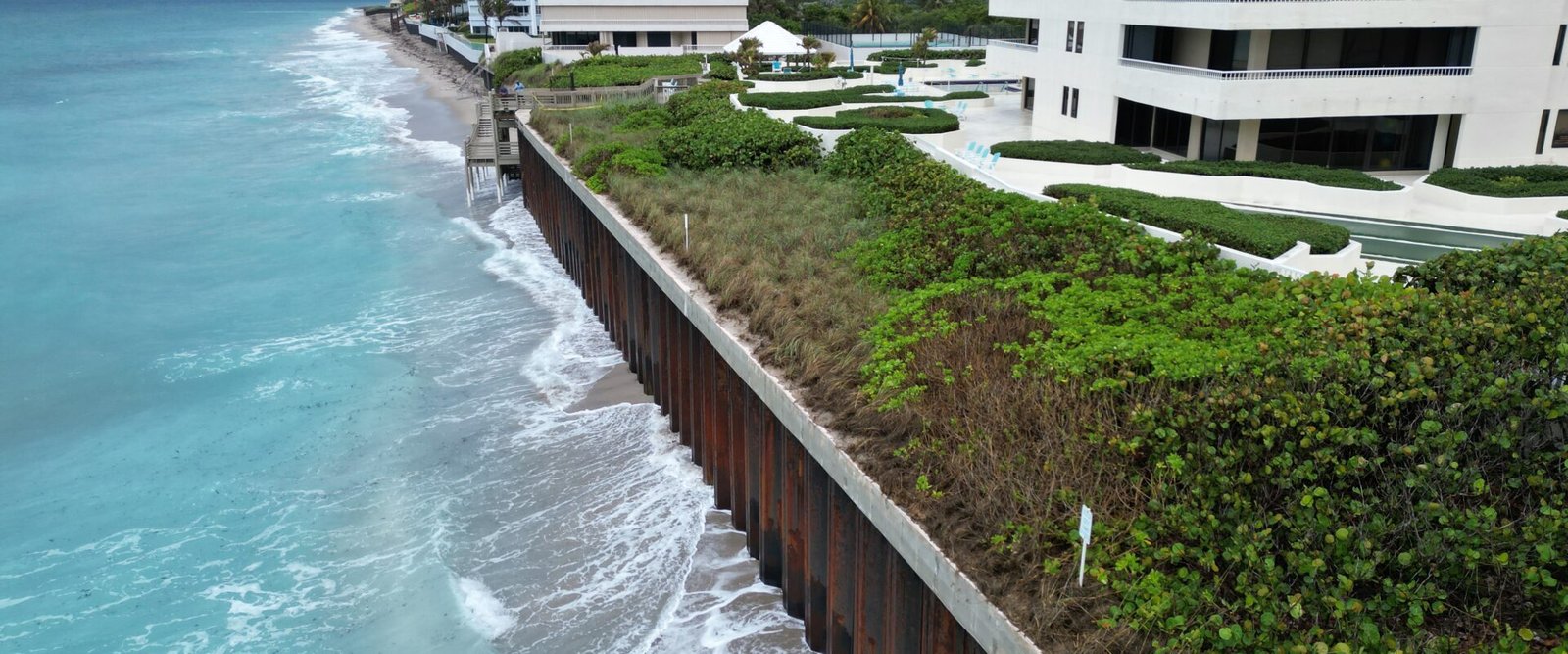
Seawall overtopping in Miami almost always comes down to one number: freeboard, the vertical gap between the top of the wall and the water at high tide. When that gap shrinks — from wall settlement, rising king tides, or a cap that was never built to the right elevation — water comes over the top even though the wall itself looks perfectly intact. A visual inspection that only checks for cracks and spalling will miss this every time; it takes an elevation survey against current tide and FEMA data to catch it.
This is one of the most common calls Souffront Contractors gets from waterfront homeowners and condo boards in Miami Beach, Key Biscayne, and along the Biscayne Bay canals: “the seawall isn’t broken, but the yard floods every king tide.” Nine times out of ten, it’s a freeboard problem, not a structural failure — but the two can look identical from the seawall side of the property line.
Key takeaways
- Freeboard is the vertical distance between the top of the seawall cap and the design high-water elevation — not the wall’s condition rating.
- Overtopping happens when freeboard runs out, either because the water rose (king tides, long-term sea level trends) or the wall settled.
- A seawall can score “Good” on a structural inspection and still flood every high tide if its freeboard is inadequate.
- Miami-Dade and most Biscayne Bay municipalities now require minimum seawall cap elevations well above older 1970s-era construction.
- Fixing chronic overtopping usually means raising the cap, adding a stem wall, or replacing the wall outright — not patching cracks.
What freeboard actually means
Freeboard is the elevation of the seawall cap minus the elevation of the design high-water level, usually expressed in feet relative to NAVD88. A wall with 18 inches of freeboard sits 18 inches above the water at a normal high tide. Once storm surge, wind setup, or a seasonal king tide eats into that margin, water goes over the cap.
Older seawalls around Biscayne Bay — many built in the 1960s and 1970s — were capped to whatever elevation was standard at the time, often 2.5 to 3.5 feet NAVD88. Sea levels and tidal datums have shifted since then, and in many neighborhoods that old cap height no longer clears today’s mean higher high water. The wall hasn’t changed. The water has.
Overtopping vs. structural failure — two different problems
Overtopping is a hydraulic problem: not enough vertical clearance. Structural failure is a mechanical problem: cracked panels, corroded tiebacks, voids behind the wall from soil loss. They can happen together, but a property can have one without the other.
- Overtopping only: water comes over the cap during high tides or storms, but the panels, cap, and tiebacks show no distress. The fix is elevation, not repair.
- Structural failure only: the wall is tall enough to clear the water but is cracking, leaning, or losing backfill through gaps and voids. The fix is repair or replacement of the wall components.
- Both at once: a wall with marginal freeboard that also has deteriorating panels or tiebacks — common on original-construction seawalls approaching 40–50 years old. This combination needs a full structural seawall inspection before any repair scope is written.
Why a wall that “looks fine” still floods
Long-term settlement
Seawalls settle a fraction of an inch a year as backfill consolidates and piles work under load. Over decades, that adds up to several inches of lost freeboard — enough to turn a dry yard into a wet one during king tide season, even with no visible cracking.
Cap elevation never matched current tidal data
A cap poured to a builder’s old benchmark, without checking it against current NOAA tidal datums or the county’s minimum elevation requirements, can be undersized from day one. This shows up almost exclusively on older, unpermitted, or owner-built repairs.
King tides and seasonal high water
Miami’s king tide season (typically September through November, with additional events around the new and full moons) pushes water levels 1 to 2 feet above the normal daily high tide. A wall with thin freeboard clears the water most of the year and overtops predictably during these windows.
Wave action and wake
On canals and open bay frontage, boat wake and wind-driven chop add momentary overtopping even when the still-water level is technically below the cap. This is a design consideration, not a defect — but it factors into how much freeboard a given property actually needs.
Signs your freeboard is the problem
- Water sheets over the cap during king tides but the wall shows no new cracking
- Yard flooding correlates tightly with the tide chart, not with rainfall
- Salt staining or a tide line visible on the landward face of the cap
- Neighboring properties with taller caps stay dry during the same events
- The seawall was built or last repaired more than 25–30 years ago with no elevation upgrade since
What Miami-Dade requires today
Miami-Dade DERM and most bayfront municipalities set minimum seawall cap elevations as part of the shoreline permitting process, and those minimums have moved upward as tidal data has been updated. A cap that met code when it was poured decades ago can sit below today’s required elevation for new construction or major repair. This matters directly for HOA boards and commercial owners: any permitted seawall repair or replacement triggers a review against current elevation requirements, not the standard the wall was originally built to.
How a structural engineer diagnoses overtopping
Diagnosing chronic flooding starts with a survey, not a hammer test. A Florida-licensed structural engineer measures the actual cap elevation at multiple points along the wall, compares it against current NOAA tidal benchmarks and the site’s FEMA base flood elevation, and checks that reading against the wall’s structural condition — panels, cap, tiebacks, and backfill. That combination tells you whether the fix is raising the wall, repairing it, or both.
For HOA boards and commercial waterfront owners, this same data set doubles as documentation for insurance, refinancing, and association compliance files — the kind of engineer-sealed record a board can hand to the next board.
Fixing chronic overtopping
Once freeboard is confirmed as the cause, the typical options are:
- Cap raise: adding height to the existing cap where the wall structure below is sound. The least invasive and least expensive option when it applies.
- Stem wall addition: a low concrete wall built on top of the existing cap to add clearance without disturbing the wall below.
- Full replacement: when the underlying panels, piles, or tiebacks are also deteriorated, replacement is designed to current elevation and code requirements in one project.
None of these should be scoped from a walk-by estimate. Each depends on the wall’s actual structural capacity to take added load, which only a proper engineering evaluation confirms.
Talk to a Florida-licensed engineer
If your seawall floods on a predictable tide schedule but shows no obvious damage, don’t assume it’s fine — and don’t assume it needs full replacement either. Souffront Contractors inspects, engineers, permits, and builds under one roof, so the same structural engineer who surveys your freeboard also designs the fix and sees it through Miami-Dade DERM permitting. Inspections are a fixed fee, typically $1,500–$3,000 depending on complexity, quoted upfront before any site visit. The contact form below reaches our office directly, and most inspection requests get a same-business-day response.
Frequently asked questions
What is freeboard on a seawall?
Freeboard is the vertical distance between the top of the seawall cap and the design high-water elevation. It’s a measure of how much clearance the wall has above the tide, separate from the wall’s structural condition — a wall can be structurally sound and still have inadequate freeboard.
Why does my seawall flood if the wall isn’t damaged?
Overtopping is usually caused by insufficient freeboard, not structural failure. Long-term settlement, an outdated cap elevation, or rising king tide levels can all reduce the effective clearance of a wall that shows no cracking, leaning, or other visible damage.
How much freeboard does a seawall need in Miami?
There’s no single number — it depends on the site’s tidal exposure, wind fetch, and Miami-Dade DERM’s current minimum cap elevation requirements for that shoreline segment. A structural engineer determines the required elevation from current tidal benchmarks and FEMA base flood data specific to the property.
What are king tides and why do they cause overtopping?
King tides are the highest predicted tides of the year, driven by the alignment of the sun and moon’s gravitational pull. In Miami, they typically peak between September and November and can push water 1 to 2 feet above a normal daily high tide — enough to overtop a wall that stays dry the rest of the year.
Can I just raise my seawall cap to stop flooding?
Sometimes. A cap raise works when the wall, piles, and tiebacks below are structurally sound and can carry the added height without extra reinforcement. If the underlying structure is deteriorated, a cap raise alone won’t hold, and replacement is the safer long-term fix. A structural engineer needs to confirm which situation applies before any work starts.
Does Miami-Dade require a permit to raise a seawall’s height?
Yes. Any work that changes a seawall’s height or structure requires permitting through Miami-Dade DERM and, in many cases, the local municipal building department. Permitted work is also evaluated against current minimum cap elevation requirements, which are often higher than the standard the original wall was built to.
Will homeowners insurance cover seawall overtopping damage?
Coverage varies by policy and carrier, and flood damage from overtopping is typically handled separately from standard homeowners coverage. An engineer-sealed inspection report documenting the wall’s condition and elevation is often required as part of an insurance claim or underwriting review — check with your carrier for specifics.
How do I know if I need an inspection or just a repair estimate?
If the wall is flooding but shows no visible cracking, leaning, or spalling, start with a structural inspection, not a repair quote — the cause is likely elevation, not damage, and a repair estimate alone won’t diagnose that. An inspection gives you the actual freeboard measurement and structural condition together, which is what determines the right fix.
Related from Souffront Contractors: HOA and condo board compliance reports and foundation repair — all delivered by the same Florida-licensed structural engineering and marine construction team. Call (877) 420-7220.
About Souffront Contractors Inc.: a Florida-licensed structural engineering and marine construction firm serving Miami-Dade, Broward, and Palm Beach counties. Talk to a seawall repair contractor who engineers, permits, and builds the fix — see our seawall contractors page or call (877) 420-7220.
Got a seawall or structural question?
Five fields. Same business day from a Florida-licensed engineer, routed into our dispatch CRM in real time.
- Same business dayAcknowledgment from a Florida licensed engineer — Mon–Fri 8 AM–5:30 PM.
- Engineer-sealed reportAccepted by carriers, building departments, and real-estate transactions.
- Fixed-fee proposalNo hourly billing. Repair scope priced line-by-line.