
What Permits Does Your Miami Seawall Project Need?
Confused about seawall permit requirements in Miami? Here's which jobs need Miami-Dade DERM, Florida DEP, or Army Corps sign-off — and what happens if you skip one.
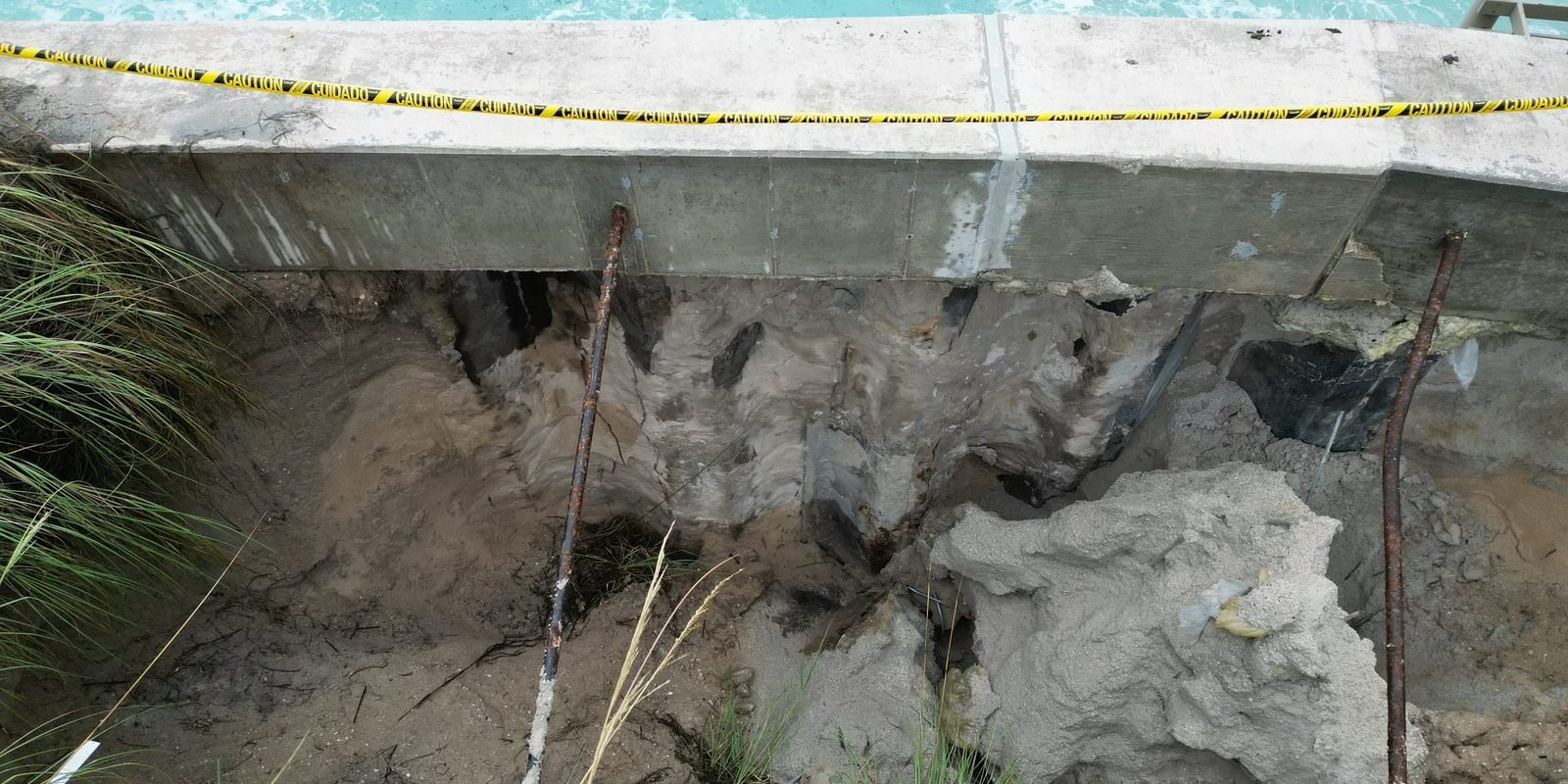
Seawall permit requirements in Miami depend on exactly what you’re building and where the work touches the water. A cap repair that stays above the mean high-water line usually only needs a Miami-Dade DERM permit. Rebuild the wall, drive new piles, or place rock below the waterline on a canal-front lot in Coconut Grove or along Biscayne Bay, and you’re likely looking at Florida DEP and the U.S. Army Corps of Engineers too. Souffront Contractors gets asked almost every week which agency actually governs a given seawall job — here’s the breakdown we give boards and homeowners on site.
Key takeaways
- Most above-water seawall cap and panel repairs in Miami-Dade need only a Miami-Dade DERM permit.
- Rebuilding a wall, driving new piles, or disturbing submerged land usually adds a Florida DEP Environmental Resource Permit.
- Work near a federally maintained channel or navigable water pulls in the U.S. Army Corps of Engineers (USACE) under Section 10/404 review.
- These three permits are usually reviewed at the same time, not one after another — plan the timeline for all of them, not just the easiest one.
- Building without the right permit can get you a DERM stop-work order and a Notice of Violation before the first panel is poured.
Miami-Dade DERM: the permit almost every job touches
If you own waterfront property in Miami-Dade, Miami-Dade DERM is the agency you’ll deal with first. DERM administers the county’s Coastal Zone Management ordinance, and it reviews almost every seawall job — cap replacement, panel patching, new tiebacks, even dock attachments to an existing wall.
On a typical job we see this play out the same way: the cap is cracked, the owner wants it patched, and DERM wants drawings showing exactly what’s being replaced, what material, and whether the footprint changes. If the repair stays within the existing wall’s footprint and above the mean high-water line, DERM alone can often get you to a permit. Step below that line — new riprap, a new toe, a deeper pile — and DERM is no longer the only reviewer.
Florida DEP: when the state gets involved
A Florida Department of Environmental Protection Environmental Resource Permit (ERP) comes into play once a project touches sovereignty submerged lands — the lake and tidal bottom the state holds in trust. New seawall construction, full replacement of an existing wall, riprap placed below the water line, and any dredge-and-fill work generally trigger an ERP review, in addition to DERM.
DEP is also the agency that cares about what the work does to seagrass, mangroves, and water quality nearby. If your property has mangroves at the toe of the wall or seagrass just offshore, expect DEP to ask for a survey before they’ll sign off.
The Army Corps: federal water, federal rules
The U.S. Army Corps of Engineers (USACE), Jacksonville District has jurisdiction over navigable waters of the United States under Section 10 of the Rivers and Harbors Act, and over the discharge of fill material under Section 404 of the Clean Water Act. For most residential canal-front seawalls, this means USACE gets involved when the canal connects to a federally recognized navigable waterway — the Intracoastal Waterway is the obvious example — or when the project involves fill below the water line.
USACE reviews can move on a different clock than DERM and DEP. On straightforward residential repairs, many projects qualify for a nationwide permit with a short notification period. Full seawall reconstruction or anything near a federal channel can mean an individual permit, which takes longer and asks for more documentation.
A field example: replacing a wall near Biscayne Bay
Here’s what this actually looks like on site. A canal-front home near Key Biscayne has a seawall with a rotated panel, a cracked cap, and visible soil loss at the toe. The owner wants a full rebuild, not another patch. That scope — new piles, new tiebacks, new panels below the waterline — touches all three agencies at once: DERM for the local coastal zone permit, DEP for the ERP because the work disturbs submerged land, and USACE because the canal ties into tidal, navigable water.
We submit the same engineering drawings to all three agencies in parallel rather than waiting on one before starting the next. That alone can save a board or homeowner six to ten weeks compared with submitting sequentially, which is the mistake we see most often when someone tries to self-permit a seawall construction project.
What happens if you skip a permit
DERM runs active code enforcement on Miami-Dade’s waterfront. If a contractor starts driving piles or pouring a cap without an open permit, DERM can issue a stop-work order and a Notice of Violation on the spot — and that notice attaches to the property, not just the contractor. We’ve walked into jobs where a prior unpermitted repair held up the sale of the house years later. If you’re already dealing with a notice, our violation response team handles the corrective engineering and the agency correspondence to close it out.
How Souffront handles multi-agency seawall permitting
Because Souffront is both the seawall repair engineer and the construction company, the same Florida-licensed structural engineer who inspects the wall also prepares the drawings DERM, DEP, and USACE each need — so you’re not paying three different firms to redraw the same wall three different ways. On larger jobs where a special inspector is required during construction, that’s coordinated the same way, under one point of contact instead of a separate hire.
Talk to a Florida-licensed engineer
If you’re not sure which of these three agencies your project needs, send us the address and a few photos. We’ll tell you straight — DERM only, or DERM plus DEP and USACE — and give you a fixed-fee quote for the inspection and the drawings before anyone steps on site. Most clients hear back the same business day. The form below gets it started.
Frequently asked questions
Do I need a permit to repair my seawall in Miami?
Almost always, yes. Miami-Dade DERM requires a permit for seawall repairs, including cap replacement and panel patching, even when the work stays above the water line. The permit requirement doesn’t depend on the size of the repair — it depends on whether you’re touching the wall at all.
How do I know if my project needs Florida DEP approval?
If the work disturbs submerged land — new piles below the water line, riprap placement, or full wall replacement — Florida DEP typically requires an Environmental Resource Permit in addition to the county permit. A repair that stays entirely above the mean high-water line usually does not need DEP review.
When does the Army Corps of Engineers get involved in a seawall project?
USACE reviews projects that touch navigable waters of the United States or involve fill below the water line under Section 10 of the Rivers and Harbors Act and Section 404 of the Clean Water Act. In Miami-Dade, this most often applies to canal-front and bay-front properties connected to a federally recognized waterway, including the Intracoastal Waterway.
Can DERM, DEP, and USACE review my permit at the same time?
Yes, and on a full seawall rebuild that’s the faster route. Submitting the same engineering drawings to all three agencies in parallel, rather than waiting for one approval before starting the next, can cut weeks off the total permitting timeline.
What happens if I build a seawall without the required permit?
Miami-Dade DERM can issue a stop-work order and a Notice of Violation, which attaches to the property record. Unpermitted work can also complicate a future sale, since buyers and title companies routinely check for open code enforcement cases on waterfront parcels.
How long does seawall permitting take in Miami-Dade?
A straightforward repair with only a DERM permit can take a few weeks. A full rebuild requiring DERM, DEP, and USACE sign-off typically runs several months, depending on agency workload and whether the site has mangroves or seagrass nearby that require additional survey work.
Does a dock attached to my seawall need its own permit?
Usually yes. A dock attachment is reviewed separately from the seawall itself, and depending on size and location it can also require DEP and USACE sign-off, particularly if it extends into a navigable channel.
Who prepares the drawings these agencies require?
A Florida-licensed structural engineer prepares the sealed drawings DERM, DEP, and USACE each require for a seawall permit application. Having the same engineer handle inspection, design, and the permit set — rather than three separate firms — keeps the drawings consistent across all three reviews.
Seawall permitting in South Florida runs through the municipal building department plus Miami-Dade DERM or Broward County environmental licensing, and the Florida DEP and Army Corps where the work reaches the water.
About Souffront Contractors Inc.: a Florida-licensed structural engineering and marine construction firm serving Miami-Dade, Broward, and Palm Beach counties. Hire a trusted seawall contractor in Fort Lauderdale and throughout Broward County — see our seawall contractors page or call (877) 420-7220.
Got a seawall or structural question?
Five fields. Same business day from a Florida-licensed engineer, routed into our dispatch CRM in real time.
- Same business dayAcknowledgment from a Florida licensed engineer — Mon–Fri 8 AM–5:30 PM.
- Engineer-sealed reportAccepted by carriers, building departments, and real-estate transactions.
- Fixed-fee proposalNo hourly billing. Repair scope priced line-by-line.