
Seawall Repair Bid Comparison: Why Low Bids Cost More
Comparing seawall repair bids for your Miami-Dade property? See why the lowest number often costs the board more, and how to spot gaps before signing.
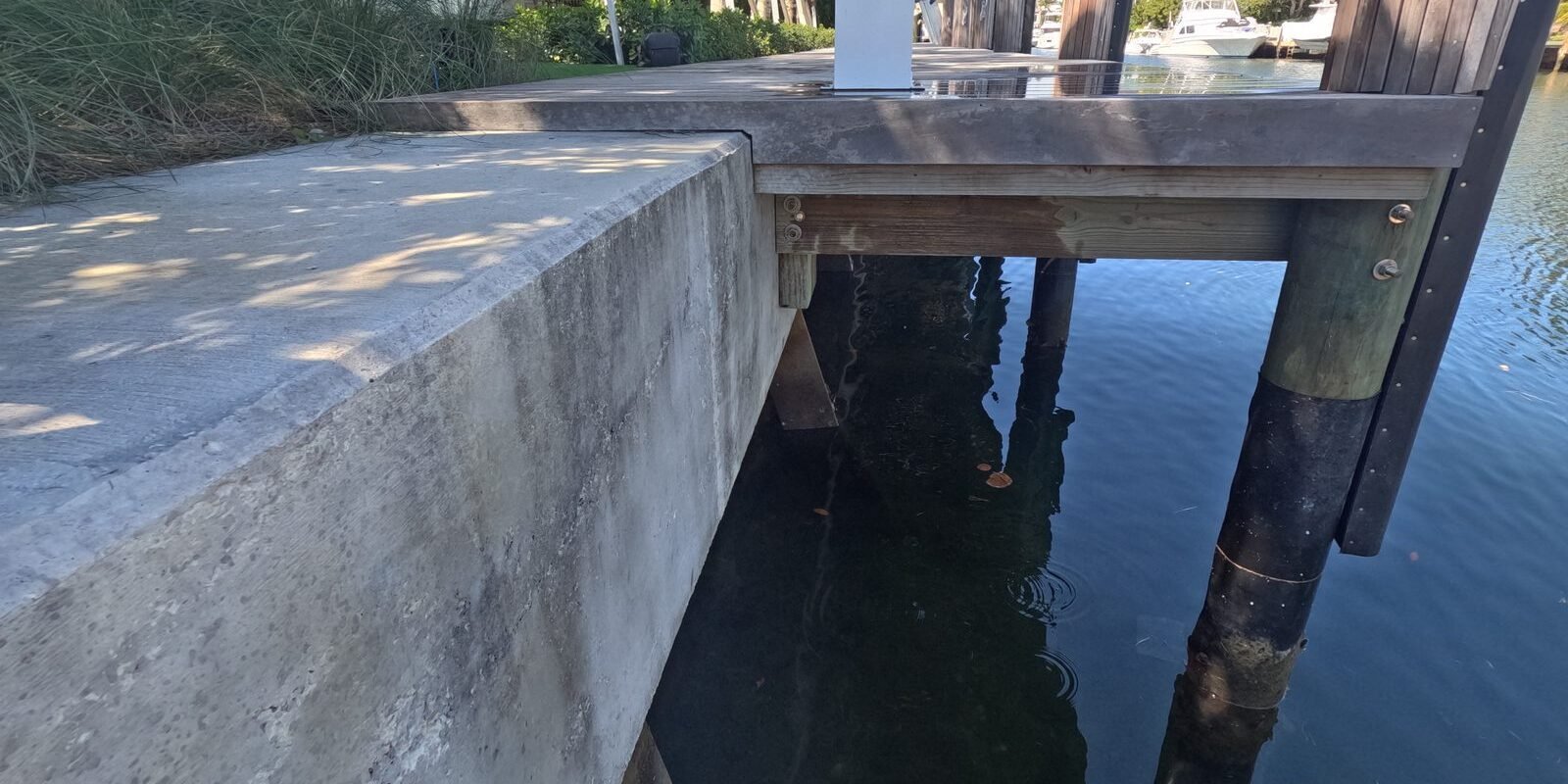
In a seawall repair bid comparison, the lowest number usually wins the vote and loses the board money later — through change orders, allowances, and scope gaps the low bidder never priced in the first place. Souffront Contractors sees this pattern constantly on canal-front and bay-front properties from Coral Gables to Key Biscayne: three bids come in, the board picks the cheapest, and six months later that project costs more than the highest original bid did.
Key takeaways
- The lowest seawall bid is often low because it leaves out scope, not because the contractor is more efficient.
- Common gaps: undersized tieback counts, no allowance for buried debris or soil contamination, vague cap-replacement quantities, and thin permitting line items.
- Change orders on an underpriced bid routinely add 15%–40% to the contract total by the time the project closes out.
- A board comparing bids without someone who reads structural drawings is comparing dollar totals, not comparable scopes of work.
- An independent Florida-licensed structural engineer reviewing bids before award catches most of these gaps in a few hours, not a few change orders in.
Why the numbers don’t mean what the board thinks they mean
Three contractors can look at the same seawall and submit three very different numbers — not because they disagree about the wall, but because they’re pricing three different projects. One assumes 24 tiebacks; another assumes 18 and plans to “true up” the count once work starts. One includes DERM and city permitting fees; another leaves permitting as an owner cost buried in a footnote. To a board without an engineer reading the fine print, all three bids look like apples-to-apples numbers on a spreadsheet.
This is the core problem with unassisted bid comparison: a lower total is only a good deal if the scope behind it is equal. Most of the time, it isn’t.
Where low bids get made up later
The gap between a low bid and the final invoice almost always shows up in the same handful of places:
- Tieback and anchor counts — underspecifying the number or depth of tiebacks to shave cost, then billing the correct count as a “differing condition.”
- Allowances that were never realistic — a token line item for debris removal or soil stabilization that gets exhausted in week one.
- Cap and panel quantities — measuring optimistically, then remeasuring “in the field” once demolition starts.
- Permitting and agency coordination — treated as a pass-through cost instead of a scoped line item, so delays and resubmittals become the owner’s problem and the owner’s bill.
- Site access and staging — assuming easy barge or crane access on a canal lot that doesn’t have it.
None of these require a dishonest contractor. A busy contractor pricing fast, working from limited information, or trying to win the job against three competitors will price optimistically. The board just has no way to see it before the contract is signed — unless someone on their side is reading the bid the way an engineer reads a drawing.
A canal-front example the pattern fits
A condo association on a Biscayne Bay-adjacent canal in Coral Gables collects three seawall repair bids. The low bid comes in nearly 30% under the other two. The board — volunteers, none of them engineers — takes the savings. Once work starts, the contractor documents “unforeseen” soil conditions requiring more tiebacks than bid, a cap section that needs full replacement instead of patching, and a permitting delay caused by an incomplete submittal. Each change order is individually defensible. Combined, they erase the original savings and add real project time. No one on the board’s side ever reviewed the original bid against the engineering scope to see the gaps coming.
What an engineer catches before the contract is signed
This is the exact problem engineer-led construction management for seawall projects is built to solve. Acting as the board’s owner’s representative, a Florida-licensed structural engineer reviews competing bids against the actual scope of work before any contract is awarded — not after the change orders start arriving. That review typically includes:
- Confirming tieback, pile, and panel quantities against the structural drawings, not the bidder’s summary sheet
- Flagging allowances that are unrealistically low for the site conditions
- Checking that permitting, agency coordination, and inspection costs are actually in the number
- Normalizing bids so the board is comparing the same scope across all three contractors, line by line
- Writing (or tightening) the scope of work and bid documents up front, so bids come back comparable in the first place
Once the project is underway, the same owner’s representative reviews submittals and shop drawings, observes work at the milestones that matter — tieback installation, cap pour, backfill — reviews pay applications against work actually completed, and evaluates change orders to tell the board which ones are a real differing condition and which ones are a bid gap the board is now being asked to cover.
The role is oversight, not another set of hands on the tools
An owner’s representative observes, reviews, verifies, and advises — the engineer does not supervise the contractor’s means, methods, or jobsite safety, and does not guarantee the contractor’s work. The value is a second, independent set of eyes reading drawings and pay applications the way the board can’t, and a single point of contact the board can call instead of five volunteers trying to interpret a change order on their own.
Because Souffront both inspects and engineers seawalls and also performs seawall construction, any interest in bidding the repair work itself is disclosed to the board in writing before the engagement starts. A board can also engage Souffront for bid review and oversight only, with no construction role at all. Handled openly, that’s a straightforward choice for the board to make going in — not a conflict discovered later.
A short checklist before the board signs anything
- Do the tieback, pile, and panel quantities in the bid match the engineering drawings, or the bidder’s own estimate?
- Are debris removal, soil conditions, and permitting priced as real line items, or buried in a small allowance?
- Does the bid include the specific site — barge access, crane staging, seawall length — or a generic template?
- Who on the board’s side is reading these bids against the structural drawings before a vote?
If the honest answer to that last question is “no one,” that’s the gap a seawall contractor’s low number is counting on.
Talk to a Florida-licensed engineer
Whether your board needs a full seawall repair bid reviewed before award or ongoing oversight from scope through closeout, Souffront Contractors scopes and quotes construction management per project, before work starts — never as an add-on guess. Call (877) 420-7220 or use the form below to get a Florida-licensed structural engineer on the board’s side of the table.
Frequently asked questions
Why does the lowest seawall bid usually end up costing more?
The lowest bid is frequently low because it underprices scope — fewer tiebacks than the wall needs, thin allowances for soil conditions or debris, or permitting treated as an afterthought. Those gaps surface as change orders once construction starts, and by closeout the “savings” from the low bid are often gone.
How can a condo or HOA board compare seawall bids fairly?
Bids are only comparable if they price the same scope. A structural engineer reviewing each bid against the drawings — tieback counts, panel and cap quantities, permitting, access — before the board votes is the only reliable way to normalize three different contractors’ numbers into one comparison.
What is an owner’s representative on a seawall project?
An owner’s representative, also called a construction manager or the board’s engineer, is the board’s single point of contact from bid review through project closeout. The role includes reviewing bids and submittals, observing work at key milestones, checking pay applications, and evaluating change orders on the board’s behalf.
Does hiring an owner’s representative mean Souffront can’t also bid the repair work?
A board can engage Souffront for bid review and oversight only. If Souffront’s interest in also bidding the construction work comes up, that interest is disclosed in writing before the engagement starts — the board decides which arrangement it wants.
How much does construction management or bid review cost?
Construction management and bid-review services are scoped and quoted per project before work begins — there is no fixed rate, since the scope depends on the wall’s condition, project size, and how many milestones need site observation.
What’s a realistic sign that a seawall bid is underpriced?
Watch for allowances that seem too small for debris removal or soil conditions, tieback or panel counts that are lower than what the engineering report calls for, and permitting or agency coordination fees that aren’t itemized at all. Any of these is where a later change order is likely to originate.
Does this apply to seawall projects outside Coral Gables and Key Biscayne?
Yes. The bid-gap pattern is the same on any Miami-Dade or Broward waterfront project — Biscayne Bay corridor properties, canal-front lots, and barrier-island associations all see the same low-bid-then-change-order dynamic, since it comes from how the bid was scoped, not the specific location.
Who actually builds the tieback and cap systems Souffront’s engineers evaluate in these bids?
Souffront Contractors is a licensed seawall contractor as well as an engineering firm, so the same team reviewing a competitor’s bid has built these systems directly — which is why the review looks for the specific gaps that show up in the field, not just generic red flags.
Related from Souffront Contractors: HOA and condo board compliance reports — all delivered by the same Florida-licensed structural engineering and marine construction team. Call (877) 420-7220.
Souffront works directly with the HOA board, the condo association and the property manager or CAM, delivering the documentation a board needs to act and to show it acted.
About Souffront Contractors Inc.: a Florida-licensed structural engineering and marine construction firm serving Miami-Dade, Broward, and Palm Beach counties. Book a seawall inspection in Miami or anywhere on the South Florida waterfront — see our seawall contractors page or call (877) 420-7220.
Got a seawall or structural question?
Five fields. Same business day from a Florida-licensed engineer, routed into our dispatch CRM in real time.
- Same business dayAcknowledgment from a Florida licensed engineer — Mon–Fri 8 AM–5:30 PM.
- Engineer-sealed reportAccepted by carriers, building departments, and real-estate transactions.
- Fixed-fee proposalNo hourly billing. Repair scope priced line-by-line.