
Why Boynton Beach Seawalls Crack Faster Than You Think
Canal walls in Boynton Beach face boat wakes, tidal swings, and aging cap slabs. A Florida-licensed structural engineer explains what fails first and what repairs cost.
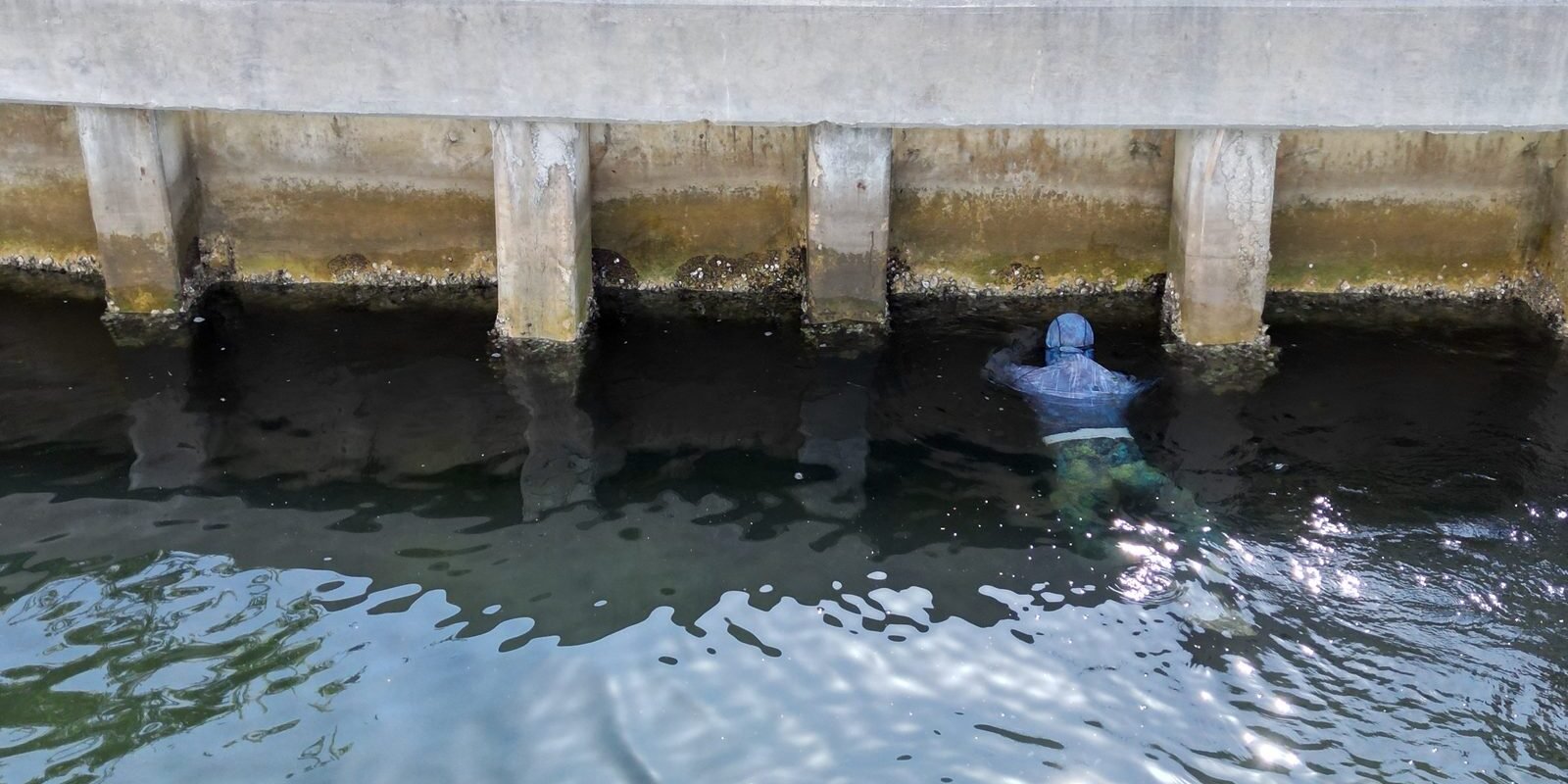
Seawall repair in Boynton Beach moves faster from “monitor it” to “replace it” than most homeowners expect — and the reason is usually not age alone. Canal-front walls here take daily punishment from boat wakes, tidal cycling, and soil that never fully dries out. When a cap slab starts cracking or a panel tilts, the question is not whether to act but how much is already gone. Souffront Contractors engineers seawall repairs and new construction across Palm Beach County, and what we see on Boynton Beach canals follows a pattern that is worth knowing before you get a repair bid.
Key takeaways
- Boat wakes on Boynton Beach canals cause repeated lateral pressure — the same load cycle that loosens tiebacks over time.
- Cap slab cracks are often the first visible sign of a bigger problem: voids behind the wall, corroded tiebacks, or panel rotation at the toe.
- Moderate seawall repairs typically run $100–$250 per linear foot; full panel or tieback replacement can reach $400–$600 per linear foot. These are repair ranges, not inspection fees.
- A seawall inspection is a flat fee — typically $1,500–$3,000 depending on complexity — quoted before any site visit.
- Boynton Beach canal work may require permits from the City of Boynton Beach, Palm Beach County, and in some cases the Florida Department of Environmental Protection.
What actually damages Boynton Beach canal walls
Spend a morning on any Boynton Beach canal and you will see the problem yourself: boat traffic generates wakes that push water against the wall face, then pull it back. That push-pull cycle loads the tieback anchors — the buried rods or cables that hold the wall against soil pressure — in a way that slow tidal action alone never does. Over ten or fifteen years, those anchor connections work loose.
Add to that South Florida’s organic muck soils. Behind a canal wall, saturated muck holds moisture and slowly migrates through panel joints or under the cap. When it goes, it leaves a void. The cap slab above the void has nothing to bear on. Cracks open. Then the slab drops, and water gets direct access to the anchor hardware.
Boynton Beach also sits in a tidal zone where canal levels swing with both the Atlantic tides and the control structures that manage inland water levels. That means the soil behind the wall cycles between saturated and partially drained — expanding and contracting against the panels repeatedly. Concrete panel walls installed in the 1980s and 1990s, common throughout the city’s older canal neighborhoods, were designed for a service life that many have already reached.
Reading the signs on your cap slab
The cap slab runs along the top of the wall — it ties the panels together and anchors the walers that distribute load. When the cap starts to show distress, the wall is telling you something specific. Here is what each sign usually means:
- Longitudinal cracks running parallel to the canal: The cap is bending because panels below it have deflected. The wall is moving.
- Transverse cracks crossing the cap: Differential settlement. One section is sinking faster than its neighbor, often because a void has formed on one side.
- Rust staining on the cap face: The rebar inside the cap is corroding. Salt water has penetrated the concrete cover. The cap is weakening from the inside.
- Spalling along the waterline: Freeze-thaw is not the culprit here — in South Florida, chloride attack and carbonation are. The concrete is losing its alkaline protection and the steel is expanding as it rusts.
- A cap that sounds hollow when you tap it: The grout or concrete below the cap has voided out. That hollow section carries no load.
None of these are cosmetic. Each one is a structural indicator. A Florida-licensed structural engineer reads them together — a single crack in isolation is different from a crack plus staining plus a hollow cap section in the same two-foot span.
How a seawall inspection works in Boynton Beach
A proper seawall inspection is not a walk-and-talk. On a Boynton Beach canal wall, the engineer looks at the full picture: cap condition, panel face, any visible panel joints, the water side at the waterline, and — critically — what is happening below the waterline at the panel toe.
Below-waterline access matters because the toe of a panel is where scour from boat wakes concentrates. Soil loss at the toe means the panel has less passive resistance holding it in place. You cannot see that from the seawall cap. An underwater dive inspection or a pole camera gives the engineer data that a visual-only inspection misses entirely.
The inspection fee is a flat fee, quoted upfront before any site visit — typically $1,500–$3,000 depending on the complexity of the work: how long the wall is, whether a below-waterline inspection is needed, how many structural components are present, and the detail level of the report. It is never priced as a rate tied solely to wall length. The report comes back engineer-sealed, which is what your permit application and your insurance carrier will ask for.
What seawall repairs cost in Boynton Beach
Repair costs depend entirely on what is wrong. A seawall repair that addresses only cap spalling and injects voids behind the wall runs far less than one that requires new tiebacks and panel replacement. General industry ranges for South Florida:
- Cap repair and void grouting: Roughly $100–$250 per linear foot for moderate work. This covers crack repair, grout injection behind the wall, and cap resurfacing where the concrete is still structurally sound.
- Tieback replacement: When anchors have corroded or pulled free, new tiebacks must be drilled and grouted. This work is priced per anchor and can push total project cost toward the higher end of the moderate range.
- Full panel and tieback replacement: When panels have rotated, cracked through, or lost section, full replacement runs roughly $400–$600 per linear foot. This is a major project involving sheet pile driving or panel installation, new deadman anchors, and a new cap pour.
These are general industry ranges, not a Souffront quote. Your actual cost depends on the engineer’s findings, the site access, soil conditions, and what the permit requires. Any bid you receive without an engineer’s report behind it is a guess.
Permits and agencies you will deal with
Boynton Beach canal walls sit within a layered permit jurisdiction. Depending on where the wall is — inlet-adjacent, in a navigable waterway, or in a controlled drainage canal — you may need approval from:
- City of Boynton Beach Building Department — structural permit for the repair or replacement work.
- Palm Beach County — for work in county-managed canals or rights-of-way along the wall.
- Florida DEP — coastal and wetland jurisdiction where the canal connects to navigable water. The Florida Department of Environmental Protection regulates work that affects state waters.
- U.S. Army Corps of Engineers — if the canal is a navigable waterway under federal jurisdiction, a Section 404 or Section 10 permit may apply.
Missing a permit is not a paperwork problem — it is a stop-work order problem. It is also a resale problem. Unpermitted seawall work surfaces in title searches and kills closings. A seawall contractor who tells you the permit is optional is not someone you want building a retaining structure next to your foundation.
When the board or HOA owns the wall
Many Boynton Beach canal-front communities — townhome associations, waterfront HOAs — share a seawall that runs behind multiple units. The association owns the wall; individual owners live with the consequences. A board running a seawall project without an engineer in their corner is in a difficult position.
The contractor answers to himself. Change orders arrive with technical language the board cannot evaluate. Work gets done out of sequence — tiebacks not fully torqued before backfill goes in, for example — and no one was on site to catch it. The board approves a pay application because the work looks complete from the top of the wall.
This is exactly what engineer-led construction management is designed to prevent. As owner’s representative, a Florida-licensed structural engineer writes the scope and bid documents, reviews submittals, observes the work at the milestones that matter — tieback installation, cap pour, backfill — reviews each pay application against what is actually complete, and evaluates change orders to separate legitimate differing conditions from bid gaps the board is now being asked to fund. The board gets one point of contact who reads the drawings. Construction management on a seawall project is scoped and quoted upfront, before the project starts.
Souffront both provides this oversight service and performs seawall construction. If a board engages us for oversight and we have an interest in bidding the repair work, that is disclosed in writing before any agreement is signed. A board can engage Souffront for oversight only. Transparency on this point is not optional — it is the basis on which the oversight relationship works.
Choosing a seawall contractor in Boynton Beach
Not every seawall contractor who works in Palm Beach County has experience with the specific conditions of Boynton Beach’s canal systems. Here is what to verify before you sign anything:
- Florida contractor license — verify it active on the DBPR website. Marine construction work requires a specific license class.
- Engineer involvement — the design should come from a Florida-licensed structural engineer, not a salesperson with a price-per-foot table.
- Permit history — ask which permits the contractor pulled on the last three comparable jobs. A contractor who cannot name the permit numbers does not pull permits.
- Comparable project experience — Boynton Beach canal walls are not the same as oceanfront revetments or marina bulkheads. Ask specifically about canal-wall tieback work in Palm Beach County.
- References from association clients — if the board owns the wall, ask for references from other HOA or condo boards, not just homeowners.
Talk to a Florida-licensed structural engineer
If your Boynton Beach seawall has visible cap cracks, staining, or a panel that looks like it has shifted, the engineer’s report is the first document you need — not a contractor’s bid. Souffront Contractors provides engineer-sealed seawall inspections and marine construction across Palm Beach County at a flat fee quoted before any site visit. Call (877) 420-7220 or use the form below to request same-business-day contact.
Frequently asked questions
What does seawall repair cost in Boynton Beach?
Moderate repairs — cap work, void grouting, minor panel patching — typically run $100–$250 per linear foot for South Florida canal walls. Full panel and tieback replacement, which is what a significantly deteriorated wall usually needs, runs roughly $400–$600 per linear foot. These are general industry ranges. Your actual cost depends on the engineer’s findings, site conditions, and permit scope — not on a bid written before anyone has looked at the wall.
How much does a seawall inspection cost in Boynton Beach?
A seawall inspection is a flat fee, not a per-linear-foot rate. For most residential canal-front properties in Boynton Beach, expect a range of $1,500–$3,000 depending on the complexity of the inspection: wall length, whether a below-waterline dive is needed, number of structural components, and the report scope. The fee is quoted upfront before any site visit, and the inspection report comes back engineer-sealed.
Do boat wakes actually damage seawalls?
Yes, and on Boynton Beach’s narrower canals the effect is more concentrated than on open water. Each wake pushes a lateral load against the wall face, then pulls back as it recedes. That cycle — applied hundreds of times a week on a busy canal — fatigues the tieback connections and loosens the anchor hardware over time. It also accelerates soil loss at the panel toe through scour. Wake erosion is one of the primary reasons canal walls in this area age faster than oceanfront structures.
What permits do I need to repair a seawall in Boynton Beach?
At minimum, a structural permit from the City of Boynton Beach Building Department. Depending on the canal’s classification, you may also need approval from Palm Beach County, the Florida Department of Environmental Protection, or the U.S. Army Corps of Engineers. The permit requirement is not optional — unpermitted seawall work creates title issues and stop-work exposure. A licensed marine contractor handles the permit applications; the engineer’s sealed drawings are what the building department reviews.
Can I just repair the cap slab without touching the panels?
Sometimes, but only if the engineer’s inspection confirms the panels and tiebacks are still structurally sound. Repairing a cap on top of a wall with failed tiebacks or rotated panels is cosmetic work — it looks better but changes nothing about the wall’s structural condition. The cap repair will crack again, usually faster than the first time, because the underlying movement continues. An engineer’s report tells you which components are genuinely repairable and which ones need replacement.
How long does a seawall repair project take in Boynton Beach?
Cap repairs on a structurally sound wall can be completed in one to two weeks after permits are in hand. Tieback replacement on a 100-foot wall typically runs two to four weeks. Full panel replacement is a larger job — plan for four to eight weeks of active construction, plus the permit timeline, which in Palm Beach County can run four to twelve weeks depending on the agencies involved. Starting the engineer’s inspection and permit process early is the only way to avoid a long gap between “decision to repair” and “construction complete.”
What is an owner’s representative on a seawall project?
An owner’s representative — sometimes called a construction manager or the board’s engineer — is a licensed professional who works for the property owner or association, not the contractor. On a seawall project, the owner’s representative writes the bid documents, runs the bid process, reviews submittals and shop drawings, observes work at key milestones, reviews pay applications, and evaluates change orders to confirm they are legitimate. The role exists because the contractor answers to himself; the owner’s representative answers to the board. Construction management on a seawall project is scoped and quoted per project, before work begins.
How often should a Boynton Beach canal seawall be inspected?
For canal-front walls exposed to regular boat wake traffic, a structural inspection every three to five years is a reasonable baseline. After a major storm, an unusually high-wake event, or any visible change in the wall — new cracks
Related from Souffront Contractors: HOA and condo board compliance reports — all delivered by the same Florida-licensed structural engineering and marine construction team. Call (877) 420-7220.
About Souffront Contractors Inc.: a Florida-licensed structural engineering and marine construction firm serving Miami-Dade, Broward, and Palm Beach counties. Arrange a seawall inspection in Broward County with same-week scheduling — see our seawall contractors page or call (877) 420-7220.
Got a seawall or structural question?
Five fields. Same business day from a Florida-licensed engineer, routed into our dispatch CRM in real time.
- Same business dayAcknowledgment from a Florida licensed engineer — Mon–Fri 8 AM–5:30 PM.
- Engineer-sealed reportAccepted by carriers, building departments, and real-estate transactions.
- Fixed-fee proposalNo hourly billing. Repair scope priced line-by-line.