
How Do You Repair a Seawall at an Occupied Condo?
Seawall repair at an occupied condo means managing residents, access, noise, and permits at once. Here's how a structural engineer keeps it from becoming a board crisis.
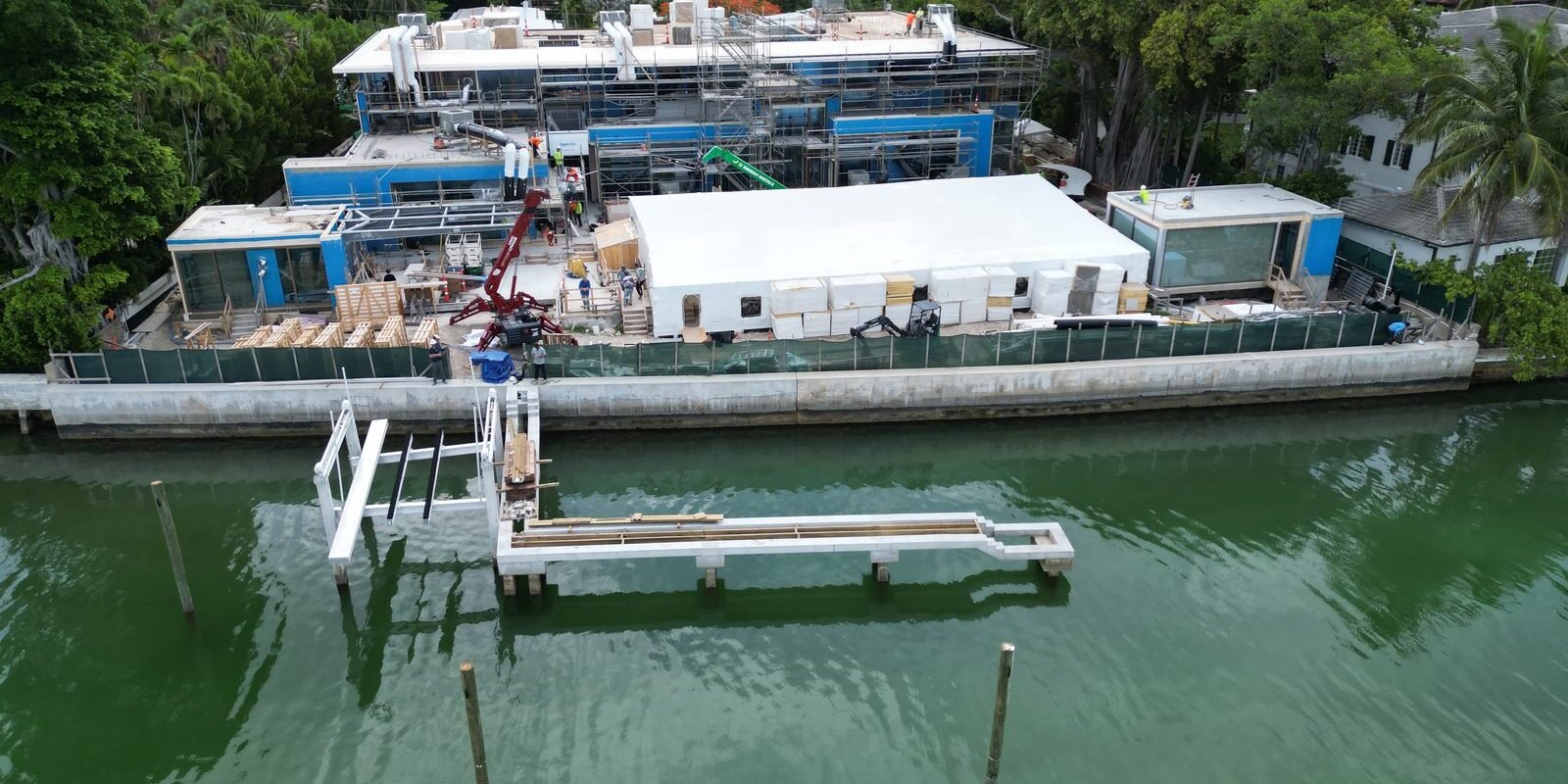
Repairing a seawall at an occupied condominium is a different problem than repairing one at a vacant lot. The wall needs fixing — but 80 units are still sleeping, parking, and launching kayaks while you do it. Souffront Contractors manages seawall repair at occupied South Florida condo properties as a single point of contact: one engineer-led construction management team that handles scope, permits, resident coordination, and site observation from start to closeout.
Key takeaways
- Seawall repair at an occupied condo requires a written access and noise plan before the first crew arrives — not after the first complaint.
- Miami-Dade and Broward municipalities set work-hour restrictions; a seawall repair schedule that violates them triggers stop-work orders and delays the whole project.
- A Florida-licensed structural engineer on the board’s side can review pay applications and change orders so the board isn’t approving invoices blind.
- The most disruptive phases — cap demolition, tieback drilling, concrete pour — can be sequenced to minimize back-to-back noise days for residents.
- Documented site observations at key milestones protect the board if a resident or future buyer later questions the quality of the work.
What actually goes wrong when no one manages the process
Picture this. A seawall contractor shows up Monday morning and starts jackhammering the cap at 7 a.m. By 8 a.m. the property manager has twelve voicemails. By 9 a.m. the board president is fielding calls from the unit owner whose balcony is directly above the work zone. By noon someone has called the city.
None of this had to happen. The contractor did nothing wrong under the permit. But the board had no access plan, no noise notice, and no sequencing agreement in writing. The repair itself was fine. The project was a disaster.
This is the gap that owner’s representative services fill. The board needs someone whose job is to think through these problems before the crew is on site — not after the complaints start.
The access problem: seawalls and the people who live above them
A seawall runs along the property’s water edge. At a condo, that same edge is often the most valuable amenity — pool deck, dock, boat slips, fishing pier, sunset terrace. Repair work closes all of it, sometimes for weeks.
Access coordination at an occupied condo typically involves:
- Pool and amenity closure notices sent to all units at least 5–7 days before work begins, with an expected reopening date
- Dock and slip closures communicated individually to boat owners — they need time to move vessels
- Parking for contractor vehicles and equipment — a concrete pump truck needs somewhere to stage; figure that out before day one
- Waterside access by barge — some Biscayne Bay condo seawalls are more efficiently reached by water than by land; barge staging needs to be coordinated with the marina or slip owners
- Pedestrian barriers and signage — the Florida Building Code and individual municipality rules require jobsite perimeter controls; an occupied condo with children and elderly residents demands extra attention here
On canal-front properties in Coral Gables, Coconut Grove, and along the Venetian Islands, the lots are narrow and the neighbors are close. A barge working off the seawall face can block a neighbor’s water access. That conversation needs to happen before the permit is pulled, not when the barge shows up.
Noise: the phase-by-phase reality
Board members often ask: how long will it be loud? The honest answer is that seawall repair noise is not constant — it comes in distinct phases, and understanding which phase is the loudest helps you sequence and communicate.
Cap demolition
This is the loudest single phase. A jackhammer or chipping gun breaking up an existing concrete cap produces impact noise that carries into upper floors. On a 150-foot seawall, cap demolition typically runs two to four days. Miami-Dade County and most Broward municipalities restrict construction noise to 7 a.m.–6 p.m. weekdays; some cities tighten this further. A notice to residents that Tuesday through Friday will be loud, with what the work is and why it has to happen, reduces complaints dramatically.
Tieback drilling
Tieback installation — drilling the anchors that hold the seawall panel against soil pressure — uses a rotary drill rig. It is loud but less impulsive than jackhammering. It also generates vibration. If the condo has a parking garage or a pool deck close to the wall, the structural engineer overseeing the project should confirm in writing that vibration is within acceptable limits before drilling begins. This is not paranoia; it is what the board’s engineer is there for.
Concrete pour
A cap pour is relatively quiet — a pump truck, some finishing, and a lot of waiting. The noise is front-loaded on the pour day (truck arrivals, pump setup), then it drops off. Curing requires the area to stay clear, but not silent.
Backfill and grading
If soil has been lost behind the wall — voids are common on older Biscayne Bay and Miami River properties — backfill brings trucks and compaction equipment. Compaction near an occupied building deserves the same vibration awareness as tieback drilling.
What the board’s engineer actually does during construction
When Souffront Contractors serves as the owner’s representative on a seawall project, the board has one Florida-licensed structural engineer as their point of contact. That engineer is not on site every hour — that is not the role, and anyone who promises continuous on-site presence for a standard seawall repair is either overstating or overcharging. The role is observation at the milestones that determine whether the wall will perform.
Those milestones include:
- Tieback installation and torque verification — tiebacks that are not properly torqued before the cap is poured are impossible to correct after. An observation visit at this stage catches it while it can still be fixed.
- Panel alignment before cap pour — wall panels that have rotated or shifted need to be addressed before concrete locks them in place
- Concrete placement and finish — confirming the cap dimensions, reinforcement, and finish match what was specified
- Backfill compaction — verifying backfill material and compaction method match the approved scope
Between visits, the engineer reviews submittals and shop drawings (confirming materials delivered match materials specified), evaluates any requests for information from the contractor, and reviews pay applications before the board approves them.
Change orders at an occupied condo: the real danger zone
Change orders on a seawall project at an occupied condo arrive fast and can be large. The two most common types:
- Genuine differing conditions — the contractor opens the wall and finds soil voids larger than the investigation showed, or discovers a utility line that the original drawings didn’t show. These are real conditions that justify additional cost. The board’s engineer can confirm them by reviewing photos, the original scope, and the bid documents.
- Bid gaps — the contractor’s original bid was light on a scope item, and they are now recovering that margin through a change order. A board with no engineer on their side has no way to tell the difference.
On one Miami Beach property, a board received a $180,000 change order three weeks into a seawall project. The contractor attributed it to unexpected soil conditions. With no owner’s representative, the board had two choices: pay it or stop the project mid-repair, which would have left the wall exposed. A board’s engineer who reviewed the original geotechnical report and the bid documents could have told them within 48 hours whether that condition was disclosed or not.
This is not hypothetical. It happens on occupied condo projects throughout Miami-Dade and Broward every year.
Permits, agencies, and who talks to whom
A seawall repair at an occupied Biscayne Bay condo can involve multiple agencies simultaneously. The Miami-Dade Department of Environmental Resources Management (DERM) reviews work in or near coastal waters. The Florida Department of Environmental Protection (DEP) may have jurisdiction depending on the coastal classification. The local building department issues the structural permit. If the work affects navigable water, the U.S. Army Corps of Engineers may require a nationwide or individual permit.
At an occupied condo, the board and property manager are already managing residents, vendors, and insurance. Adding agency coordination on top of that — responding to DERM comments, tracking permit status, scheduling required inspections — creates real administrative burden. The owner’s representative handles all of it, reporting to the board in plain language at each milestone.
What the board should have at closeout
When the crew leaves and the pool deck reopens, the board needs more than a repaired wall. They need a file. A properly closed seawall project at an occupied condo should include:
- As-built drawings signed by the engineer of record
- Permit final inspection sign-off from the building department
- Contractor warranties on materials and workmanship
- Photos from key construction milestones (tieback installation, rebar placement, cap pour)
- Copies of all pay applications and approved change orders
- Any agency correspondence and permit closeout documents
That file is what the next board gets. It is also what the association’s attorney gets if a resident ever challenges the project. And it is what a buyer’s inspector will ask for when a unit sells. A seawall inspection five years from now should be able to reference that file and confirm the work was done right.
A note on Souffront’s dual role
Souffront both performs seawall construction and provides owner’s representative oversight. A board can engage Souffront strictly for oversight — reviewing a scope written by another engineer and observing a contractor the board selected independently. If Souffront has any interest in also bidding the repair work, that is disclosed in writing before any engagement begins. Handled openly, this is straightforward. A firm that has actually built seawalls knows exactly what to look for when observing one being built. That experience is the point.
Talk to a Florida-licensed structural engineer
If your condo association is facing a seawall repair at an occupied property and the board doesn’t have an engineer on their side yet, that’s the first thing to fix. Souffront provides engineer-led construction management for HOA and condo boards throughout Miami-Dade, Broward, and Palm Beach — scoped and quoted upfront, before the project starts. Call (877) 420-7220 or fill out the form below for a same-business-day response.
Frequently asked questions
How long does seawall repair take at an occupied condo?
A standard seawall repair — cap replacement, tieback work, and backfill — on a 100–200 linear foot residential condo seawall typically runs three to six weeks from mobilization to final inspection, depending on permit timelines, material lead times, and weather. Permitting in Miami-Dade and Broward can add four to ten weeks before the contractor ever starts. The board should plan for pool and dock closures during active construction phases, which usually run two to four weeks of that total.
Do residents need to leave their units during seawall repair?
In almost every case, no. Seawall repair does not require unit evacuation. Residents should expect noise during demolition and drilling phases, reduced amenity access (pool, dock, waterfront areas), and some vibration on lower floors near the work zone. Boards should communicate the schedule clearly and in advance — a written notice sent five to seven days before work begins reduces complaints significantly.
What permits are required for condo seawall repair in Miami-Dade?
At minimum, a structural building permit from the local municipality is required. Depending on the location and scope, DERM (Miami-Dade Department of Environmental Resources Management) review may be required for work near coastal or tidal waters. Florida DEP may have concurrent jurisdiction. If the work affects navigable water, a U.S. Army Corps of Engineers permit may also be needed. An engineer familiar with South Florida agencies can determine the permit path and manage agency correspondence on the board’s behalf.
How much does seawall repair cost per linear foot in South Florida?
Moderate seawall repairs — cap replacement, crack injection, minor tieback work — generally run $100–$250 per linear foot in South Florida. Full panel replacement or extensive tieback and anchor work can reach $400–$600 per linear foot. These are general industry ranges, not a quoted price. Every condo seawall is different: wall type, condition, access constraints, and permit requirements all affect cost. Get a scope-based bid, not a per-foot estimate called in over the phone.
What is an owner’s representative on a seawall project?
An owner’s representative — sometimes called a construction manager or the board’s engineer — is a Florida-licensed structural engineer or qualified firm that acts as the association’s single point of contact throughout a construction project. They write the bid documents, evaluate contractor bids, review submittals and pay applications, observe construction at key milestones, and evaluate change orders on the board’s behalf. They report to the board, not to the contractor. The role exists because most board members are volunteers with day jobs, not engineers — and major seawall projects involve decisions that require technical judgment.
Can the same firm that inspects the seawall also manage the repair project?
Yes, and in practice it is often more efficient. A firm that conducted the original seawall inspection already understands the wall’s condition, the failure modes, and the site constraints. Souffront provides both inspection and construction management. If Souffront is also interested in bidding the repair work itself, that potential interest is disclosed in writing before any engagement, so the board can make a fully informed decision about how to structure the project.
How do we keep residents informed during a long seawall project?
Written notices before each disruptive phase — not one notice at the start and then silence — are the most effective approach. The notice should name the work being done, the dates and hours it will occur, which amenities will be unavailable, and a contact name for questions. A brief weekly update email or bulletin board post during active construction keeps residents from assuming the worst. The owner’s representative can draft these communications or advise the property manager on timing.
What happens if the contractor finds unexpected conditions behind the seawall?
Soil voids, buried debris,
Related from Souffront Contractors: HOA and condo board compliance reports and dock repair — all delivered by the same Florida-licensed structural engineering and marine construction team. Call (877) 420-7220.
Souffront works directly with the HOA board, the condo association and the property manager or CAM, delivering the documentation a board needs to act and to show it acted.
About Souffront Contractors Inc.: a Florida-licensed structural engineering and marine construction firm serving Miami-Dade, Broward, and Palm Beach counties. Hire a trusted seawall contractor in Fort Lauderdale and throughout Broward County — see our seawall contractors page or call (877) 420-7220.
Got a seawall or structural question?
Five fields. Same business day from a Florida-licensed engineer, routed into our dispatch CRM in real time.
- Same business dayAcknowledgment from a Florida licensed engineer — Mon–Fri 8 AM–5:30 PM.
- Engineer-sealed reportAccepted by carriers, building departments, and real-estate transactions.
- Fixed-fee proposalNo hourly billing. Repair scope priced line-by-line.