
Why Does a Seawall Return Wall Fail First?
A seawall's return wall is the short corner section joining the wall to the yard — and it's usually the first thing to go. Here's why, and what it costs you.
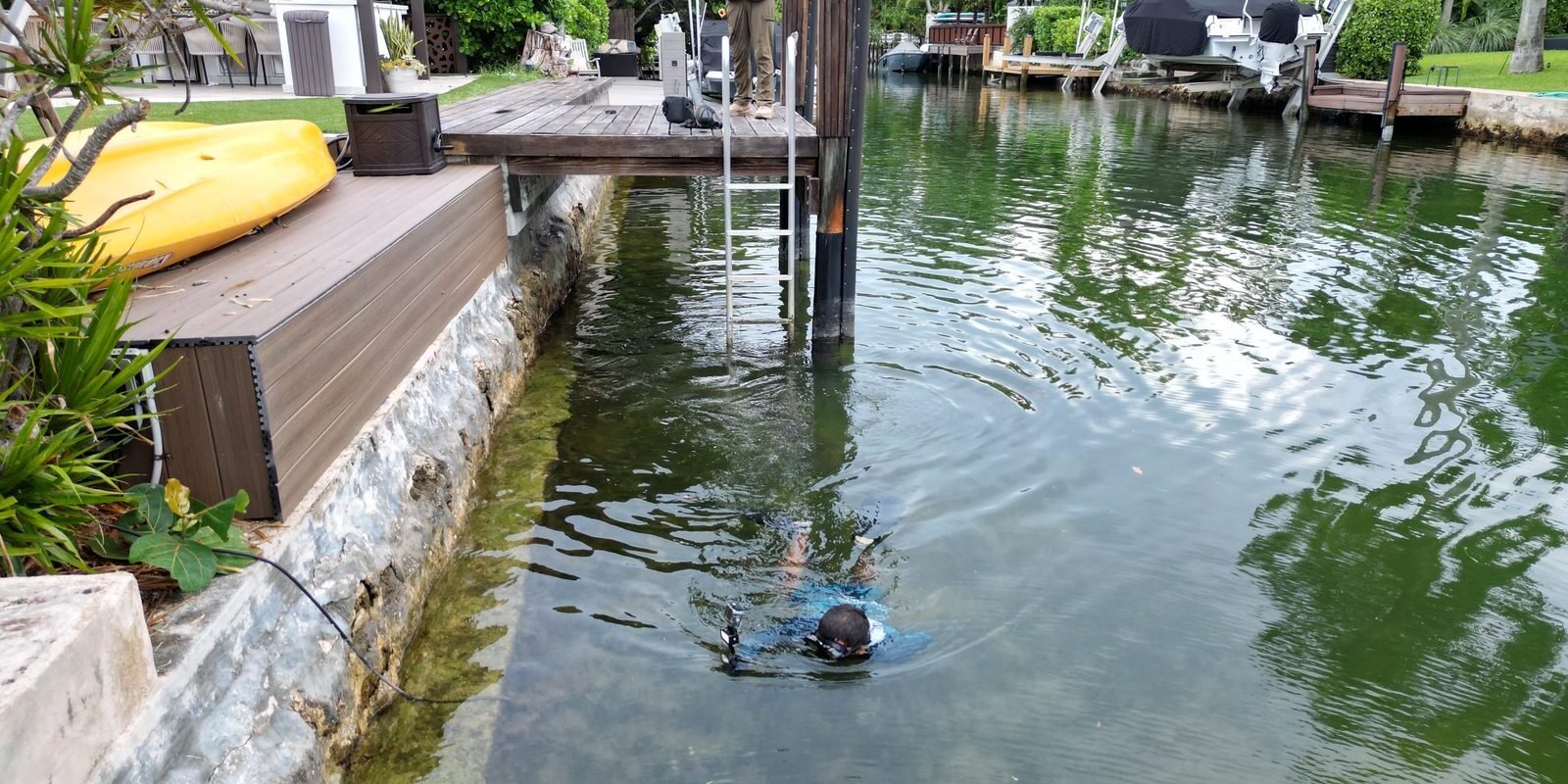
A seawall return wall is the short section that turns the corner off the main seawall and runs back into the yard, closing the gap at the property line. In canal-front lots around Coconut Grove, Key Biscayne, and the rest of the Biscayne Bay corridor, this corner piece almost always cracks, separates, or washes out years before the main run of wall shows any trouble. If you need seawall repair, there’s a good chance the return wall is where it starts.
We get called out to look at these corners more than almost any other seawall complaint, and it’s rarely the homeowner who called — it’s usually the neighbor, standing in a soft spot in their own yard, wondering why the ground under their feet is sinking when the problem wall is next door. That’s the part most people don’t expect from Souffront Contractors: a return wall failure doesn’t stay on one property. It drains straight into the one next to it.
Key takeaways
- The return wall is the short, perpendicular section that connects the main seawall to the upland at the property line — not the long run that faces the water.
- Return walls fail first because tidal and wave action wraps around the corner and scours the soil behind it from two directions at once, not one.
- Return walls are often built with shorter embedment and fewer tiebacks than the main wall, because the original design treated them as a minor detail.
- Because the return wall sits on or near the property line, the void it leaves behind frequently drains toward and surfaces in the adjacent yard — not the owner’s.
- A flat-fee structural engineer inspection, typically $1,500–$3,000 depending on complexity, is the only reliable way to confirm a corner failure before it reaches the house slab or the neighbor’s dock.
What a return wall actually is
Most homeowners only think about the long wall that faces the canal or the bay. The return wall is the piece most people never notice: a short run, often 10 to 30 feet, that turns 90 degrees off the end of the main seawall and ties back into dry land at the property line. It closes the system so water and soil can’t flank the wall from the side yard.
On a lot with a dock or a side canal, you may have two return walls — one on each side — plus whatever the neighbor built (or didn’t build) to meet yours. That seam between two different owners’ walls, built at different times by different contractors, is exactly where problems start.
Why the corner fails before the rest of the wall does
A straight run of seawall faces one direction of wave and tidal pressure. The corner where a return wall meets the main wall faces pressure from two directions at once, and the water wraps around the end of the structure on every tide cycle. That wrap-around action scours soil from behind the corner faster than it scours soil from behind a straight section.
Three things compound the problem:
- Shorter embedment. Return walls are frequently built with shorter sheet piling or shallower footings than the main wall, because the original plans treated them as a closure detail, not structural wall.
- Fewer tiebacks. A tieback is the buried anchor rod that holds a seawall panel against the soil pressure behind it. Return walls often get one tieback where the main wall gets several, simply because the run is short.
- A weak seam. The joint where the return wall meets the main wall — or where it meets the neighbor’s wall — is a cold joint. Caulk and mortar fail there first, and once that seam opens, fine soil particles wash through it with every tide.
Once that seam opens, you get a slow, invisible loss of backfill behind the corner. By the time you see a crack in the cap or a gap you can put your hand through, the void behind it is usually much larger than it looks from the surface.
Why it shows up in the neighbor’s yard, not yours
This is the part that catches people off guard. A return wall sits at the property line by design — it’s the piece that closes your lot off from the one next door. When the soil behind it washes out, the void doesn’t stay centered under your yard. It follows the path of least resistance, and that path is almost always toward whichever side has the lower grade or the weaker compacted fill — frequently the neighbor’s side.
What that looks like on the ground: a soft or sinking patch of lawn near the property line, a paver or sprinkler head that’s suddenly out of level, or a visible settlement crack running parallel to the fence. The neighbor calls their landscaper first, the landscaper finds nothing wrong with the irrigation, and it’s not until someone looks at the seawall corner on the other side of the property line that the real cause turns up.
If you own the wall and the void is draining into someone else’s yard, that’s a conversation worth having early and honestly. A documented seawall inspection report, sealed by a Florida-licensed structural engineer, is the thing that settles the “whose problem is this” question before it turns into a dispute between neighbors.
What fixing a return wall actually involves
A return wall repair is usually smaller in scope than a full seawall replacement, because the run is short. The work typically includes excavating the failed corner, resetting or replacing the short section of panel or sheet piling, installing new tiebacks tied properly into the main wall’s anchor system, and compacting clean backfill before the cap is restored or repoured.
On cost: inspections are a flat fee, not a per-linear-foot charge — typically $1,500–$3,000 depending on the complexity of the access and how much of the system needs to be checked, quoted before anyone steps on site. Repair work, by contrast, is priced by the linear foot, with moderate panel and backfill repairs generally running $100–$250 per linear foot and more severe tieback or full-panel replacement running $400–$600 per linear foot — these are general South Florida industry ranges, not a quote. Because a return wall run is short, the total repair bill is often lower than the per-foot number suggests, even when the work itself — new piling, new tiebacks, a full cap tie-in — is substantial.
Any work at the property line, including a return wall repair, typically needs to go through Miami-Dade DERM permitting, since it touches shoreline and may affect drainage onto an adjacent parcel. A licensed seawall contractor who also holds the engineering license to seal the plans can move that permit through without handing the job to three different companies.
Talk to a Florida-licensed structural engineer
If a corner of your seawall is cracked, separated, or your neighbor has mentioned a soft spot near the property line, don’t wait for it to reach the cap or the slab. Souffront Contractors inspects, engineers, permits, and builds under one roof, so the same structural engineer inspection that documents the return wall failure can also scope and seal the repair — fixed-fee, with a same-business-day response. The contact form below gets you a real answer, not a sales pitch.
Frequently asked questions
What is a seawall return wall?
A return wall is the short section of seawall that turns a corner off the main wall and runs back to the upland, closing the gap at the property line. It’s distinct from the main wall, which runs along the water’s edge, and it’s often built with lighter construction than the straight run beside it.
Why do return walls fail before the rest of the seawall?
Water wraps around the corner from two directions on every tide cycle, scouring the soil behind a return wall faster than a straight section. Return walls are also commonly built with shorter embedment and fewer tiebacks than the main wall, which makes them the weak point in the overall system.
Why is the sinking spot in my neighbor’s yard, not mine, if it’s my seawall?
The return wall sits at or near the property line by design. When soil behind it washes out through an open seam, the resulting void follows the lowest grade or the weakest compacted fill, which is frequently on the adjacent property rather than the one the wall belongs to.
How much does it cost to inspect a failing return wall?
A structural engineer inspection is a flat fee, typically $1,500–$3,000 depending on access and the scope of the system being checked, quoted upfront before any site visit. It is never priced by the linear foot — that pricing only applies to repair work.
How much does it cost to repair a return wall?
Repair work is priced by the linear foot: moderate panel and backfill repairs generally run $100–$250 per linear foot, and tieback or full-panel replacement can run $400–$600 per linear foot, as general South Florida ranges. Because a return wall run is short, the total project cost is usually lower than a full seawall replacement even when the repair itself is substantial.
Do I need a permit to repair a seawall return wall?
Yes. Work at the shoreline near a property line in Miami-Dade generally requires permitting through Miami-Dade DERM, and may also involve Florida DEP review depending on the site. A licensed seawall contractor who holds the engineering license to seal the repair plans can carry that permit through directly.
What are the warning signs of a failing return wall?
Look for a crack or visible gap at the corner where the return wall meets the main seawall, a soft or sinking patch of lawn near the property line, pavers or a fence post that have shifted out of level, and any new separation between your wall and the neighbor’s adjoining wall.
Can a return wall failure damage my neighbor’s property even if the wall is entirely on my side?
Yes. Soil loss behind a failed return wall moves underground and does not respect the property line on the surface. If the void drains toward the neighbor’s yard, their landscaping, pavers, or dock foundation can settle even though the failing wall itself sits entirely on your property.
Related from Souffront Contractors: dock repair and seawall design — all delivered by the same Florida-licensed structural engineering and marine construction team. Call (877) 420-7220.
About Souffront Contractors Inc.: a Florida-licensed structural engineering and marine construction firm serving Miami-Dade, Broward, and Palm Beach counties. Talk to a seawall repair contractor who engineers, permits, and builds the fix — see our seawall contractors page or call (877) 420-7220.
Got a seawall or structural question?
Five fields. Same business day from a Florida-licensed engineer, routed into our dispatch CRM in real time.
- Same business dayAcknowledgment from a Florida licensed engineer — Mon–Fri 8 AM–5:30 PM.
- Engineer-sealed reportAccepted by carriers, building departments, and real-estate transactions.
- Fixed-fee proposalNo hourly billing. Repair scope priced line-by-line.