
Your Neighbor Shares Your Seawall. Who Pays to Fix It?
A seawall split between two properties in Coral Gables or Coconut Grove raises real questions — who coordinates repairs, how the cost splits, and who signs the permit.
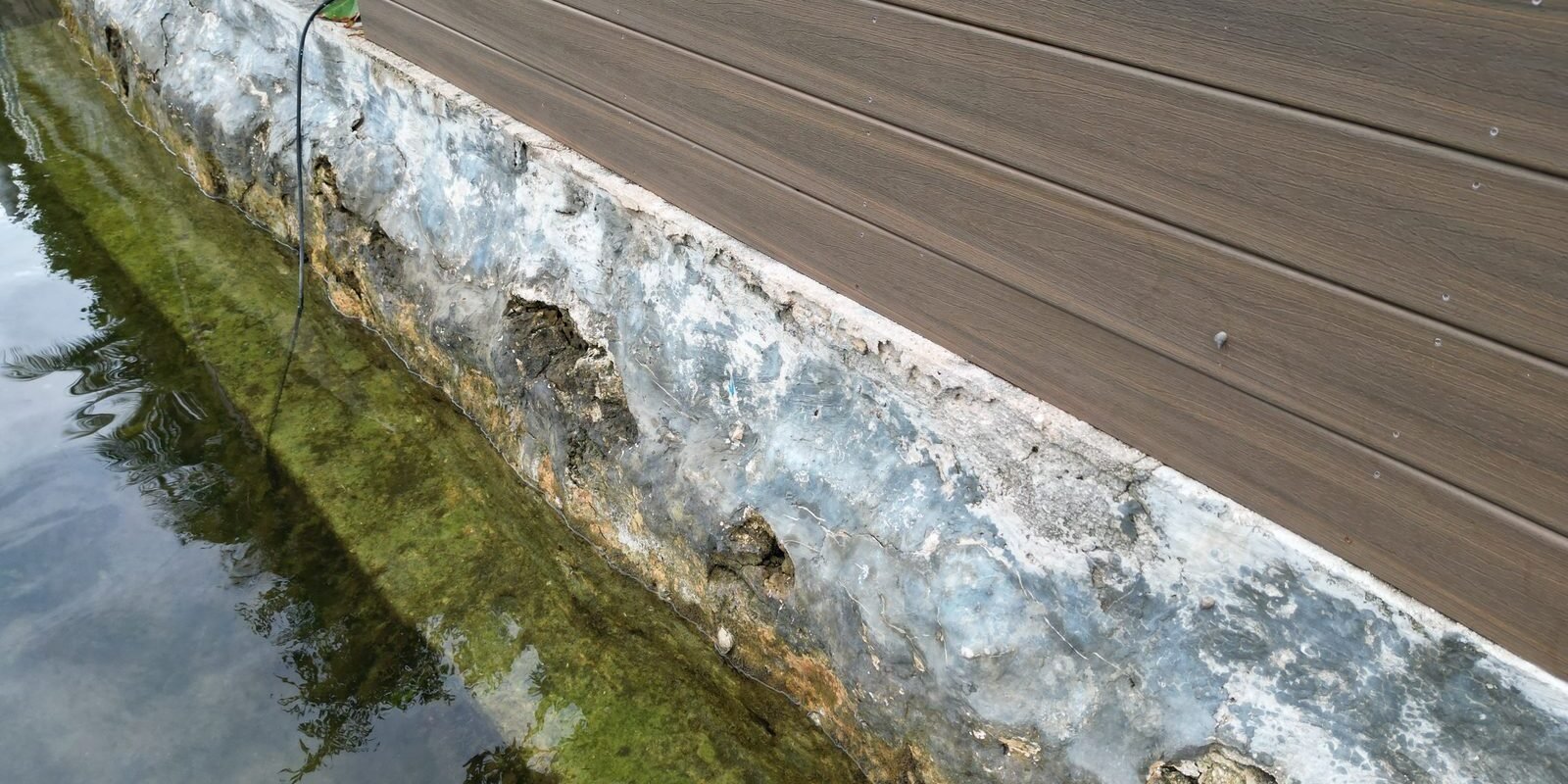
A seawall running behind two backyards in Coral Gables, or along a Coconut Grove canal, doesn’t stop at the property line. The wall is one continuous structure, even though the deed splits it in half. A shared seawall repair cost gets divided based on who owns which section, but coordinating the actual work — permits, contractor selection, schedule — takes one person pulling it together, because two owners rarely agree on their own.
That’s the part most owners get wrong first. They assume the wall splits cleanly down the middle the way the survey shows it. In practice, water, soil, and structural load don’t care about a property line. If one half fails, the other half is already compromised. Souffront Contractors gets called into these jobs after one neighbor has already started — and the other hasn’t been told yet.
Key takeaways
- A shared seawall is almost always two separate legal ownership sections on one continuous physical structure — the survey line is legal, not structural.
- Cost typically splits by linear footage of wall each owner’s lot touches, not 50/50 by default.
- Most Biscayne Bay municipalities and Miami-Dade DERM require both adjoining owners to sign off, or at least be notified, before a shared-wall permit is issued.
- One owner can legally repair only their section, but a seawall inspection of the full run usually shows the “good” half is failing too, just later.
- Schedule delays on shared-wall jobs come from the second owner, not the permit — budget extra weeks to get both sides aligned before you ever call a contractor.
How a seawall ends up “shared” in the first place
Most waterfront lots in Miami-Dade and Broward were platted with the seawall built as one continuous pour or one continuous run of panels, long before each lot sold separately. The survey later drew a line through the middle of that wall to mark the property boundary. Structurally, nothing changed. The cap is one slab. The sheet piles or panels interlock across the line. The soil behind both halves is the same fill, moving the same way.
This matters the moment one half starts failing. A cracked cap, a leaning panel, or soil loss at the toe on one owner’s section pulls on the panels next to it — including the neighbor’s. A structural engineer inspection of just one owner’s section misses that context. We always walk the full run, both sides of the line, even when only one owner hired us.
Who actually coordinates the work
On a two-owner wall, somebody has to run point: get both sides a scope they can compare, pick one contractor instead of two crews working against each other, and keep the permit moving through one application instead of two competing ones. Left alone, this almost never happens cleanly. One owner gets a bid, the other owner gets a different bid from a different company with a different scope, and now there are two sets of drawings for one wall.
This is exactly the gap an owner’s representative for a shared seawall project closes — one Florida-licensed structural engineer who writes a single scope covering both sections, gets comparable bids, and reports to both owners instead of one. Neither owner has to trust the other owner’s judgment about a contractor; they both get an engineer’s read on the same set of facts. We disclose this plainly when we’re asked to bid the repair work ourselves on a job we’re also overseeing — any interest in doing the construction is in writing up front, not something either owner finds out later.
On jobs with an HOA or condo association on one or both sides, this role matters even more. A board can’t evaluate a $60,000 change order on a wall it only owns half of any better than a single homeowner can.
What drives the cost of a shared seawall repair
Repair pricing on seawalls runs by linear foot, not by owner count. Moderate repairs — cap patching, tieback replacement, panel point repairs — generally run $100–$250 per linear foot. Full panel and tieback replacement runs $400–$600 per linear foot. These are general South Florida ranges, not a quote; every seawall repair gets its own number after an inspection.
What changes on a shared wall is scope creep. If one owner’s 40 feet needs full tieback replacement and the inspection shows the adjoining 35 feet is six months behind it on the same failure, the honest number includes both sections — even if only one owner originally called. Deferring the second half to “later” almost always costs more per foot later, because mobilization, dewatering, and equipment access get paid for twice instead of once.
Splitting a shared seawall repair cost between neighbors
There’s no statewide formula for this — it gets handled a few common ways:
- Proportional to linear footage. Each owner pays for the feet of wall on their side of the surveyed property line. This is the most common split and the easiest to defend if one owner later disputes the bill.
- Proportional plus a shared mobilization fee. Equipment, barge access, and dewatering get split evenly since both owners benefit from one mobilization instead of two.
- Unequal split by condition. If one half needs full replacement and the other needs only cap repair, the invoice reflects that — not a flat 50/50.
- Association-absorbed. On condo or HOA waterfront, the association sometimes owns the entire wall regardless of individual unit lines — check the declaration before assuming a private-owner split applies.
Get the split in writing before the contractor starts, not after the invoice arrives. A one-page agreement — signed by both owners, referencing the engineer’s scope and the linear footage each side covers — prevents the argument that stalls half of these jobs at the finish line.
The schedule problem nobody budgets for
The permit is rarely what delays a shared-wall job. The second owner is. One owner is ready to sign a contract; the other wants a second opinion, needs board approval, or is waiting on an insurance claim to resolve. Every week that owner takes is a week the first owner’s half sits half-mobilized, paying for equipment that isn’t moving.
Build in four to eight weeks before the first shovel just to get both owners aligned on scope, contractor, and payment terms — longer if one side is a condo association that needs board or membership approval. Once both sides sign, a typical two-section seawall repair in the 60–120 linear foot range runs 4–8 weeks of active construction, weather and material lead times permitting.
What happens when one owner won’t cooperate
An owner can repair only their own section. It’s legal, and sometimes it’s the only option when a neighbor won’t engage. But it comes with real limits: the new section has to tie into the old one structurally, the contractor working next to an unrepaired, failing section is working next to an active liability, and the untouched half will likely need the same repair within a few years anyway — at a higher per-foot cost for the same reasons mobilization costs double when split across two jobs.
Miami-Dade DERM and most municipal building departments will still issue a permit for a single owner’s section, but documentation matters more here, not less. A written inspection report that specifically addresses the boundary condition — how the new work ties into the existing wall, and what condition the adjoining section was in at the time — protects the owner who acted if the neighbor’s half fails later and tries to argue damage was caused by the repair next door. That’s one more reason the inspection should cover both sides even when only one owner is paying for it.
Talk to a Florida-licensed engineer
If you’re sharing a seawall with a neighbor and only one of you is ready to move, start with a full-run inspection, not a contract. A Florida-licensed structural engineer can document both sections’ real condition, give you a defensible linear-foot cost split to bring to your neighbor, and tell you honestly whether waiting on their half is a six-month problem or a six-year one. Souffront quotes seawall inspections fixed-fee, before any site visit, and can turn the findings into a scope either owner — or both — can act on the same week. The contact form below gets a same-business-day response.
Frequently asked questions
Who owns a shared seawall between two properties?
Each owner typically owns the section of seawall that runs along their property line, per the recorded survey. The wall itself is usually one continuous physical structure, so structural problems on one section commonly affect the adjoining one even though ownership is split.
How do you split the cost of repairing a shared seawall?
Most owners split cost proportional to the linear footage of wall on each side of the surveyed property line, sometimes with a shared mobilization fee for equipment and access. Condo or HOA declarations sometimes assign the whole wall to the association instead of splitting it between units.
What if my neighbor won’t pay for their share?
You can legally repair only your own section. A written inspection report documenting the condition of both sections and how the new work ties into the existing wall protects you if the neighbor’s untouched section fails later.
Do both owners need to hire the same contractor?
No, but it’s strongly recommended. Two contractors working independently on one continuous structure often produce mismatched tiebacks, panels, or cap elevations at the seam. One engineer writing a single scope for both sections, with one contractor executing it, avoids that.
Does Miami-Dade DERM require both owners to sign off on a shared seawall permit?
Requirements vary by municipality, but most Biscayne Bay jurisdictions and Miami-Dade DERM require notification to, or sign-off from, the adjoining property owner before issuing a permit for work on a shared structure. Check with the specific city building department before submitting.
How long does a shared seawall repair take from first call to completion?
Budget four to eight weeks to align both owners on scope, contractor, and cost split before construction starts — longer if a condo association needs board approval. Active construction on a typical 60–120 linear foot shared repair runs another four to eight weeks.
What if only one side of the shared wall is actually failing?
It’s common for one section to show visible damage years before the adjoining section does, even though both are under the same soil and water pressure. A full-run inspection usually finds the “good” half is six months to a few years behind the failing half, not structurally sound indefinitely.
Related from Souffront Contractors: HOA and condo board compliance reports — all delivered by the same Florida-licensed structural engineering and marine construction team. Call (877) 420-7220.
About Souffront Contractors Inc.: a Florida-licensed structural engineering and marine construction firm serving Miami-Dade, Broward, and Palm Beach counties. Talk to a seawall repair contractor who engineers, permits, and builds the fix — see our seawall contractors page or call (877) 420-7220.
Got a seawall or structural question?
Five fields. Same business day from a Florida-licensed engineer, routed into our dispatch CRM in real time.
- Same business dayAcknowledgment from a Florida licensed engineer — Mon–Fri 8 AM–5:30 PM.
- Engineer-sealed reportAccepted by carriers, building departments, and real-estate transactions.
- Fixed-fee proposalNo hourly billing. Repair scope priced line-by-line.