
What Makes a Star Island Seawall Different to Repair?
Star, Palm and Hibiscus Island seawalls face different loads, older construction and tighter permitting. Here's what a structural engineer finds on-site.
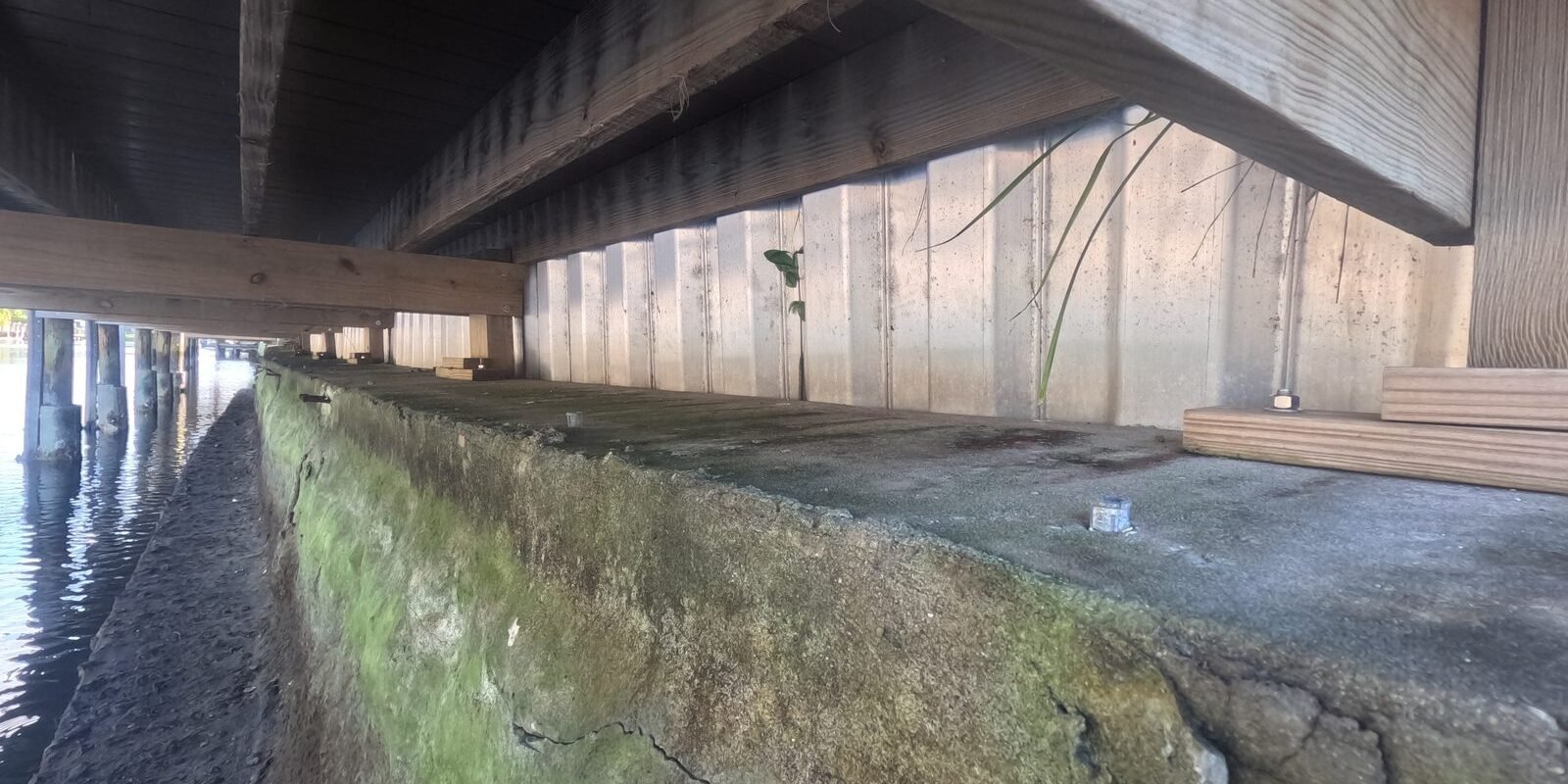
A Souffront Contractors seawall repair on Star Island, Palm Island or Hibiscus Island rarely looks like a repair on a standard canal lot. These three islands sit on open Biscayne Bay off the MacArthur Causeway in Miami Beach, and the seawalls holding them were mostly built in the 1920s through the 1950s, decades before current Florida Building Code requirements existed. Older construction, bigger wave and wake exposure, and estate-scale docks tied into the cap all change how these walls fail and what it costs to fix them.
Key takeaways
- Star, Palm and Hibiscus Island seawalls typically predate modern reinforced-concrete standards, so original rebar cover and tieback spacing are often thinner than current code.
- Open-bay wave and wake exposure on these islands is harsher than a protected canal, which accelerates cap spalling and tieback corrosion.
- Repair work on a Star, Palm or Hibiscus Island lot usually requires barge-mounted equipment, since these estates don’t have street-side crane or truck access along the seawall.
- Projects need sign-off from the City of Miami Beach building department, Miami-Dade DERM, and often the island’s own architectural review process, on top of the standard structural permit.
- A flat-fee seawall inspection — typically $1,500–$3,000 depending on complexity, quoted before any site visit — is the starting point for knowing whether a wall needs monitoring, targeted repair, or full replacement.
What makes these seawalls different from a canal-front wall
Most of Biscayne Bay’s canal seawalls were poured from the 1960s onward, inside protected water with modest tidal range. Star, Palm and Hibiscus Island seawalls face open bay water on at least one side, with more fetch, more boat wake from the MacArthur Causeway channel, and in some sections, original coral rock or unreinforced construction that predates the panel-and-tieback systems used today.
That combination matters for engineering, not just aesthetics. A wall built without adequate rebar cover corrodes faster once chlorides reach the steel. A cap poured without expansion joints cracks differently than a modern one. And a seawall that has never had a documented structural engineer inspection gives an owner no baseline to compare against when something starts to look wrong.
What we typically find on-site
On estate-scale seawalls in this corridor, the same handful of conditions show up repeatedly:
- Cap spalling with exposed rebar — concrete cover fails first at corners and near dock tie-in points, where salt spray and standing water concentrate.
- Rotated or leaning panels — a sign the tieback system anchoring the wall to the soil behind it has lost tension or corroded through.
- Voids behind the cap — tidal flushing pulls fill material out through cracks and gaps, leaving a hollow shell that looks intact from the yard.
- Marine growth masking underwater section loss — barnacles and oysters below the waterline hide corrosion that only shows up on a below-waterline dive inspection.
- Dock and boat lift loads bearing directly on the cap — a private dock or davit tied structurally into an aging cap adds live load the original wall was never designed to carry.
Permitting on a private island
Seawall work on Star, Palm or Hibiscus Island runs through more than one authority. The City of Miami Beach building department reviews the structural permit. Miami-Dade DERM reviews the environmental and shoreline permit, since all three islands sit within their coastal jurisdiction. Most island associations also require architectural review before work starts, covering everything from staging equipment to how the finished cap matches the rest of the shoreline. Skipping any one of these steps is the most common reason a project stalls mid-construction.
Why repair costs more on an estate lot
General seawall repair costs in South Florida run roughly $100–$250 per linear foot for moderate repairs and $400–$600 per linear foot for full panel and tieback replacement — industry ranges, not a fixed Souffront quote. On Star, Palm and Hibiscus Island, expect the upper end of those ranges more often, for three reasons. First, these lots don’t have street access along the seawall, so a marine contractor has to barge in equipment and materials. Second, open-bay wall heights and wave exposure often call for a heavier cap section than a canal wall needs. Third, owners and associations frequently want the new cap to match existing coral rock, cast stone, or a historic profile, which adds finish work a standard seawall construction crew doesn’t normally price in.
This is also where the gap between contractors shows up. A general seawall contractor can pour concrete. Fewer firms can tell you why the original wall is failing, size the repair to the actual load, and get it signed and sealed for permit. When you’re vetting bulkhead contractors for a project this size, ask specifically who on the team is a licensed engineer, not just who runs the crew.
Who actually manages a project like this
Island associations and individual owners on Star, Palm and Hibiscus rarely have someone on staff who reads structural drawings. That’s the gap engineer-led construction management fills — a single point of contact who writes the scope, reviews bids and shop drawings, observes the work at the milestones that matter, and checks pay applications against what’s actually been built. Souffront both performs this oversight role and builds seawalls directly; when there’s any overlap on a project, that dual role is disclosed in writing before work starts, so the board or owner knows exactly who’s bidding what.
Talk to a Florida-licensed engineer
If you own or manage a seawall on Star, Palm or Hibiscus Island and haven’t had it looked at by a structural engineer, start with a documented inspection rather than a contractor’s estimate. It’s a flat fee, quoted before the visit, and you get a sealed report the same way you would for any engineering deliverable — not a sales pitch. Fill out the form below and we’ll schedule it.
Frequently asked questions
How old are the seawalls on Star, Palm and Hibiscus Island?
Most were originally constructed between the 1920s and 1950s, when these islands were first developed off the MacArthur Causeway. Sections have been repaired or partially rebuilt since, but much of the original wall on many lots predates modern reinforced-concrete seawall standards.
Why does a seawall on open bay water fail faster than a canal seawall?
Open bay exposure means more wave action, more boat wake, and greater tidal flushing through cracks and joints. That flushing pulls soil out from behind the wall and accelerates corrosion of embedded steel, both of which happen more slowly in a protected canal.
Do I need a dive inspection for an estate seawall?
Usually yes. Private docks, boat lifts and seawalls with substantial water depth often block a clear visual read of the wall below the waterline from the shore or a boat. A below-waterline dive inspection is the only reliable way to check for section loss hidden under marine growth.
How much does a seawall inspection cost on these islands?
A structural inspection is a flat fee, typically $1,500–$3,000 depending on complexity — access, wall length, number of structural components, and whether a below-waterline dive is needed. It is quoted before any site visit and is not priced per linear foot.
Who approves seawall repair permits on Star, Palm or Hibiscus Island?
Three layers typically apply: the City of Miami Beach building department for the structural permit, Miami-Dade DERM for the environmental and shoreline permit, and most island associations require their own architectural review before construction starts.
Why does barge access matter for the cost?
These estate lots generally don’t have street-side access directly along the seawall, so equipment and materials have to be brought in by barge rather than truck or crane from the yard. That adds mobilization cost that a typical canal-front repair doesn’t carry.
Can a boat lift or dock be tied into a failing seawall cap?
It can, and often is — which is part of the problem. A dock or davit anchored into an aging cap adds live load the original wall wasn’t designed to carry, and that load can accelerate cracking or rotation at the tie-in points. This should be evaluated as part of any structural inspection.
Does Souffront offer construction management for island association projects?
Yes. Souffront provides engineer-led owner’s representative oversight — scope development, bid review, submittal review, site observation and pay application checks — for seawall and dock projects, including on private-island association work. Fees for this service are scoped and quoted per project, before it starts.
Related from Souffront Contractors: dock repair — all delivered by the same Florida-licensed structural engineering and marine construction team. Call (877) 420-7220.
About Souffront Contractors Inc.: a Florida-licensed structural engineering and marine construction firm serving Miami-Dade, Broward, and Palm Beach counties. Choose a seawall inspection company whose reports are signed and sealed by a licensed structural engineer — see our seawall contractors page or call (877) 420-7220.
Got a seawall or structural question?
Five fields. Same business day from a Florida-licensed engineer, routed into our dispatch CRM in real time.
- Same business dayAcknowledgment from a Florida licensed engineer — Mon–Fri 8 AM–5:30 PM.
- Engineer-sealed reportAccepted by carriers, building departments, and real-estate transactions.
- Fixed-fee proposalNo hourly billing. Repair scope priced line-by-line.