
Tidal Range and Seawall Design in Biscayne Bay
How tidal range shapes seawall design in Biscayne Bay — cap height, drainage, and materials a Florida-licensed structural engineer accounts for.
Tidal range in Biscayne Bay is small compared to open-ocean coastlines, but it still drives most of the structural decisions behind a properly engineered seawall. A Florida-licensed structural engineer designs cap elevation, drainage, and material selection around the daily swing between mean low water and mean high water, plus the higher water levels a storm surge or king tide can push against the wall.
Key takeaways
- Biscayne Bay’s tidal range runs roughly 2 to 2.5 feet between mean low and mean high water, smaller than Atlantic-facing coastlines but still a governing design factor.
- Seawall cap elevation is set above expected high-tide and storm-surge levels, not just current mean high water, to limit overtopping in Coconut Grove, Coral Gables, and Key Biscayne.
- Repeated tidal wetting and drying accelerates corrosion of steel reinforcement and connectors faster than a wall exposed to water only occasionally.
- Weep holes and drainage design must account for the water table rising and falling with the tide, not just rainfall.
- King tides and higher high tides in the bay are becoming more frequent, which is why many older seawalls built decades ago now overtop on a normal high tide.
Why tidal range matters for seawall design
A seawall is not a static wall holding back a fixed water level. In Biscayne Bay, the water behind and in front of the wall rises and falls twice a day. That daily cycle governs three things: how high the cap needs to be, how the wall drains, and how fast the materials deteriorate. Get any one of those wrong and a wall that looks fine today fails within a decade.
Souffront Contractors designs and repairs seawalls throughout the Biscayne Bay corridor — Coral Gables, Coconut Grove, Key Biscayne, Miami, and Miami Beach — where canal-front and island properties see tidal exchange daily on both sides of the property line.
Cap elevation and overtopping
The cap is the top edge of the seawall. If it sits too close to mean high water, normal tidal cycles combined with wind setup or a king tide will push water over the top. In Biscayne Bay, engineers set cap elevation well above the current mean high water mark, factoring in a margin for storm surge and long-term water level trends, so the property behind the wall stays dry through ordinary tidal events, not just calm-weather conditions.
Many seawalls built 30 to 40 years ago were capped to the tidal data available at the time. Those same walls now flood on a routine high tide in low-lying parts of Coconut Grove and along the Miami River corridor, because the water has risen relative to the cap, not because the wall itself failed structurally.
Drainage and the water table behind the wall
A seawall holds back soil, not just water, and that soil’s groundwater table moves with the tide. As the bay rises, water pushes into the soil behind the wall; as it falls, that water needs somewhere to go. Weep holes — small drainage openings through the wall — let that pressure equalize. Without functioning weep holes, hydrostatic pressure builds behind the wall every tidal cycle, which is one of the most common causes of seawall repair calls Souffront receives on older bay-front properties.
- Weep holes sized and spaced for the soil type behind the wall, not a generic default
- A filter fabric or gravel backing that lets water pass but keeps soil from washing out with it
- Periodic inspection to confirm weep holes have not clogged with sediment or marine growth
Material selection and the tidal wetting-drying zone
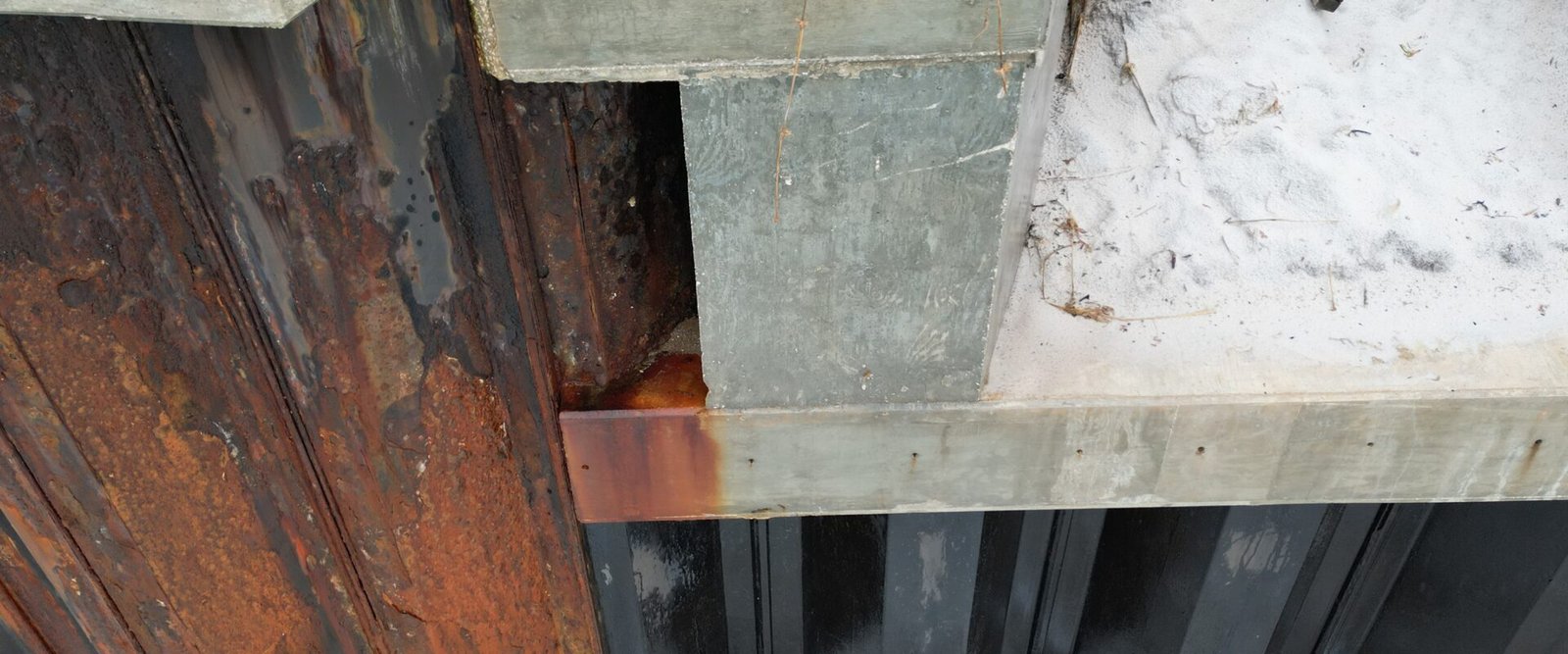
The band of wall that gets wet and dry twice a day — the tidal zone — corrodes and deteriorates faster than sections that stay permanently submerged or permanently dry. Steel reinforcement in that zone is exposed to oxygen and saltwater in alternating cycles, which is more corrosive than constant submersion. Engineers account for this by specifying corrosion-resistant reinforcement, adequate concrete cover, and coatings rated for a marine tidal environment in that specific band of the wall.
This is also why a below-waterline inspection matters: the section of a seawall most at risk from tidal cycling is often the hardest to see from a dock or seawall cap.
How this plays out across Biscayne Bay neighborhoods
Tidal conditions are not identical everywhere in the bay. A seawall on an open bay-front lot in Key Biscayne sees more wind-driven wave action layered on top of the tide than a seawall on a protected finger canal in Coral Gables. Coconut Grove’s older seawalls, many built before modern cap-height standards, are among the most frequently affected by routine high-tide overtopping in the corridor. A wall design that works for one location can be undersized for another a mile away.
Souffront Contractors — Souffront Contractors — evaluates each property’s specific tidal exposure, orientation, and soil conditions rather than applying one standard design across the bay.
Signs your seawall isn’t handling tidal cycling well
- Water regularly reaching the yard or pool deck on a normal high tide, not just during storms
- Cracking or spalling concentrated in a horizontal band at the tide line
- Rust staining bleeding through the cap or panels
- Soil settling or small voids opening up along the landward side of the wall
- Weep holes that appear dry or blocked at low tide when they should be draining
Any one of these is worth a professional look. A seawall inspection documents which of these conditions are present and how urgently they need attention.
Talk to a Florida-licensed engineer
If your seawall is showing signs of tidal wear, or you’re planning new construction on a Biscayne Bay canal or bay-front lot, get an engineer-sealed evaluation before deciding on repairs. Souffront Contractors is one company that inspects, engineers, permits, and builds — fixed-fee, quoted upfront, with a same-business-day response. The contact form below gets you started.
Frequently asked questions
What is the tidal range in Biscayne Bay?
Biscayne Bay typically sees a tidal range of roughly 2 to 2.5 feet between mean low water and mean high water. That range is smaller than an open Atlantic coastline, but it still drives seawall cap height, drainage design, and material choices for the tidal wetting-and-drying zone.
Why does tidal range affect seawall cap height?
The cap has to stay above the water level the wall will actually experience, including higher high tides, king tides, and storm surge — not just the average high tide. If the cap is set only to current average conditions, the wall will overtop during normal seasonal high tides within a few years.
Why do older seawalls in Biscayne Bay flood more than they used to?
Many seawalls in Coconut Grove, Coral Gables, and along the Miami River were built decades ago using the tidal data available at the time. Water levels in the bay have since risen relative to those cap elevations, so walls that once had clearance now overtop on an ordinary high tide, even without a storm.
What are weep holes and why do seawalls need them?
Weep holes are small openings through the seawall that let groundwater behind the wall drain as the tide falls. Without them, water pressure builds up behind the wall every tidal cycle, which pushes on the wall from the landward side and is a leading cause of cracking and panel failure over time.
Does tidal cycling make seawalls deteriorate faster than constant submersion?
Yes. The band of the wall that gets wet and dry twice a day is exposed to both oxygen and saltwater in alternating cycles, which corrodes steel reinforcement faster than sections that stay fully submerged or fully dry. This tidal zone is where a seawall inspection should focus close attention.
How much does a seawall inspection cost in the Biscayne Bay area?
A residential structural seawall inspection typically runs $1,500 to $3,000, depending on the complexity of the inspection — wall length, access, whether a below-waterline dive is needed, and the number of structural components involved. The fee is a flat rate quoted before any site visit, never priced per linear foot.
Can the same seawall design work for a canal lot and an open bay-front lot?
Not usually. An open bay-front property, like many in Key Biscayne, deals with more wind-driven wave action layered on top of tidal cycling than a protected finger canal in Coral Gables. Cap height, wall thickness, and anchoring often need to differ between the two conditions even within the same neighborhood.
Who regulates seawall construction in Biscayne Bay?
Seawall work in the bay typically requires review from Miami-Dade DERM for environmental and shoreline permitting, along with the local city building department, and may involve the Florida Department of Environmental Protection or the U.S. Army Corps of Engineers depending on the scope of work. A licensed marine contractor coordinates these approvals as part of the project.
About Souffront Contractors Inc.: a Florida-licensed structural engineering and marine construction firm serving Miami-Dade, Broward, and Palm Beach counties. Learn more about engineer-led seawall repair across South Florida — see our seawall contractors page or call (877) 420-7220.
Got a seawall or structural question?
Five fields. Same business day from a Florida-licensed engineer, routed into our dispatch CRM in real time.
- Same business dayAcknowledgment from a Florida licensed engineer — Mon–Fri 8 AM–5:30 PM.
- Engineer-sealed reportAccepted by carriers, building departments, and real-estate transactions.
- Fixed-fee proposalNo hourly billing. Repair scope priced line-by-line.