
Who Pays for Seawall Repairs in a Key Biscayne HOA?
Who pays for a cracked seawall in a waterfront HOA — the association or the unit owner? How Florida governing documents decide, with real cost-sharing examples.
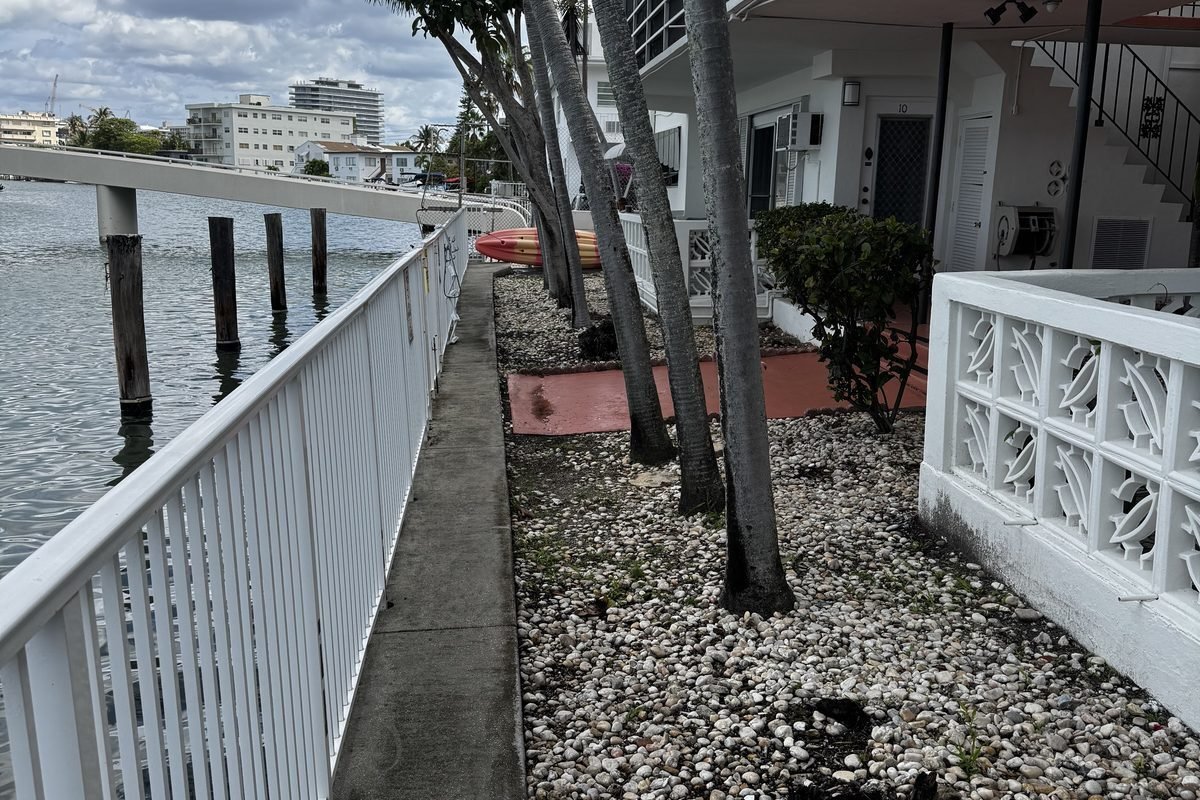
We stood on a dock behind a six-building association in Key Biscayne last spring, looking at a 40-foot stretch of seawall cap that had dropped two inches and pulled away from the rest of the wall. The board president’s first question wasn’t “how bad is it.” It was “who’s paying for this.” That’s the question every waterfront association eventually asks, and the answer lives in the declaration, not in guesswork. Souffront Contractors gets called in on this exact dispute often enough that it’s worth laying out plainly.
In most Florida waterfront HOAs and condominiums, the seawall is a common element, which means the association pays for its inspection, repair, and replacement — not the individual owner whose unit happens to sit closest to the water. The association then recovers that cost from all owners through assessments, usually split by the percentage share set in the declaration rather than by who’s physically adjacent to the wall. The exceptions are real, though, and they turn on how the governing documents are written.
Key takeaways
- A seawall is almost always a common element under Florida condo and HOA law, which puts the repair cost on the association, not the waterfront-facing owner alone.
- The declaration of condominium or HOA covenants — not common sense — controls the final answer. Some older declarations assign seawall maintenance to the abutting lot owner.
- Associations typically fund seawall repair through a special assessment, reserve draw, or a combination of both, spread across all owners by their declared percentage share.
- A seawall inspection from a Florida-licensed structural engineer is usually the document a board needs before it can legally levy a special assessment.
- Boards that skip the engineering step and assess based on a verbal contractor estimate expose themselves to owner challenges over reasonableness.
Why the seawall is usually the association’s responsibility
Florida Statutes Chapter 718 (condominiums) and Chapter 720 (homeowners’ associations) treat shared infrastructure — roads, drainage, retaining walls, and seawalls — as common elements maintained by the association unless the declaration says otherwise. A seawall protecting six units behind it isn’t a private backyard feature even if only two or three units touch the water directly. It holds back the canal or bay for the whole parcel, which is why courts and most declarations treat it the same way they treat a shared roof or a shared parking structure.
We’ve inspected walls in Coconut Grove and Coral Gables where only the rear four units faced Biscayne Bay directly, yet the entire 40-unit association paid for the repair because the declaration listed the seawall under common elements with no carve-out for adjacent owners. That’s the default most boards should expect, absent language that says otherwise.
When the owner pays instead
Some older platted subdivisions along the Intracoastal, especially single-family HOA communities rather than condominiums, assign the seawall to the fee-simple lot it sits on. If your declaration says the rear lot line extends to the bulkhead and that owner is responsible for its maintenance, that language controls — even if the HOA collects dues for everything else. We’ve seen this in canal-front HOA communities in North Miami and Aventura where each lot owns its own 50 or 60 linear feet of wall outright.
Read the declaration before assuming either way. Boards sometimes discover mid-dispute that the document actually splits responsibility: the association owns the cap and the structural system, while an individual owner is responsible for anything added on top, like a dock or a seawall-mounted davit.
How the cost actually gets split
Once responsibility is established as the association’s, the board has three funding paths, usually in this order:
- Reserves. If the association has been funding a seawall or structural reserve line, this covers some or all of it without a special assessment.
- Special assessment. The most common path. The board levies a one-time or installment assessment, split by each owner’s percentage interest as recorded in the declaration — not by linear footage of wall behind their specific unit.
- Assessment plus financing. For full-panel or tieback replacement running $400–$600 per linear foot, many boards combine a partial special assessment with a bank loan secured against future assessments, spreading the hit over several years instead of one invoice.
What a board cannot usually do is single out the three owners closest to the water and bill only them, unless the declaration explicitly assigns that section of wall to those lots.
The engineering report is what makes the assessment defensible
We’ve watched boards get challenged by owners — sometimes in arbitration — not because the seawall didn’t need the work, but because the board couldn’t document why. A written condition assessment from a Florida-licensed structural engineer does three things a verbal contractor quote never does: it documents the specific failure (cracked cap, rotated panel, soil loss at the toe, corroded tieback), it separates urgent structural work from cosmetic maintenance, and it gives the board a sealed basis for the assessment amount if an owner questions it later.
Boards that go straight from “the wall looks bad” to a contractor’s repair quote, with no engineering documentation in between, are the ones we see get sued over the special assessment — not over the wall itself.
What to do if your board is having this argument right now
- Pull the declaration and look specifically for the words “seawall,” “bulkhead,” or “common element boundary.” Don’t rely on memory or what the last board did.
- Get a written structural condition report before setting an assessment number — it anchors the figure to actual damage, not a round number.
- Confirm whether the wall needs a seawall repair in sections or a full rebuild — the funding math is very different between the two.
- Check reserve balances before assuming a special assessment is the only option.
Talk to a Florida-licensed engineer
If your board is weighing who pays, get the condition of the wall documented first — it’s the piece every other decision depends on. Souffront inspects, engineers, permits, and builds seawall repairs under one roof across Miami-Dade, Broward, and Palm Beach, with a fixed inspection fee quoted before anyone steps on site and a same-business-day response to boards working against a deadline. The contact form below reaches our office directly.
Frequently asked questions
Is a seawall considered a common element in a Florida HOA?
In most cases, yes. Florida condominium and HOA law treats shared structural infrastructure, including seawalls, as a common element maintained by the association unless the declaration specifically assigns it to individual lot owners. Older single-family canal-front communities are the main exception.
Can an HOA charge only the owners closest to the water for seawall repair?
Only if the declaration specifically assigns that section of wall to those lots. Otherwise, the cost is split across all owners by their recorded percentage share, the same way roof or road repairs are assessed, regardless of which units physically face the water.
What if our declaration doesn’t mention the seawall at all?
Silence usually defaults to common-element treatment under the broader definition in the declaration, but this is exactly the situation where a board should get a legal read on the document rather than guess. An engineer can document the wall’s condition while that question gets answered.
How much does a seawall repair cost an HOA?
Moderate repairs — cap patching, localized panel work — typically run $100 to $250 per linear foot. Full panel and tieback replacement runs higher, roughly $400 to $600 per linear foot. These are general South Florida ranges for repair and construction work, not inspection fees, and the right number depends on what an engineering assessment finds.
Do we need an engineer’s report before levying a special assessment?
Florida law doesn’t require it in every case, but boards that skip it are far more exposed to owner challenges over whether the assessment amount is reasonable. A sealed condition report ties the dollar figure to documented damage instead of a contractor’s verbal estimate.
Does homeowners insurance cover seawall failure?
Rarely. Most standard property policies exclude gradual deterioration, earth movement, and water damage to below-grade structures, which covers most of what actually causes seawall failure. Associations should plan funding through reserves and assessments rather than counting on a claim.
What’s the difference between a seawall repair and a full replacement for cost purposes?
Repair addresses specific failed sections — a cracked panel, a failed tieback, a settled cap — and costs less per linear foot. Replacement rebuilds the wall system entirely and costs more but resets the clock on the structure’s service life. An engineer’s report should tell the board which category the damage actually falls into before a number gets attached to an assessment.
Where does Florida law on this actually live?
Chapters 718 and 720 of the Florida Statutes govern condominium and homeowners’ association common-element responsibility respectively. The declaration of condominium or HOA covenants, recorded against the property, is the document that applies those statutes to your specific association.
Related from Souffront Contractors: HOA and condo board compliance reports — all delivered by the same Florida-licensed structural engineering and marine construction team. Call (877) 420-7220.
Souffront works directly with the HOA board, the condo association and the property manager or CAM, delivering the documentation a board needs to act and to show it acted.
About Souffront Contractors Inc.: a Florida-licensed structural engineering and marine construction firm serving Miami-Dade, Broward, and Palm Beach counties. Get seawall repair in Coral Gables and across Miami-Dade County — see our seawall contractors page or call (877) 420-7220.
Got a seawall or structural question?
Five fields. Same business day from a Florida-licensed engineer, routed into our dispatch CRM in real time.
- Same business dayAcknowledgment from a Florida licensed engineer — Mon–Fri 8 AM–5:30 PM.
- Engineer-sealed reportAccepted by carriers, building departments, and real-estate transactions.
- Fixed-fee proposalNo hourly billing. Repair scope priced line-by-line.