
Why Seawalls Fail at the Joints First (Not the Middle)
Seawall panels rarely fail at their center — they fail at the joints. Here's why joint failure comes first, what to watch for, and when to call an engineer.
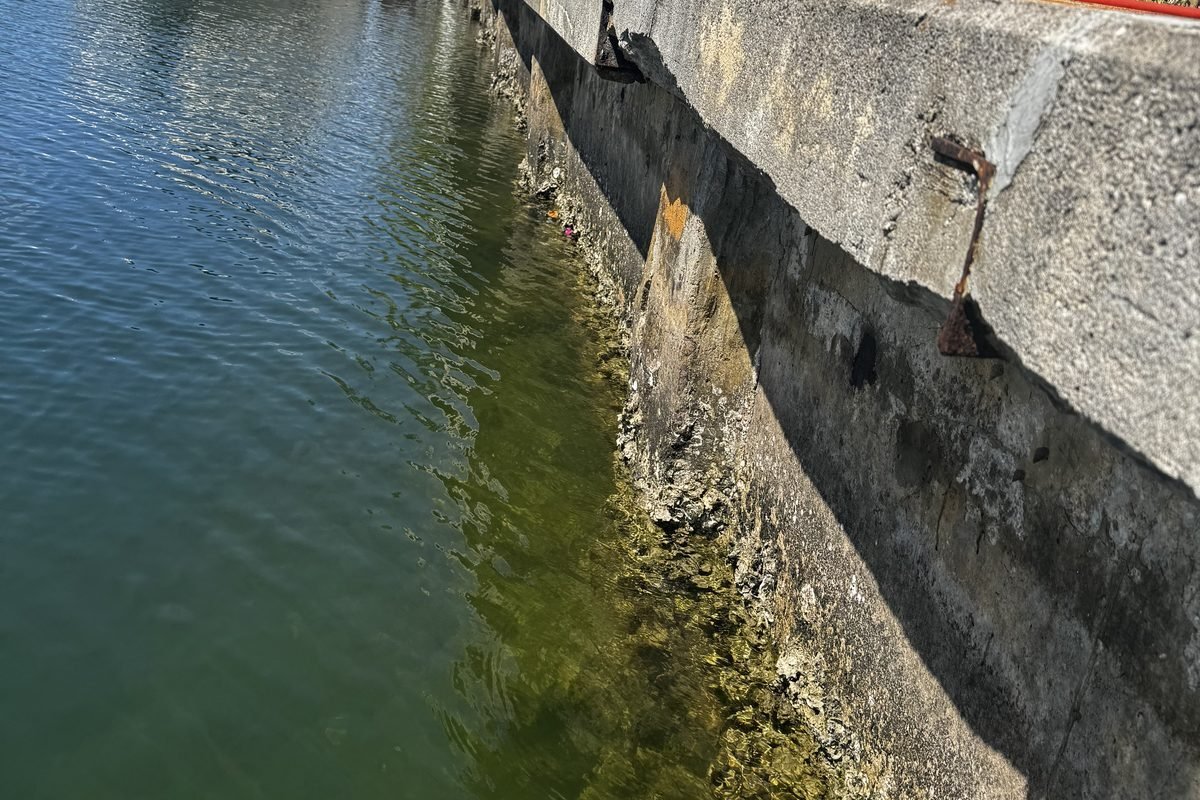
A seawall almost always shows its first real damage at the joints between panels, not in the middle of a single panel. That’s because the joint is where two rigid concrete sections meet, where soil pressure concentrates, and where water finds the shortest path through the wall. Understanding why joints go first helps waterfront owners in Souffront Contractors’ service area catch problems early, before a small gap becomes a collapsed section.
Key takeaways
- Seawall joints are the weakest point in the system because they’re where two separate concrete panels meet — any movement between panels shows up there first.
- Soil and groundwater constantly push against the wall; joints are the path of least resistance for that pressure to escape.
- Visible signs of joint failure include a widening gap, a step or offset between panels, staining, or soil loss (a sinkhole-like depression) on the land side.
- Joint failure often signals a deeper issue — a failed tieback or eroded soil behind the wall — not just a cosmetic crack.
- Left unaddressed, a failed joint accelerates soil loss, which can undermine adjacent panels and the seawall cap above.
What a seawall joint actually is
A seawall is built from individual precast or cast-in-place concrete panels set side by side, not one continuous pour. Between each panel is a joint — sometimes a simple butt joint, sometimes a tongue-and-groove interlock, often sealed with a flexible filler material designed to move slightly without cracking.
That flexibility is the point. Panels expand, contract, and shift slightly with temperature, tide, and soil movement. The joint is engineered to absorb that movement so the panels themselves don’t crack. When the joint’s filler degrades or the panels shift beyond what it can absorb, the joint becomes the failure point instead of the safety valve.
Tieback — the buried anchor
Most gravity and sheet-pile seawalls rely on a tieback: a rod or cable anchored deep in the soil behind the wall that holds the panels against the outward push of the earth and water. When a tieback corrodes or its anchor loses grip in the soil, the panel it holds shifts slightly forward or sideways — and that shift shows up as a widening or offset joint before it shows up anywhere else.
Why the joint fails before the panel
A solid concrete panel is far stronger than the connection between two panels. Three forces converge at the joint and rarely converge anywhere else:
- Soil pressure. The ground behind a seawall constantly pushes forward. A solid panel resists that push across its full width. A joint has no continuous concrete to resist it — only the filler material and whatever mechanical interlock the panels have.
- Water movement. Every tide cycle pushes water in and out of any gap that opens at a joint. Moving water carries fine soil particles out with it — a process called soil migration — which slowly hollows out the ground directly behind the joint.
- Differential settlement. Two adjacent panels rarely sit on identical soil conditions. One may settle slightly faster than its neighbor. That uneven settlement concentrates stress exactly at the seam between them.
Once soil migration starts at a joint, it’s a feedback loop: the gap widens, more soil escapes, and the void behind the wall grows. That void is what eventually shows up on the land side as a depression in the yard or a sunken paver near the seawall cap.
Signs a joint is failing
Most of these are visible from the water or the yard without any special equipment:
- A gap between panels that’s clearly wider than the others along the same wall.
- One panel sitting slightly forward, back, or lower than its neighbor — a visible step or offset.
- Dark staining or efflorescence (white mineral streaking) radiating from a single joint.
- A soft spot, dip, or small sinkhole in the lawn within a few feet of the wall — often the clearest sign that soil has already migrated out through a joint below the waterline.
- Cloudy or turbid water near the base of the wall after rain, indicating active soil loss.
A single hairline gap is common and often not urgent. A gap that’s grown, that’s paired with a step between panels, or that’s paired with yard settlement is a structural signal worth having checked by a licensed structural engineer.
Why joint failure matters more than it looks
A failing joint rarely stays isolated. Once soil migrates out from behind one panel, the panels on either side lose some of the lateral support they were counting on from their neighbor. That’s why a wall can look stable for years, then show rapid deterioration across three or four panels once one joint fails and the soil loss spreads. Catching it at the single-joint stage is far less costly than addressing it after it spreads to an entire wall section.
How this gets fixed
Depending on severity, joint issues are addressed a few ways:
- Joint resealing. For early-stage gaps with no significant soil loss, removing the degraded filler and installing a new flexible sealant can stop water intrusion and soil migration.
- Soil grouting or backfilling. Where a void has already formed behind the wall, structural grout or compacted backfill restores support before it can undermine the cap or adjacent panels.
- Tieback replacement. If the root cause is a failed anchor, the tieback itself needs replacement — resealing the joint alone won’t hold if the panel keeps moving.
- Panel or section replacement. Once a joint has failed badly enough to cause panel misalignment or cracking, replacing the affected section is usually more cost-effective long-term than repeated patch repairs.
Repair costs scale with linear footage of wall addressed: moderate joint and soil-loss repairs typically run $100–$250 per linear foot, while full panel and tieback replacement runs $400–$600 per linear foot. These are general South Florida market ranges, not a fixed quote — every wall’s condition is different.
Where this shows up most in South Florida
Joint failure is especially common in older seawalls throughout Miami, Fort Lauderdale, and Coral Gables, where many walls were built decades ago with tieback systems that are now well past their design life. Tidal fluctuation, seasonal rain, and the sandy, permeable soils common along South Florida’s Intracoastal Waterway all accelerate soil migration once a joint opens. Miami-Dade DERM regulates permitting for any seawall repair work in tidal waters, and repairs that involve new anchors or fill typically require a permit before work begins.
Talk to a Florida-licensed engineer
If you’ve noticed a gap, a step between panels, or a soft spot in the yard near your seawall, don’t wait for it to spread. Souffront Contractors is a Florida-licensed structural engineering and marine construction firm — the same company inspects, engineers, permits, and builds the fix, with a clear fixed fee quoted before any site visit and a same-business-day response. Reach out at (877) 420-7220 or use the form below to schedule a look at your wall.
Frequently asked questions
Why do seawalls crack at the joints instead of the middle of a panel?
The joint is where two separate concrete panels meet, connected only by flexible filler and whatever mechanical interlock they have — not solid concrete. Soil pressure, water movement, and uneven settlement all concentrate their stress at that seam, making it the weakest point in the system.
Is a small gap between seawall panels dangerous?
A hairline gap alone is common and often not urgent. It becomes a concern when it widens over time, when one panel sits noticeably higher or lower than its neighbor, or when it’s paired with soil settlement in the yard — all signs that soil is migrating out through the gap.
What causes soil to escape through a seawall joint?
Tidal water movement pushes in and out of any open joint. Each cycle carries fine soil particles out with it, a process called soil migration. Over time this hollows out the ground behind the wall, eventually showing up as a depression or soft spot in the yard.
How do I know if my seawall’s tieback has failed?
A failed tieback typically shows up as a panel that has shifted forward, backward, or downward relative to its neighbors, often paired with a widened joint at that panel’s edge. Confirming it usually requires a structural inspection, since the anchor itself is buried and not visible.
Can a seawall joint be repaired without replacing the whole wall?
Yes, in many cases. Early-stage joint issues can often be addressed by resealing the joint and, if needed, grouting any void that’s formed behind it. Replacement is typically only necessary once the joint failure has caused panel misalignment, cracking, or significant soil loss.
How much does it cost to repair a failed seawall joint?
Repair costs are based on the linear footage of wall affected. Moderate joint and soil-loss repairs generally run $100–$250 per linear foot, while more severe cases requiring panel or tieback replacement run $400–$600 per linear foot. Every property is quoted based on its specific condition.
Do I need a permit to repair a seawall joint in Miami-Dade?
Most seawall repair work in tidal waters requires a permit through Miami-Dade DERM, particularly if the repair involves new anchors, grout injection, or fill material. An engineer-sealed scope of work is typically required as part of that permit application.
How often should I check my seawall’s joints?
A visual check from the yard and water after major storms or king tides is a reasonable habit for any waterfront owner. For a full structural assessment of joints, tiebacks, and panel condition, a licensed engineer’s inspection every few years — or sooner if you notice any of the warning signs above — is the more reliable approach.
About Souffront Contractors Inc.: a Florida-licensed structural engineering and marine construction firm serving Miami-Dade, Broward, and Palm Beach counties. Choose a seawall inspection company whose reports are signed and sealed by a licensed structural engineer — or call (877) 420-7220.
Got a seawall or structural question?
Five fields. Same business day from a Florida-licensed engineer, routed into our dispatch CRM in real time.
- Same business dayAcknowledgment from a Florida licensed engineer — Mon–Fri 8 AM–5:30 PM.
- Engineer-sealed reportAccepted by carriers, building departments, and real-estate transactions.
- Fixed-fee proposalNo hourly billing. Repair scope priced line-by-line.