
Seawall Inspection Miami Beach: What Owners Should Know
What Miami Beach island and canal-front owners should know about seawall inspection cost, timing, tides, and permits — from a Florida-licensed engineer.
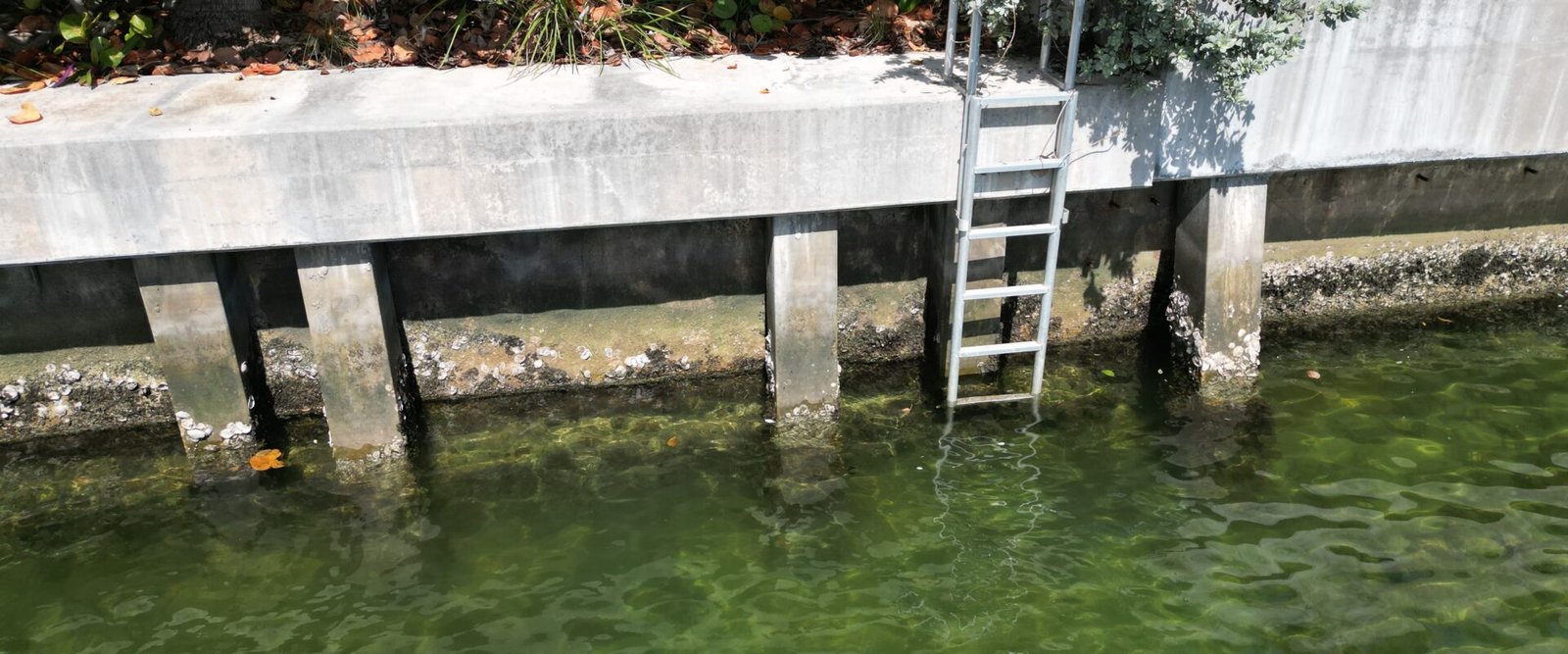
A seawall inspection in Miami Beach checks the cap, panels, piles, and drainage of a bulkhead or seawall for the cracking, tidal erosion, and soil loss typical of Biscayne Bay island and canal-front lots. Most residential inspections are handled by Souffront Contractors as a flat fee — typically $1,500–$3,000 depending on complexity — quoted before any site visit, never by the linear foot. A structural engineer inspection at this stage catches problems while repair is still a fraction of the cost of replacement.
Key takeaways
- Miami Beach seawall inspections are flat-fee, typically $1,500–$3,000, quoted before the engineer visits the site.
- Island properties (Venetian, Sunset, Star, Palm, Hibiscus) face open Biscayne Bay wave and boat wake action; canal-front lots on the interior of Miami Beach face slower, chronic tidal erosion and soil loss instead.
- The most common failure point on Miami Beach seawalls is the cap-to-panel joint, where cracking lets tidal water wash soil out from behind the wall.
- Miami-Dade DERM permitting applies to nearly all seawall repair work on Miami Beach islands and canals — inspection alone typically does not require a permit.
- Hurricane season (June–November) is the highest-risk window for wave-driven damage; late spring is the best time to inspect before storm season.
Why Miami Beach seawalls fail differently on islands vs. canals
Miami Beach sits on a chain of natural and dredged islands — Venetian Islands, Sunset Islands, Star, Palm, and Hibiscus Islands, Belle Isle — surrounded by both open Biscayne Bay and narrow interior canals. The two conditions stress a seawall in different ways.
Open-bay frontage takes direct wave energy and boat wake, which accelerates erosion at the toe of the wall and stresses the cap-to-panel joint. Canal-front lots see calmer water but more constant tidal cycling in a confined channel, which slowly washes fine soil out through small cracks — a process that can go unnoticed from above the waterline for years. Both conditions eventually produce the same result if left unaddressed: soil voids behind the wall, cap settlement, and eventually panel failure.
What a structural engineer checks during a Miami Beach seawall inspection
A thorough inspection covers the wall above and below the waterline. On most Miami Beach properties, the engineer evaluates:
- Cap — cracking, spalling, and settlement at the top of the wall
- Panels — cracking, bowing, leaning, or displacement
- Piles — king piles and batter piles for corrosion, cracking, or movement
- Tiebacks — the buried anchors holding the wall against soil pressure, checked for tension and corrosion where accessible
- Drainage — weep holes and relief joints that let water pass through instead of building pressure behind the wall
- Marine growth and rust staining — both are visual indicators of underlying rebar corrosion
- Soil loss and voids — evidence that erosion has already begun to undercut the structure
On many island and canal-front lots a below-waterline dive component is warranted, since the toe of the wall and the base of the piles — the parts most exposed to tidal scour — aren’t visible from the seawall cap.
What a Miami Beach seawall inspection costs
A residential structural seawall inspection in Miami Beach is priced as a flat fee, typically $1,500–$3,000, set by the complexity of the inspection rather than the length of the wall. Complexity factors include site access, whether a below-waterline dive is needed, how many structural components are present (cap, panels, piles, tiebacks, drainage), and the scope of the final report. The fee is always quoted upfront before the engineer steps on site.
If the inspection finds damage, seawall repair is priced separately and differently — by the linear foot. Moderate repairs generally run $100–$250 per linear foot; full panel or tieback replacement runs roughly $400–$600 per linear foot. These are general South Florida ranges, not a quote, and every project is scoped and priced individually after the inspection.
Signs a Miami Beach seawall needs inspection now
- Visible cracking or gaps at the cap, especially where it meets a neighboring panel
- A section of the cap or adjacent pavers has settled or tilted
- Soil or lawn pulling away from the back of the wall, or a sinkhole forming near it
- Rust staining bleeding through concrete panels or the cap
- Water bubbling through the wall face during a rising tide
- A dock, seawall cap, or dock piling showing new movement after a storm
Any one of these on a Biscayne Bay island or canal-front lot is worth a call before the next king tide or storm cycle stresses the wall further.
DERM permitting for Miami Beach seawall work
Nearly all seawall repair or replacement work in Miami-Dade County, including Miami Beach’s islands and canals, requires review by Miami-Dade DERM before construction, since the work occurs in or adjacent to protected coastal waters. An inspection itself typically doesn’t require a permit, but the engineer’s findings and report are usually the first document DERM and the city building department ask for once repair work is proposed. Building a permit-ready scope from day one avoids delays later.
Condo and HOA boards on the islands
A meaningful share of Miami Beach’s waterfront — the Venetian and Sunset Islands, Belle Isle, and the canal-front condo buildings throughout Mid-Beach and North Beach — is governed by condo associations and HOAs, not single owners. A board evaluating a shared seawall needs a report it can bring to owners and lenders: clear condition ratings, photo documentation, and a recommendation timeline, not a verbal opinion. A signed engineering report gives the board a documented basis for budgeting a repair reserve or moving forward with a special assessment, and protects the board if the decision is ever questioned by an owner.
Talk to a Florida-licensed engineer
If your Miami Beach seawall shows cracking, settlement, or soil loss — or it simply hasn’t been looked at in a few years — schedule a structural engineer inspection. Souffront Contractors inspects, engineers, permits, and builds as one company, so the report you get reflects what it actually takes to fix the problem, not a guess. Pricing is a flat fee quoted upfront, and reports are typically delivered the same business day as the site visit. The scheduling form is below.
Frequently asked questions
How much does a seawall inspection cost in Miami Beach?
A residential seawall inspection in Miami Beach typically costs $1,500–$3,000 as a flat fee, depending on the complexity of the site — access, whether a below-waterline dive is needed, and how many structural components are involved. The fee is quoted before the site visit, not calculated by the length of the wall.
How often should an island or canal-front seawall be inspected?
Most Miami Beach waterfront properties benefit from a structural inspection every 3–5 years, or sooner if visible cracking, settlement, or soil loss appears. Properties with older seawalls, prior storm exposure, or upcoming sale or refinancing often need one sooner.
What’s the difference between inspecting a bay-front wall and a canal-front wall?
An open Biscayne Bay wall faces direct wave energy and boat wake, which stresses the cap and toe of the wall. A canal-front wall in a narrower channel sees calmer water but more constant tidal cycling, which slowly erodes soil through small cracks. Both are checked using the same structural inspection, but the engineer weighs different risk factors for each.
Do I need a permit for seawall repairs on a Miami Beach island or canal?
Yes. Seawall repair or replacement work in Miami-Dade County, including Miami Beach, generally requires review by Miami-Dade DERM and the local building department before construction begins. The inspection report is usually the document that starts that permitting process.
What are the first signs a seawall is failing?
Cracking or gaps at the cap, settlement of the cap or adjacent pavers, soil pulling away from behind the wall, rust staining on concrete, and water bubbling through the wall during high tide are the earliest visible signs. Any of these warrants a professional inspection before the damage progresses.
Can a seawall inspection cover a wall shared with a neighboring property or condo association?
Yes. Shared seawalls, dock seawalls, and condo association walls are inspected the same way as a single-family property, with a report that documents condition and ownership boundary as observed. This is common for HOA and condo boards managing a wall that runs along multiple units or lots.
How long does a Miami Beach seawall inspection take?
A standard residential inspection takes a few hours on site. If a below-waterline dive is required to assess the toe of the wall or the base of the piles, the visit runs longer. The written engineering report typically follows within the same business day.
Is a seawall inspection required before selling a Miami Beach waterfront property?
It’s not legally required in most cases, but it’s common practice for waterfront sales in Miami Beach. A current engineering report reassures buyers and can prevent a deal from stalling over undisclosed seawall condition during due diligence.
Related from Souffront Contractors: foundation repair — all delivered by the same Florida-licensed structural engineering and marine construction team. Call (877) 420-7220.
About Souffront Contractors Inc.: a Florida-licensed structural engineering and marine construction firm serving Miami-Dade, Broward, and Palm Beach counties. Schedule a professional seawall inspection with a licensed structural engineer — see our seawall contractors page or call (877) 420-7220.
Got a seawall or structural question?
Five fields. Same business day from a Florida-licensed engineer, routed into our dispatch CRM in real time.
- Same business dayAcknowledgment from a Florida licensed engineer — Mon–Fri 8 AM–5:30 PM.
- Engineer-sealed reportAccepted by carriers, building departments, and real-estate transactions.
- Fixed-fee proposalNo hourly billing. Repair scope priced line-by-line.